 E-CommerceGenerative AI in Online Retail: Uses That Pay BackGenerative AI ecommerce uses ranked by payback and risk: product descriptions, AI search and support assistants, plus Arabic quality checks for UAE stores.
WooCommerce vs BigCommerce: Which Platform Suits Your Store?
WooCommerce vs BigCommerce compared on cost structure, ease of use, customization, scalability, SEO, security and support, with clear guidance.
WooCommerce suits businesses that want full control over their store, already use WordPress or need deep customization, and are comfortable managing hosting and updates. BigCommerce suits businesses that want a hosted platform with built in features, managed security and vendor support, and would rather not run servers. The right choice depends less on which platform is better and more on your team's skills, catalog, growth plans and how much you want to own.
Below we compare the two on the factors that matter most, then give a simple way to decide.
The two platforms at a glance
WooCommerce
WooCommerce is a free, open source ecommerce plugin for WordPress. You install it on a WordPress site that you host yourself or with a managed host. Because you own the code and the database, you can change almost anything: checkout, product types, pricing rules and integrations. The trade off is responsibility: hosting, security, backups, plugin updates and performance are yours to manage, or your developer's.
BigCommerce
BigCommerce is a hosted software as a service (SaaS) platform. You pay a subscription and the vendor runs the servers, security patches and core updates. It includes many ecommerce features out of the box, offers B2B, multi storefront and headless options, and has an app marketplace for extras. You have less control over the underlying code, and customization happens through themes, apps and APIs.
| Factor | WooCommerce | BigCommerce |
|---|---|---|
| Type | Open source WordPress plugin, self hosted | Hosted SaaS platform |
| Software cost model | Free core, paid hosting, themes and extensions | Monthly or annual subscription by plan |
| Setup effort | Higher, needs WordPress and hosting | Lower, sign up and configure |
| Customization | Very high, full code access | Moderate to high through themes, apps and APIs |
| Hosting and security | Your responsibility | Handled by the vendor |
| Content and blogging | Strong, built on WordPress | Basic built in blog, often paired with a CMS |
| Support | Community, extension vendors, your developer | Vendor support plus partners |
| Data ownership | Full, on your own server | Exportable, held on the vendor's platform |
Detailed comparison
Cost structure
WooCommerce itself is free, but a real store needs hosting, a domain, a theme, usually several paid extensions and developer time for setup and maintenance. Costs scale with the hosting you need and the extensions you add.
BigCommerce charges a subscription. According to its pricing page, plan eligibility is tied to annual online sales calculated on a trailing 12 month basis, so a growing store moves up plans as revenue rises. Apps and premium themes add to the total.
Neither is automatically cheaper. Compare the total cost over two or three years, including hosting, apps, payment processing, developer time and staff time, for your actual catalog and volume.
Ease of use
BigCommerce is quicker to start: create an account, pick a theme, add products and connect payments. The admin is consistent because one company builds it.
WooCommerce has more moving parts. You manage WordPress, the theme and each plugin, and the admin experience depends on which extensions you install. Teams already familiar with WordPress adapt quickly; others usually rely on a developer for setup.
Customization and flexibility
This is WooCommerce's biggest strength. With full access to the code and the WordPress plugin ecosystem, you can build custom product configurators, unusual pricing, membership models and tailored checkouts. Our WooCommerce developers regularly build features that would be awkward on a hosted platform.
BigCommerce offers plenty of customization through its theme framework, apps and APIs, and supports headless commerce where a custom front end connects to BigCommerce's back end. You cannot change the core platform itself, which also means you avoid breaking it.
Scalability and performance
Both platforms run large stores. With BigCommerce, the vendor scales the infrastructure, so traffic spikes are mostly their problem. With WooCommerce, performance depends on your hosting, caching, database tuning and plugin choices. Large WooCommerce stores perform well on good infrastructure, but they need technical care that BigCommerce users largely avoid.
Features out of the box
BigCommerce includes a wide range of built in features such as multiple payment gateways, promotions, SEO settings and multichannel selling, so fewer apps are needed. WooCommerce starts lean and grows through extensions, which keeps the store tailored but means more components to update and test.
SEO and content
Both platforms give you control over URLs, titles, meta descriptions and structured data. WooCommerce has an advantage for content heavy brands because WordPress is a mature publishing platform. BigCommerce stores that rely on content marketing often pair the store with a separate CMS.
Security and maintenance
BigCommerce handles server security, patches and PCI compliance for the platform. With WooCommerce, you or your host must keep WordPress, the theme and plugins updated, monitor for vulnerabilities and run backups. Neglected updates are the most common cause of WooCommerce security problems.
Support and community
BigCommerce provides vendor support and a partner network. WooCommerce relies on a large community, documentation, extension vendors and your own developers. If you want one company to call when something breaks, BigCommerce is simpler. If you have a capable developer or agency, WooCommerce's openness becomes an asset.
Multichannel and B2B
BigCommerce has built in channel integrations and B2B features. WooCommerce can do both through extensions or custom work, which offers more flexibility but requires more setup.
Which platform should you choose?
Choose WooCommerce if
- Your site already runs on WordPress or content is central to how you sell.
- You need custom product logic, pricing or checkout that hosted platforms cannot handle.
- You want full ownership of code and data.
- You have a developer or agency to manage hosting, updates and performance.
Choose BigCommerce if
- You want a hosted store with minimal technical maintenance.
- You need built in multichannel or B2B features quickly.
- You prefer a single vendor for platform support and security.
- You plan a headless front end and want a managed commerce back end.
Switching between platforms
Moving from WooCommerce to BigCommerce, or the other way, is entirely possible. Products, customers and orders can be exported and imported, but URLs, redirects, custom fields, reviews and integrations need planning so you keep search rankings and do not lose data. A structured site migration with a full redirect map protects your traffic during the move.
Still unsure? A platform fit review looks at your catalog, integrations, team and growth plans and recommends the platform that suits them, before you commit budget to either. Codeeo's team of 80+ across Dubai, Riyadh and Karachi has delivered 200+ projects across the UAE and the US, including WooCommerce stores such as Ghezlan. Talk to us about your store.
Frequently asked questions
WooCommerce is a free, open source plugin that turns a WordPress site into a store, so you host and maintain it yourself and can customize almost everything.
BigCommerce is a hosted SaaS platform with a subscription, where the vendor runs servers, security and updates. In short, WooCommerce offers more control and responsibility, while BigCommerce offers more convenience with less access to the core.
E-CommerceGenerative AI in Online Retail: Uses That Pay BackGenerative AI ecommerce uses ranked by payback and risk: product descriptions, AI search and support assistants, plus Arabic quality checks for UAE stores.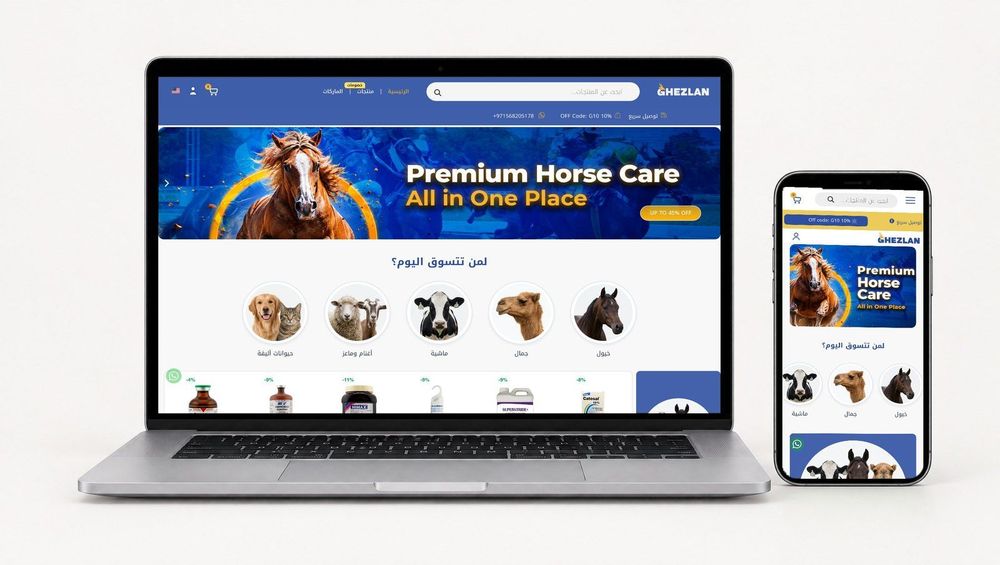 E-CommerceConnecting WooCommerce to ERP, CRM and Shipping Without DuplicatesPlan a WooCommerce ERP integration that avoids duplicates: data ownership rules, idempotent order sync, CRM matching and UAE shipping, with Odoo and Dynamics.
 E-CommerceEnterprise Ecommerce Platform Selection: Requirements Before DemosChoose an enterprise ecommerce platform by setting integration, multi entity, data residency and order management requirements before any vendor demo starts.
Tell us what the business needs. We will tell you what to build first.
Schedule a free consultation and get a written recommendation, with costs, before you commit to anything.
Get in touchPROVEN RESULTS
4.7 / 5verified reviews on Google