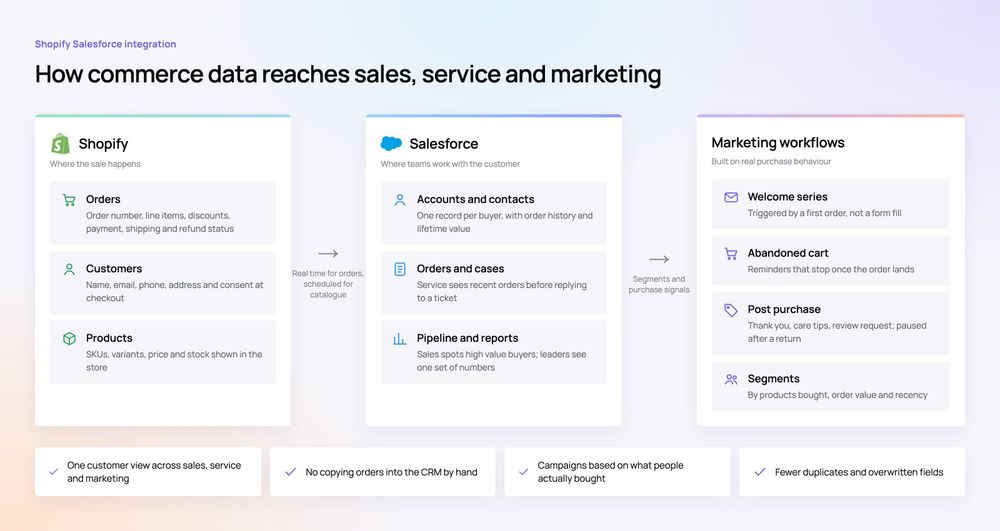
 Software DevelopmentAPI Integration for Saudi Business Websites: ERP, CRM and Payment GatewaysHow Saudi websites connect to ERP, CRM, payment gateways like mada and Tabby, ZATCA e-invoicing, logistics and WhatsApp through APIs.
CodeeoInsightsSoftware Development
How to Choose a Software Development Company
How to choose a software development company: the checks that matter, questions to ask, engagement models compared and the red flags to avoid.
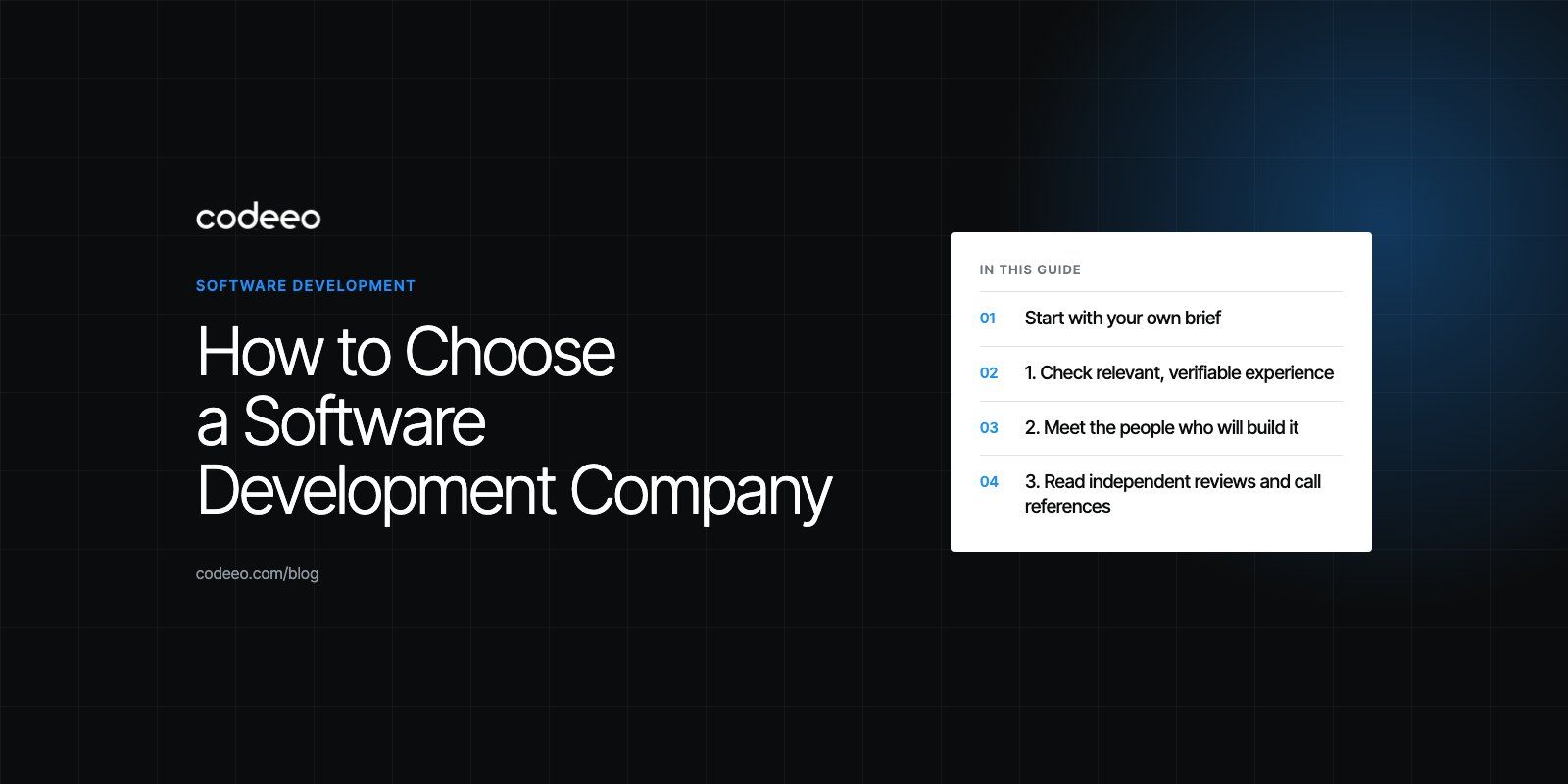
To choose a software development company, check five things in order: relevant work you can verify, the people who will actually build your product, how they plan and communicate, how they protect your code and data, and how the contract handles scope, ownership and support. Ask for proof at every step rather than accepting claims. A short paid discovery phase is the safest way to test the fit before you commit to a full build.
This guide turns those checks into practical questions, red flags and a comparison of the common engagement models.
Start with your own brief
You cannot judge a partner until you know what you need. Before contacting anyone, write a one or two page brief that covers:
- The problem the software solves and who will use it.
- The must have features for a first release, and what can wait.
- Systems it must connect to, such as your CRM, ERP, payment gateway or website.
- Your timeline, any fixed launch dates and who on your side makes decisions.
- Constraints such as data residency, accessibility, languages or industry regulation.
A clear brief makes proposals comparable. If every vendor answers a different question, you end up comparing sales skills instead of delivery skills. If your idea is still fuzzy, a short product scoping exercise can turn it into a brief before you go to market.
1. Check relevant, verifiable experience
Look for work that resembles yours in type and complexity, not just in industry. A team that has shipped marketplaces, booking apps or integrations with ERP systems will spot problems in your plan early.
What to ask for
- Two or three projects similar to yours, with live links or app store listings you can open yourself.
- What the company built itself and what it took over from another team.
- A walkthrough of one project: the hardest problem, how they solved it and what they would change.
Some work sits under non disclosure agreements, so a vendor may not show everything. They should still be able to describe the approach, the stack and the outcome in general terms. Be wary of portfolios full of mockups with no live products behind them.
2. Meet the people who will build it
Sales teams are often polished. What matters is the project manager, designers and engineers who will actually work on your product.
- Ask who will be assigned, what their roles are and how much of their time is committed to you.
- Talk to the technical lead. Ask them to explain how they would approach your core feature.
- Check the technology stack fits your needs and that skills are not concentrated in one person.
- Ask what happens if a key person leaves during the project.
If you plan to grow your own team later, ask whether the vendor also offers dedicated developers who can work inside your process.
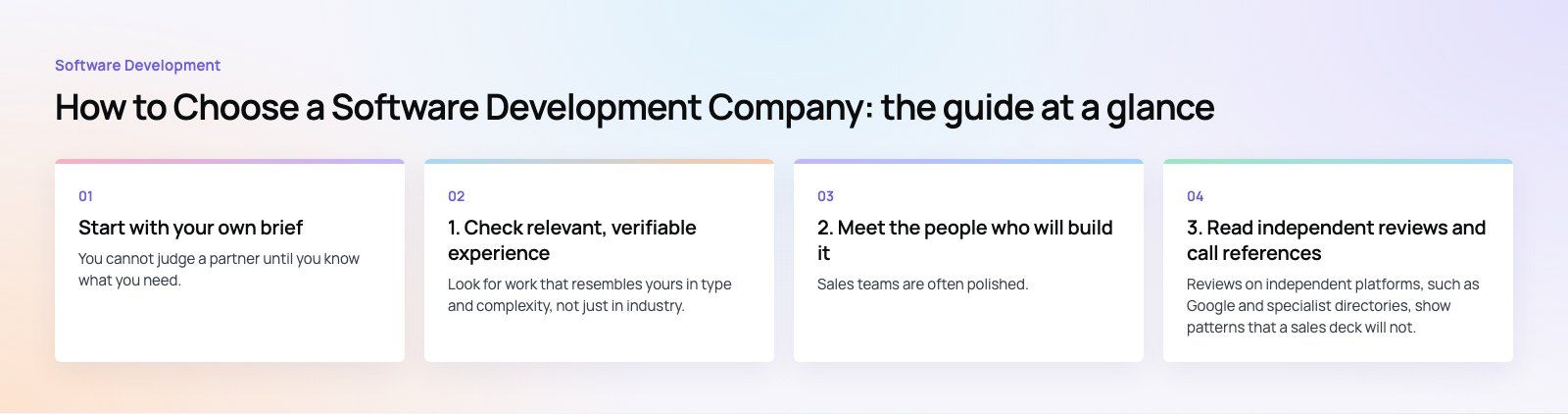
3. Read independent reviews and call references
Reviews on independent platforms, such as Google and specialist directories, show patterns that a sales deck will not. Read the low ratings as carefully as the high ones and look at how the company responded.
References are even more useful. Ask the vendor for two clients you can call, then ask those clients:
- Did the project finish close to the agreed time and scope?
- How did the team handle a problem or a change request?
- Would you hire them again for the next phase?
4. Understand how they plan, build and communicate
Most good teams work in short iterations, often called sprints, with a working build you can review at the end of each one. The label matters less than the habits behind it.
Signs of a healthy process
- A discovery or planning phase before development starts.
- A shared backlog you can see, with priorities you help set.
- Regular demos of working software, not just status reports.
- Automated testing, code review and a separate staging environment.
- A named contact, an agreed meeting rhythm and response times written down.
Communication problems cause more failed projects than technical ones. Check time zone overlap, language and how decisions are recorded. A quick test is to ask a detailed question by email and see how clear and fast the answer is.
5. Check security and ownership
You will share business data and possibly customer data with your partner, so their security habits become yours.
- Ask how they manage access to your systems, secrets and production data.
- Ask which secure coding practices they follow. The OWASP Top Ten is a sensible baseline for any web product.
- Confirm that the code lives in a repository you own or can access at any time.
- Make sure the contract assigns intellectual property to you once invoices are paid.
- Agree how data will be returned or deleted when the engagement ends.
If you are taking over an existing product, a codebase review before signing shows what you are inheriting and what it will take to support.
6. Compare engagement models
How you pay shapes how the project behaves. No model is right for every case.
| Model | Works best when | Watch out for |
|---|---|---|
| Fixed scope | Requirements are clear and unlikely to change | Every change becomes a change request, and vendors build in buffers for risk |
| Time and materials | Scope will evolve as you learn from users | Needs active product ownership on your side to keep spending focused |
| Dedicated team | You need ongoing capacity for a long running product | You manage priorities, so you need someone who can lead the work |
| Phased hybrid | You want a fixed discovery phase, then flexible delivery | Requires clear handover from planning to build |
Cost depends mainly on scope, the number of platforms (web, iOS, Android), integrations, design depth, compliance needs and how fast you need it. The cheapest quote often leaves out testing, project management or support, so compare what each proposal actually includes.
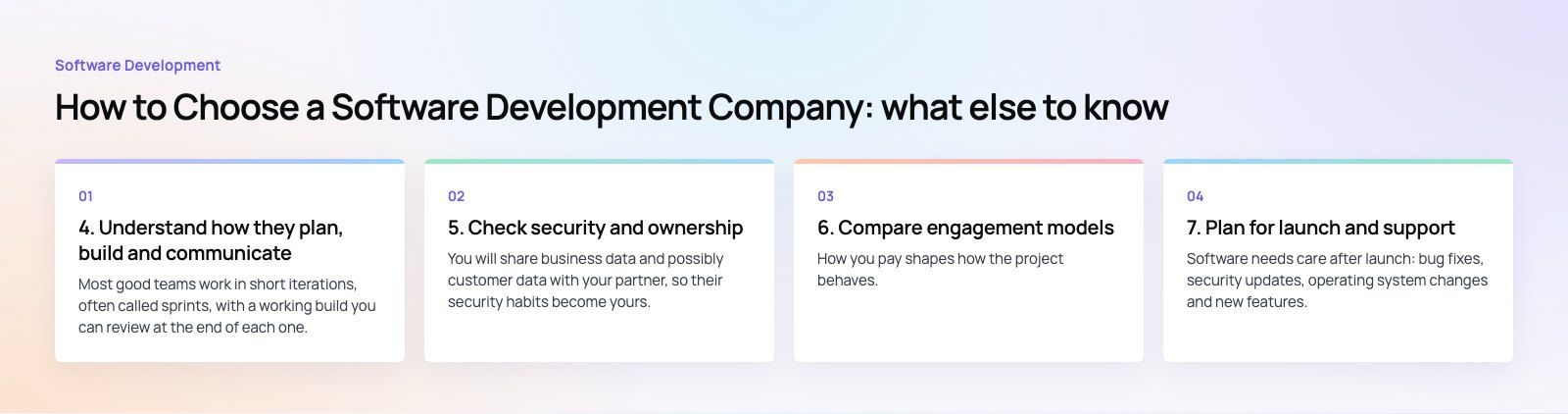
7. Plan for launch and support
Software needs care after launch: bug fixes, security updates, operating system changes and new features. Ask:
- What support is included after launch, and for how long?
- How are bugs prioritized and how quickly are critical issues handled?
- Who handles hosting, monitoring and backups?
- What documentation will you receive so another team could take over if needed?
Red flags to watch for
- A fixed quote given before anyone has asked serious questions about your project.
- Promises of certain results or unrealistically short timelines.
- No access to the code repository until the final payment.
- Reluctance to let you speak to the developers or to past clients.
- Vague answers about testing, security or who owns the code.
A simple selection process
- Write your brief and shortlist three to five companies.
- Send the same brief and questions to each.
- Meet the delivery team of the best two or three.
- Check reviews and call references.
- Run a short paid discovery or pilot with your first choice.
- Sign the full contract only when the pilot confirms the fit.
Codeeo has delivered more than 200 projects across the UAE and the US, with a team of 80+ across Dubai, Riyadh and Karachi, and is rated 4.7 from 23 Google reviews. You can browse our case studies, then read about our custom software development and mobile app development services.
Frequently asked questions
Ask for live projects similar to yours that you can open yourself, then ask the technical lead to walk you through one of them, including the hardest problem and how it was solved.
Meet the engineers who will be assigned, not only the sales team. Finally, call two past clients and ask about delivery, communication and how changes were handled.
Software DevelopmentAPI Integration for Saudi Business Websites: ERP, CRM and Payment GatewaysHow Saudi websites connect to ERP, CRM, payment gateways like mada and Tabby, ZATCA e-invoicing, logistics and WhatsApp through APIs. Software DevelopmentAI Workflow Automation for Case Management: Where AI Saves Case Teams Real TimeHow AI workflow automation fits into case management: practical uses, human review, data security and when to build a custom AI workflow.
 Software DevelopmentLaw Firm Client Portal, Legal CRM and Intake Software: Turning Inquiries into Signed ClientsTurn more legal inquiries into signed clients with intake software, a legal CRM and a secure client portal built around your firm.
Tell us what the business needs. We will tell you what to build first.
Schedule a free consultation and get a written recommendation, with costs, before you commit to anything.
Get in touchPROVEN RESULTS
4.7 / 5verified reviews on Google