 E-CommerceGenerative AI in Online Retail: Uses That Pay BackGenerative AI ecommerce uses ranked by payback and risk: product descriptions, AI search and support assistants, plus Arabic quality checks for UAE stores.
How to Start an Ecommerce Business: A Step by Step Guide
How to start an ecommerce business: validate a niche, choose a sourcing model, build the store, plan shipping, win first customers and manage margins.
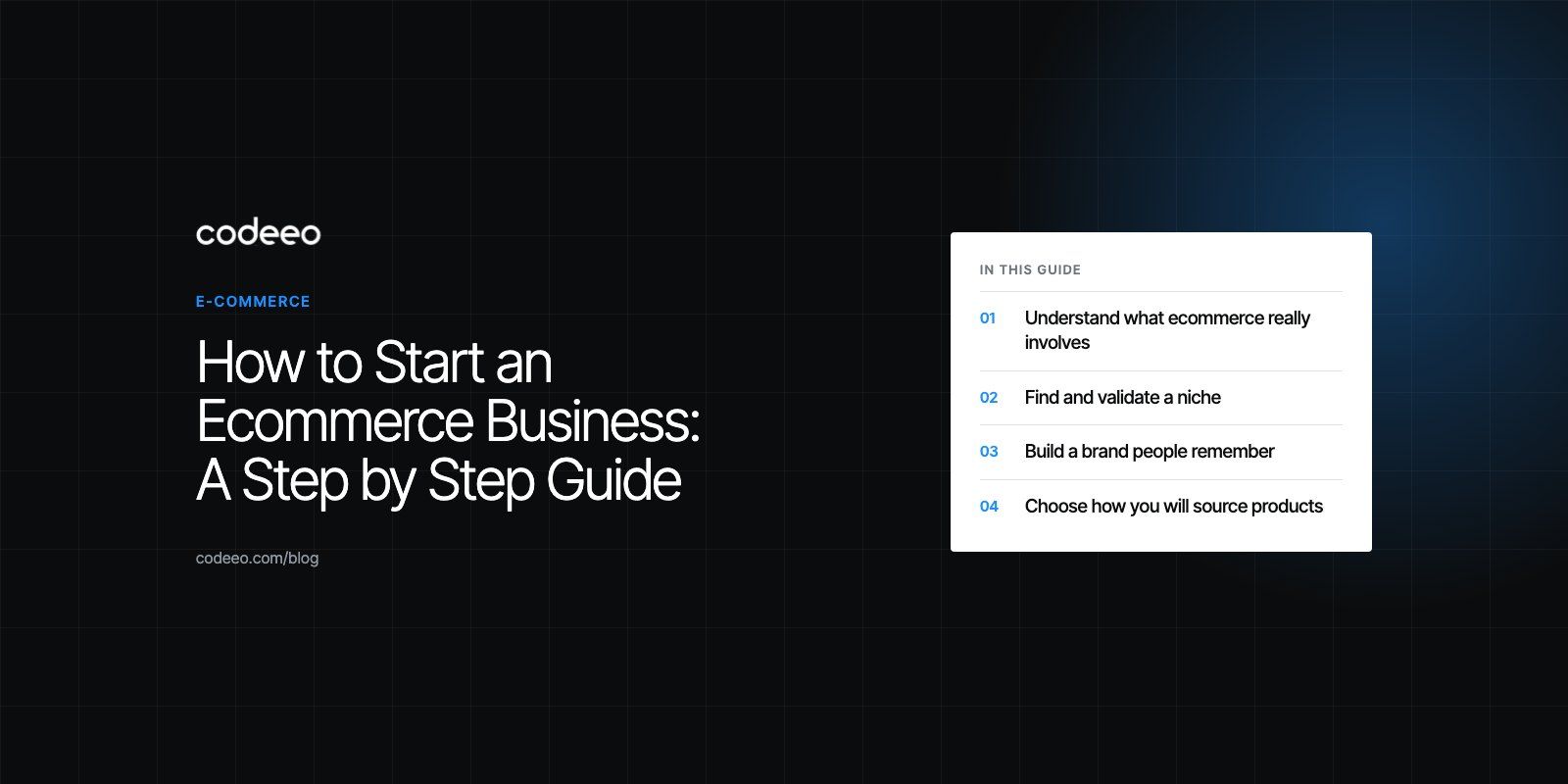
To start an ecommerce business, pick a narrow niche you can validate with real buyers, decide how you will source and ship stock, and launch a simple store on a platform that fits your catalog. Then spend most of your energy on getting the first hundred customers and keeping them. The store itself is the easy part; demand, margins and fulfillment decide whether the business lasts.
This guide walks through each stage in the order most new sellers should tackle it, with the decisions that matter at every step and the mistakes that cost people the most time.
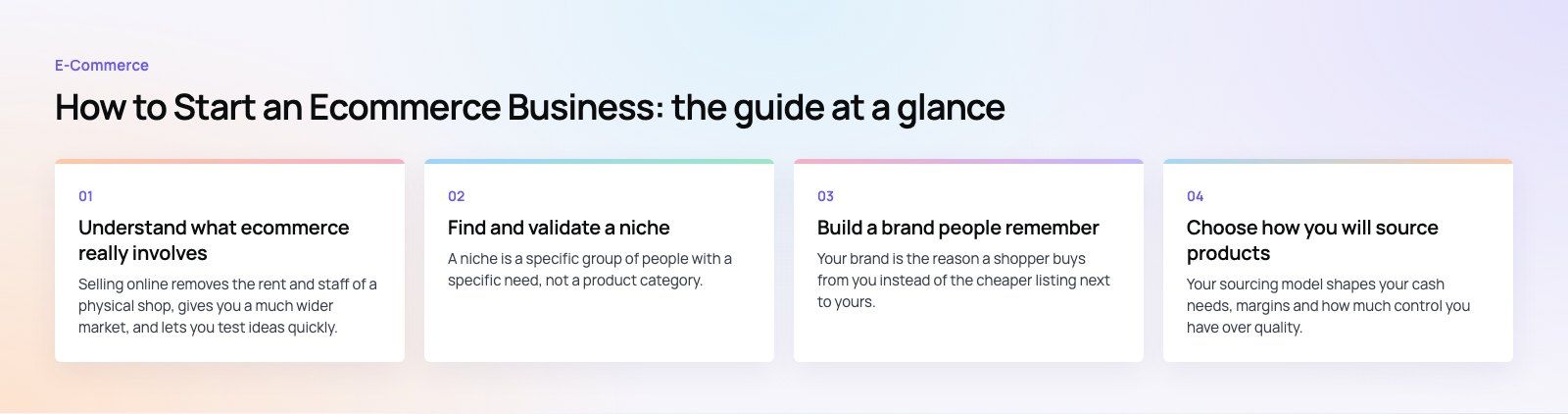
Understand what ecommerce really involves
Selling online removes the rent and staff of a physical shop, gives you a much wider market, and lets you test ideas quickly. It also brings its own pressures. You compete with every other store a shopper can open in a new tab, you carry the full cost of delivery and returns, and you need some technical comfort to keep the store running.
| Factor | Advantage | Challenge |
|---|---|---|
| Running costs | No shop lease or counter staff | Shipping, returns and payment fees add up |
| Reach | Customers well beyond your city | Far more competitors on every search |
| Flexibility | Change prices, products and offers in minutes | You own the tech, the content and the support |
| Data | Every visit and order is measurable | You need the discipline to act on it |
Find and validate a niche
A niche is a specific group of people with a specific need, not a product category. "Pet products" is a category. "Grain free treats for dogs with allergies" is a niche. The narrower version is easier to rank for, easier to advertise to, and easier to build a brand around.
How to research it
- Search demand: use free keyword tools and the autocomplete in Google and marketplaces to see what people actually type.
- Competitor gaps: read the one and two star reviews on competing products. Complaints show you what to fix.
- Margin check: estimate product cost, packaging, shipping, payment fees, likely returns and ad cost per sale. If little is left, the niche will not support paid growth.
How to validate it before you invest
Put up a simple landing page, run a small ad test, take preorders, or sell a first batch through a marketplace. Real orders or real email signups are worth far more than friends saying the idea sounds good.
Build a brand people remember
Your brand is the reason a shopper buys from you instead of the cheaper listing next to yours. Start by writing down who you serve, what you promise them and how you sound. Then turn that into a name, logo, colors and a tone of voice.
- Choose a name that is short, easy to spell and available as a domain and on the social platforms you will use.
- Keep visuals and wording consistent across the store, packaging, emails and social profiles.
- Tell a real story: why the product exists and who is behind it. Shoppers notice when it is invented.
Brand work never finishes. Read reviews and support messages regularly and adjust how you present the business as you learn what customers value.
Choose how you will source products
Your sourcing model shapes your cash needs, margins and how much control you have over quality.
| Model | How it works | Best for | Watch out for |
|---|---|---|---|
| Wholesale | Buy finished stock in bulk from a distributor | Proven products with steady demand | Cash tied up in inventory |
| Dropshipping | The supplier ships each order directly to the customer | Testing many products with little cash | Thin margins and little control over delivery |
| Private label | A manufacturer makes a product under your brand | Building a defensible brand | Minimum order quantities and longer lead times |
| Make your own | You produce the goods yourself | Handmade or specialist products | Capacity limits as you grow |
Whichever model you choose, order samples, agree on quality standards in writing and keep at least one backup supplier. Once you hold stock, track sales velocity and set reorder points so you avoid both stockouts and dead inventory. Inventory software or the stock features built into your platform are enough at the start.
Build your online store
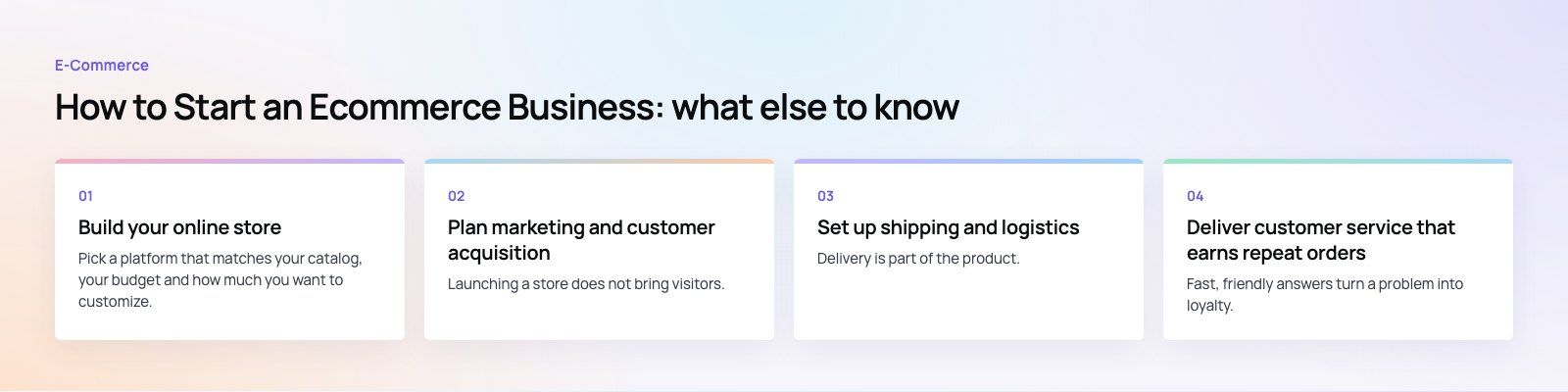
Pick a platform that matches your catalog, your budget and how much you want to customize. Hosted platforms such as Shopify handle hosting, security and updates for you. WooCommerce runs on WordPress and gives you more control, with more responsibility for maintenance. Larger or more complex catalogs sometimes justify a headless or custom build later, but very few new stores need that on day one.
What the first version must get right
- Product pages: clear photos from several angles, honest descriptions, sizing or fit details, delivery times and the return policy close to the buy button.
- Checkout: guest checkout, the payment methods your customers expect, and no surprise costs at the last step.
- Mobile: most shoppers will browse on a phone, so test every step on one.
- Speed: compress images and keep apps and plugins to the ones you really use.
- Abandoned cart emails: a simple reminder sequence recovers some sales you would otherwise lose.
If you are unsure which platform suits your products, our platform fit review compares the options against your catalog and plans. Our Gorgeous Flower case study shows a WooCommerce store built around same day delivery.
Plan marketing and customer acquisition
Launching a store does not bring visitors. Plan your first channels before you launch, and pick two or three you can do well rather than six you do badly.
- Search: structure category and product pages around what people search for, and follow Google's ecommerce guidance on site structure, product data and URLs.
- Social and creators: show the product in use. Short video usually outperforms polished studio shots.
- Paid ads: start small, measure cost per purchase, and only scale what is profitable after returns.
- Email and SMS: capture visitors with a useful offer and send welcome, post purchase and win back messages. Repeat buyers are usually your cheapest sales.
A digital marketing partner can help once you know which channel works, but test the basics yourself first so you understand the numbers.
Set up shipping and logistics
Delivery is part of the product. Compare several carriers on speed, tracking and how they handle failed deliveries. Choose packaging that protects the item without adding much weight. Show delivery times and shipping costs clearly before checkout, because unexpected costs are one of the most common reasons shoppers abandon a cart.
If you sell across borders, research customs rules and duties for each country first, and decide who pays them. A fulfillment partner can store, pack and ship for you once order volume makes doing it yourself a bottleneck.
Deliver customer service that earns repeat orders
Fast, friendly answers turn a problem into loyalty. Set a response time you can keep, write saved replies for common questions, and make returns simple. Ask for reviews after delivery and treat negative feedback as product research. A loyalty program or subscription option makes sense once you have customers who already buy more than once.
Manage the money from the first day
- Open a separate business bank account and keep personal and business spending apart.
- Track contribution margin per order: revenue minus product, shipping, payment fees, packaging and ad cost.
- Watch cash flow closely when you buy stock in advance; growth can run you out of cash.
- Register for and collect the right sales taxes for every place you sell, and take professional tax advice early.
Price from your costs and your positioning, not only from what competitors charge. Discounting to win the first sale trains customers to wait for the next discount.
Scale when the basics are stable
Growth makes sense once orders, fulfillment and support run smoothly without you fixing them every day. Then you can add product lines, open new markets, or move to a stronger stack with integrations to your inventory, accounting and CRM. Before you scale, document your processes so new team members or partners can follow them.
When you are ready to build or rebuild your store, Codeeo has delivered 200+ projects across the UAE and the US, including Shopify development and WooCommerce development for retailers of every size.
Frequently asked questions
The first step is choosing and validating a niche.
Pick a specific group of buyers with a clear need, check search demand and competitor reviews, and confirm the margin works after shipping, fees and returns. Then test demand with a landing page, preorders or a small ad campaign before spending heavily on stock or a custom store.
E-CommerceGenerative AI in Online Retail: Uses That Pay BackGenerative AI ecommerce uses ranked by payback and risk: product descriptions, AI search and support assistants, plus Arabic quality checks for UAE stores. E-CommerceConnecting WooCommerce to ERP, CRM and Shipping Without DuplicatesPlan a WooCommerce ERP integration that avoids duplicates: data ownership rules, idempotent order sync, CRM matching and UAE shipping, with Odoo and Dynamics.
 E-CommerceEnterprise Ecommerce Platform Selection: Requirements Before DemosChoose an enterprise ecommerce platform by setting integration, multi entity, data residency and order management requirements before any vendor demo starts.
Tell us what the business needs. We will tell you what to build first.
Schedule a free consultation and get a written recommendation, with costs, before you commit to anything.
Get in touchPROVEN RESULTS
4.7 / 5verified reviews on Google