 E-CommerceGenerative AI in Online Retail: Uses That Pay BackGenerative AI ecommerce uses ranked by payback and risk: product descriptions, AI search and support assistants, plus Arabic quality checks for UAE stores.
How to Start an Online Boutique: A Step by Step Guide
How to start an online boutique: choose a niche, set up the business, source products, build the store and market it, plus the mistakes that slow new shops down.
To start an online boutique, pick a narrow niche with a clear buyer, set up a legal business, write a short plan, find suppliers you can rely on, and launch a store on a platform that fits your catalog. Then spend most of your energy on marketing and repeat customers. The store itself is the easy part; the niche, the suppliers and the first hundred buyers decide whether it lasts.
This guide walks through each stage in the order most founders meet it, with the decisions that tend to cause trouble later if you rush them.
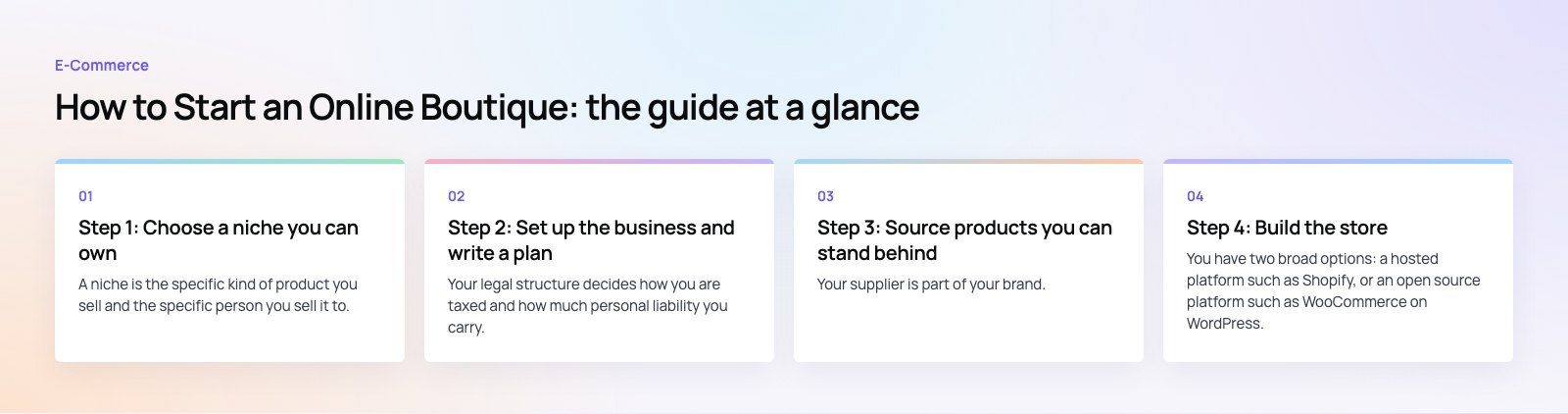
Step 1: Choose a niche you can own
A niche is the specific kind of product you sell and the specific person you sell it to. "Women's clothing" is a category. "Modest workwear for women in their thirties" is a niche. The narrower version is easier to market, easier to stock and easier to remember.
Good boutique niches usually share three traits:
- A buyer who cares about choice. People who browse boutiques want something they will not find in a department store.
- Room for a point of view. Curation is your edge. If every product could come from the same marketplace listing, there is nothing for you to curate.
- Margins that survive shipping and returns. Clothing and shoes have high return rates, so check that a typical order still makes money after one item comes back.
Ideas that suit a small boutique include vintage or secondhand jewelry, children's wall art, gardening tools with a design angle, shapewear and loungewear, and gift sets built around an occasion. Treat these as starting points, not a list to copy.
How to test a niche before you commit
Search the products you plan to sell on Google, Instagram and TikTok. Look at who already sells them, how they price, what their reviews complain about and which posts get saved or shared. If competitors exist but their sites are slow, their photos are poor or their sizing advice is missing, that is an opening. If nobody sells it at all, ask whether there is demand.
Pick a name that is short, easy to spell and available as a domain and a social handle. Check trademark databases in the countries you will sell to before you print anything.
Step 2: Set up the business and write a plan
Your legal structure decides how you are taxed and how much personal liability you carry. In many countries the common choices for a small shop are a sole proprietorship or a limited liability company. The rules differ by country and sometimes by city, so speak to an accountant or your local business authority before you register.
A business plan is rarely mandatory, but writing one forces you to answer the questions that sink new shops. The US Small Business Administration has a clear guide to writing a business plan that works for founders anywhere. Keep yours short and cover:
- A one paragraph summary of what you sell and to whom
- Your target customer and the competitors they already buy from
- Ownership, legal structure and any licenses or permits you need
- How you will source, store and ship products
- Your marketing plan for the first six months
- A simple budget and the sales volume you need to break even
The break even line is the one most first time founders skip. Write down your landed cost per item, your expected platform and payment fees, shipping, packaging and a realistic return rate. If the numbers only work at a volume you cannot imagine reaching, change the niche or the pricing now, not after launch.
Step 3: Source products you can stand behind
Your supplier is part of your brand. Late stock, inconsistent sizing and poor packaging will show up in your reviews, not theirs. Look for suppliers who offer consistent quality, clear lead times, reasonable minimum order quantities and responsive support.
Common sourcing routes
| Route | Best for | Watch out for |
|---|---|---|
| Wholesale marketplaces (for example Faire) | Curated boutiques buying small batches from independent brands | Minimum orders and lead times vary by brand |
| Large manufacturer marketplaces (for example Alibaba) | Private label and custom products | Sample quality, minimums, shipping time and import duties |
| Trade shows and showrooms | Seeing quality in person and building relationships | Travel time and larger opening orders |
| Dropshipping suppliers | Testing products with no stock on hand | Slow delivery, thin margins and little control over packaging |
| Local makers | Unique stock and a strong story | Limited capacity if a product takes off |
Always order samples before listing a product. Photograph them yourself, wash or wear them if relevant, and check the sizing against your own size guide. One issue we often see is a store that launches with supplier photos, then gets returns because the real item looks different.
Step 4: Build the store
You have two broad options: a hosted platform such as Shopify, or an open source platform such as WooCommerce on WordPress. Hosted platforms handle servers, security and updates for you and are quick to launch. Open source gives you more control over design and data, but you are responsible for hosting and maintenance.
Whichever you choose, a boutique store needs a few things to convert well:
- Real photography. Several angles, a model or scale reference, and close ups of fabric or finish.
- A size guide on every product page. This is the single biggest lever on returns for clothing.
- Fast mobile pages. Most boutique traffic comes from social media on phones.
- Familiar payment options. Cards, wallets and, in some markets, buy now pay later.
- Clear shipping and returns policies linked from the footer and the cart.
For an example of how this comes together, our EGO Sustainable case study covers a bilingual Shopify store for a GCC athleisure label selling across five markets with Tabby and Tamara at checkout. If you are torn between platforms, a platform fit review compares them against your catalog and plans before you build.
Step 5: Market the boutique
Once the store is live, marketing becomes the main job. There is no single best channel; the right mix depends on your customer, your budget and how quickly you need sales.
Channels worth testing
- Social content. Styling videos, behind the scenes packing and new arrival drops suit boutiques well.
- Search engine optimization. Category pages and buying guides that answer real questions bring steady traffic over time.
- Paid social and search ads. Fast feedback on which products and messages work, but costs rise quickly without a clear offer.
- Influencer partnerships. Small creators with an engaged audience in your niche often outperform big names.
- Email and SMS. Your cheapest channel for repeat sales once you have a list.
- Local press and pop ups. Useful when your story is local or the product benefits from being touched.
Do not skip loyalty
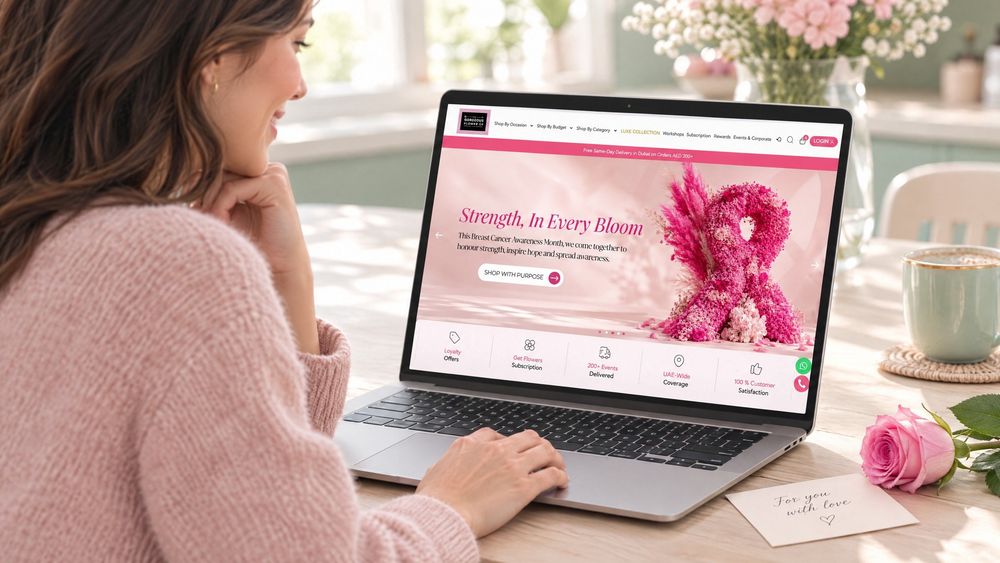
A loyalty program is one of the most underused tools for small shops. Points, early access to new drops or a birthday offer give customers a reason to come back instead of searching for a cheaper copy. The Gorgeous Flower case study shows a WooCommerce florist built around repeat buying, with loyalty points and subscriptions alongside delivery dates and windows at checkout.
Mistakes that slow new boutiques down
- Too many products at launch. A tight edit of strong products is easier to photograph, market and restock.
- Pricing without counting returns. Build expected returns into your margin from day one.
- Relying on one supplier. Keep at least one backup for your best sellers.
- Spending on ads before the store converts. Fix product pages and checkout first, then pay for traffic.
- Ignoring email from the start. Collect addresses before launch with a waitlist or first order offer.
Get the store right from the start
An online boutique succeeds on curation, reliable suppliers and steady marketing, but the store is where all of that turns into orders. Codeeo has delivered 200+ projects across the UAE and the US, including fashion and gifting stores. If you want help choosing a platform and building a boutique that converts on mobile, see our Shopify development service or our work for retail and ecommerce brands.
Frequently asked questions
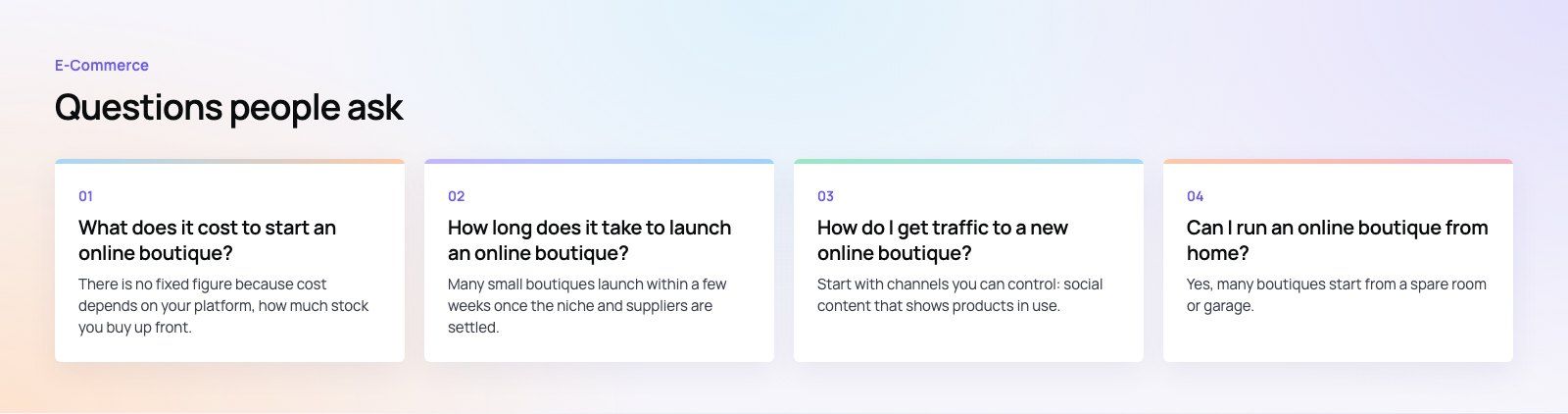
There is no fixed figure because cost depends on your platform, how much stock you buy up front, your legal structure and how much you spend on marketing.
The biggest variables are opening inventory and advertising. Founders who dropship or buy small batches can start lean, while private label or custom design needs more capital. Build a simple budget before you register the business.
E-CommerceGenerative AI in Online Retail: Uses That Pay BackGenerative AI ecommerce uses ranked by payback and risk: product descriptions, AI search and support assistants, plus Arabic quality checks for UAE stores. E-CommerceConnecting WooCommerce to ERP, CRM and Shipping Without DuplicatesPlan a WooCommerce ERP integration that avoids duplicates: data ownership rules, idempotent order sync, CRM matching and UAE shipping, with Odoo and Dynamics.
 E-CommerceEnterprise Ecommerce Platform Selection: Requirements Before DemosChoose an enterprise ecommerce platform by setting integration, multi entity, data residency and order management requirements before any vendor demo starts.
Tell us what the business needs. We will tell you what to build first.
Schedule a free consultation and get a written recommendation, with costs, before you commit to anything.
Get in touchPROVEN RESULTS
4.7 / 5verified reviews on Google