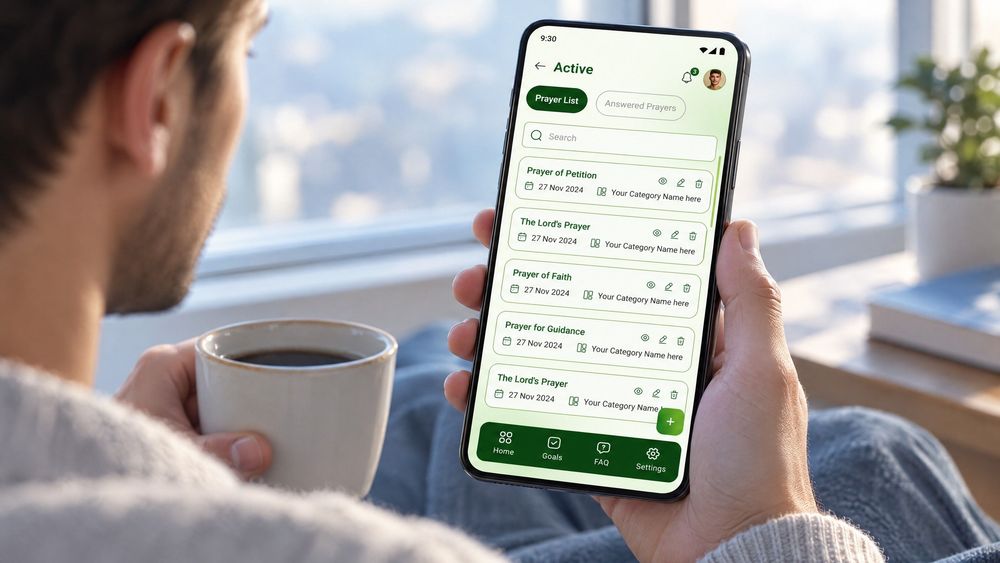
 AIAI Chatbots for Lead Generation in Saudi Arabia: Turning Website Visitors into SalesHow Saudi businesses use AI chatbots on websites and WhatsApp to answer in Arabic and English, qualify leads and hand off to sales in the CRM.
Private Enterprise AI in Saudi Arabia: What a Private AI Platform Actually Looks Like
Why Saudi organisations are moving company data away from public AI tools, and what a private AI platform with your own models, integrations and controls really involves.

Private enterprise AI is a set of language models, connectors and applications that run inside a boundary your organisation controls, so prompts, files and customer records never travel to a third party. In Saudi Arabia that boundary is usually on premise hardware or a dedicated private cloud environment hosted inside the Kingdom. The model itself is the easy part; the real work is connecting it to your systems and running it like any other production platform.
This guide is for CIOs, CTOs, data leaders and compliance teams at banks, healthcare groups, government entities and large companies in Riyadh, Jeddah and Dammam.
Why public AI assistants stop working once company data is involved
Public AI assistants are excellent for generic tasks such as drafting a product announcement, where the risk is low. The picture changes the moment an employee pastes in a customer complaint, uploads a contract, or asks the assistant to summarise a spreadsheet of account balances.
Where the data actually goes
When someone types into a public assistant, the prompt and any attached files are sent to servers operated by the provider. Depending on the plan and its settings, that content may be stored for a period, reviewed for abuse monitoring, or processed in data centres outside the Kingdom. Enterprise plans often improve these terms, but the data still leaves your environment and sits under someone else's operational control.
Who should be most cautious
For a bank, a hospital group, a ministry or any business holding personal data, that loss of control is the core issue. Patient histories, national ID numbers, salary files and loan applications all carry obligations about where they are processed and who can see them. Staff will use AI regardless, so the real question is where it should run.
The Saudi rules that shape enterprise AI in Saudi Arabia
Several layers of regulation influence how enterprise AI in Saudi Arabia should be designed. What follows is a general orientation, not legal advice. The exact requirements depend on your sector, the type of data, and the systems involved, and they should be confirmed with your legal counsel and the relevant regulator before any architecture is finalised.
The Personal Data Protection Law
The Personal Data Protection Law (PDPL) governs how personal data about individuals in the Kingdom is collected, processed and shared. It is overseen by the Saudi Data and AI Authority, SDAIA, which also issues the implementing regulations. It sets principles such as purpose limitation and data minimisation, and permits cross border transfers only under defined circumstances with appropriate safeguards. That makes PDPL compliance for AI much simpler when the processing never leaves the country in the first place.
Sector regulators
Many organisations also answer to a sector regulator. Financial institutions supervised by the Saudi Central Bank (SAMA) follow its frameworks on cybersecurity, outsourcing and cloud use, and healthcare, telecom and government bodies have their own expectations on data classification and hosting. A use case acceptable for a retailer may need extra approvals for a bank.
National Cybersecurity Authority controls
The National Cybersecurity Authority publishes the Essential Cybersecurity Controls, which set a baseline for governance, protection and resilience, and the Cloud Cybersecurity Controls, which address cloud service providers and the organisations that use them. Government bodies and critical national infrastructure operators are generally expected to align with these controls, and many private companies adopt them as a benchmark. Any AI platform that touches sensitive data should be designed so that it can be assessed against them.
What "private" actually means in a private AI platform
A private AI platform is one where the model runs where your data already lives, and the data never crosses the boundary you define.
In practice that boundary takes one of two forms. The first is on premise AI: graphics processors installed in your own data centre or a colocation facility you contract, with the models and all supporting software running on that hardware. The second is a dedicated private cloud environment, where compute is reserved for your organisation alone and can be hosted inside the Kingdom which addresses AI data residency in Saudi Arabia. In both cases, no prompt, document or answer is sent to an external model provider.
This is what people usually mean by sovereign AI at the organisational level: the model weights, the data, the logs and the access rules all sit under your governance. It does not mean building a model from scratch. It means hosting a capable existing model yourself and wrapping it in your own controls.
Choosing a model: why the private LLM matters less than expected
The gap between closed commercial models and models you can host yourself has narrowed considerably. Open weight models, whose weights can be downloaded and run on your own infrastructure, now handle summarisation, drafting, classification, extraction and question answering well enough for most enterprise tasks. For a typical private LLM deployment, the choice of model rarely decides whether the project succeeds. Data quality, integration and user adoption decide that.
Arabic quality deserves its own test
In the Kingdom, Arabic is the exception to that rule. Many organisations work across Modern Standard Arabic, Gulf dialect in customer messages, and English in technical documents, often within a single conversation. Model quality varies a great deal across these. Arabic focused open models such as SDAIA's ALLaM and Jais are worth including in any evaluation alongside general multilingual models, but the only reliable test is your own material. Build a small evaluation set from real policies, contracts and customer messages, have bilingual staff score the answers, and compare candidates side by side. Our guide to Arabic language AI model quality covers how to structure that comparison.
The four layers of a private AI platform
A working platform is more than a model on a server. It helps to think in four layers, each with its own owners and effort.
Layer one: models and hosting
This is the compute, the model serving software, and supporting components such as embedding models and a vector database for document search. Decisions here cover hardware sizing, redundancy, concurrent users, and how models are versioned. Design it so that swapping one model for another is a configuration change, not a rebuild.
Layer two: integrations
An assistant that cannot see your systems can only offer general knowledge. The value comes from AI integration with the places your data lives: the CRM, WhatsApp Business, email, the ERP, document management systems, data warehouses and line of business databases. This is where most engineering effort goes. Each connector needs authentication, permission mapping so users only retrieve what they are already allowed to see, data cleaning, and handling for errors and changes upstream. Organisations that underestimate this layer are the ones whose pilots stall. Codeeo's AI integration services focus on exactly this work.
Layer three: applications people use
Users never interact with a model directly. They use applications built on top of it. Common examples include an internal assistant for drafting and analysis, search over company documents that returns answers with links to the source paragraphs, automations that process incoming requests or files without a person in the loop, and dashboards that summarise activity. An Arabic AI assistant for customers on WhatsApp is another application on the same foundation.
Layer four: operations
Finally, the platform has to run like production software. That means monitoring for availability and response quality, role based access control tied to your identity provider, audit logs of who asked what and what the system returned, security hardening, incident handling, and a clear support model. This layer is what compliance teams will examine most closely. Practices from MLOps, such as automated evaluation, version control for prompts and models, and staged releases, keep quality steady as the platform grows.
Public AI, private cloud or on premise AI: a side by side comparison
Each hosting model suits different organisations. The table below compares them on the factors that usually decide the matter. Cost drivers are described rather than quantified, because actual figures depend heavily on usage and scale.
| Factor | Public AI service | Dedicated private cloud | On premise |
|---|---|---|---|
| Data location | Provider's data centres, often outside the Kingdom | Reserved environment that can be hosted inside the Kingdom | Your own facility or contracted colocation |
| Control | Limited to the provider's settings and contract terms | High control over models, data and access; provider manages the hardware | Full control over every component |
| Compliance effort | Heavy review of transfers, contracts and provider controls for sensitive data | Moderate; assess the hosting provider against relevant controls | Lower external dependency, but your own controls must be documented and audited |
| Main cost drivers | Per user or per usage fees that rise with adoption | Reserved compute, storage and the managed service fee | Hardware purchase, power, cooling, facility space and refresh cycles |
| Maintenance | Handled by the provider | Shared: provider runs infrastructure, your team or partner runs the platform | Entirely yours or your partner's, including hardware |
| Best suited to | Non sensitive drafting and general productivity | Most regulated organisations wanting control without running hardware | Highly sensitive data, strict regulators, or existing data centre capacity |
Many organisations end up with a mix: a public tool for low risk tasks and a private platform for personal or confidential data.
Where to start: three use cases that prove value
Broad programmes with no measurable outcome lose executive support quickly. Pick one narrow workflow, measure how it performs today, prove the improvement, then expand. Three starting points work well in the Saudi market.
A WhatsApp assistant for enquiries
WhatsApp is the default channel for many Saudi customers. An assistant connected to your catalogue, policies and CRM can answer routine questions in Arabic and English, qualify the enquiry, and hand it to a human with the conversation attached. Measure response time, the share of enquiries resolved without escalation, and lead quality before and after. Codeeo builds these as AI chat agents, and banks often start with a narrower banking AI agent scoped to approved topics.
Internal knowledge search
Policies, contracts and circulars pile up across shared drives in both languages. A search assistant that answers questions from these documents and cites the exact source paragraph saves time for legal, HR, compliance and operations teams. Measure how long staff currently spend finding answers and how often they reach the wrong version of a document.
Back office automation
Reading invoices, extracting form fields and drafting routine reports are repetitive tasks that suit AI well. Document processing systems can read scanned Arabic and English documents, validate fields against your ERP, and route exceptions to a person. See Codeeo's work on AI document processing for how these pipelines are built.
A readiness checklist before you commit
Before choosing hosting or a vendor, confirm the following internally:
- One named workflow with a business owner who will sponsor it and use the result.
- A measured baseline for that workflow, such as handling time, error rate or backlog.
- A data inventory showing which systems the use case needs and the classification of each.
- A view from legal and compliance on PDPL obligations, sector rules and residency requirements.
- A decision on hosting: on premise, private cloud inside the Kingdom, or a mix.
- An Arabic and English evaluation set built from your own documents and messages.
- A plan for logging, monitoring and audit that the security team has reviewed.
- Agreed success criteria that decide whether the pilot expands or stops.
Questions to ask any vendor
- Where exactly will our data, prompts, embeddings and logs be stored and processed?
- How will the platform respect the permissions already set in our document stores and CRM?
- How will you evaluate Arabic quality, and can we see results on our own material?
- How easily can the model be replaced if a better one becomes available?
- What audit trail is kept, and can our compliance team export it?
- Who owns the code, prompts, configurations and any fine tuned weights?
- What does support look like after launch, and how are incidents handled?
Common mistakes that stall private AI projects
Starting with the hardware. Buying GPUs before a use case is proven often leaves expensive equipment underused. Settle the workflow first, then size the infrastructure.
Ignoring permissions. If the search assistant can see every document on the shared drive, it will happily show a junior employee the board minutes. Permission mapping must be designed in, not added later.
Skipping the baseline. Without a measurement of how the process performs today, there is no credible way to show improvement.
Testing Arabic last. Finding weak dialect handling after launch costs far more than testing it early.
No owner after go live. A platform nobody owns degrades quietly until users stop trusting it.
How Codeeo builds private AI platforms for Saudi organisations
Codeeo designs and builds custom AI systems around a client's own data. That covers private model deployment, the integrations that connect models to CRMs, WhatsApp, email, ERPs and document stores, and the assistants and automations people actually use. Hosting and compliance decisions are made alongside the client's legal and security teams, not assumed.
The company has delivered more than 200 projects across the UAE and the US, with a team of over 80 people across Dubai, Riyadh and Karachi, and holds a 4.7 rating from 23 Google reviews. The Riyadh office means clients in the Kingdom can meet the team in person to work through architecture, data and governance questions. For an overview of the full offer, see Codeeo's enterprise AI services.
If your organisation is weighing a private platform, the most useful first step is a working session on one workflow and the data behind it. Contact the Codeeo team in Riyadh to arrange it.
Frequently asked questions
Private enterprise AI is an AI platform where language models, data connectors and applications run inside infrastructure the organisation controls, such as on premise servers or a dedicated private cloud.
Prompts, documents and outputs stay within that boundary and are not sent to an external model provider. It lets regulated organisations use AI on sensitive data while keeping control over storage, access and audit.
AIAI Chatbots for Lead Generation in Saudi Arabia: Turning Website Visitors into SalesHow Saudi businesses use AI chatbots on websites and WhatsApp to answer in Arabic and English, qualify leads and hand off to sales in the CRM.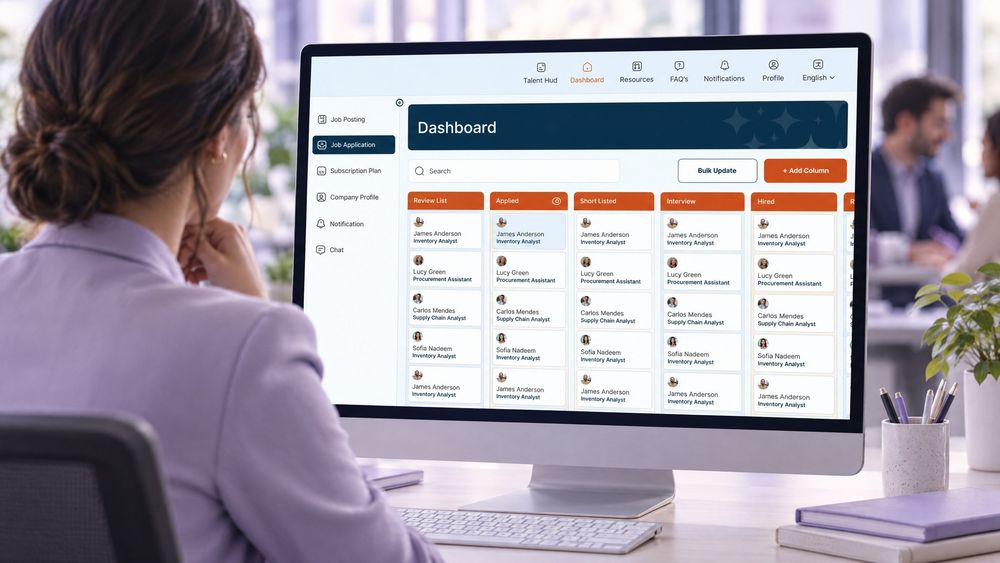 AIAgentic AI in Saudi Arabia: How AI Agents Are Changing Business OperationsWhat agentic AI means for Saudi businesses: AI agents vs chatbots, workflows they handle, Arabic support, guardrails, PDPL and how to start.
 AIAI in Web Development: What Works in 2026How AI in web development really works in 2026: coding tools, AI features for users, prompt-to-app builders, survey data, and the risks to plan for.
Tell us what the business needs. We will tell you what to build first.
Schedule a free consultation and get a written recommendation, with costs, before you commit to anything.
Get in touchPROVEN RESULTS
4.7 / 5verified reviews on Google