 MarketingShopify Email vs Mailchimp: Which Is Better for Your Store?Shopify Email, now Shopify Messaging, against Mailchimp: ease of use, Shopify data, automation, segmentation, design and how pricing scales, with a clear way to choose.
How to Develop a Digital Marketing Strategy for Your Website
A step by step plan for a website digital marketing strategy: audience, goals, site readiness, SEO, content, social, email, paid ads and measurement.
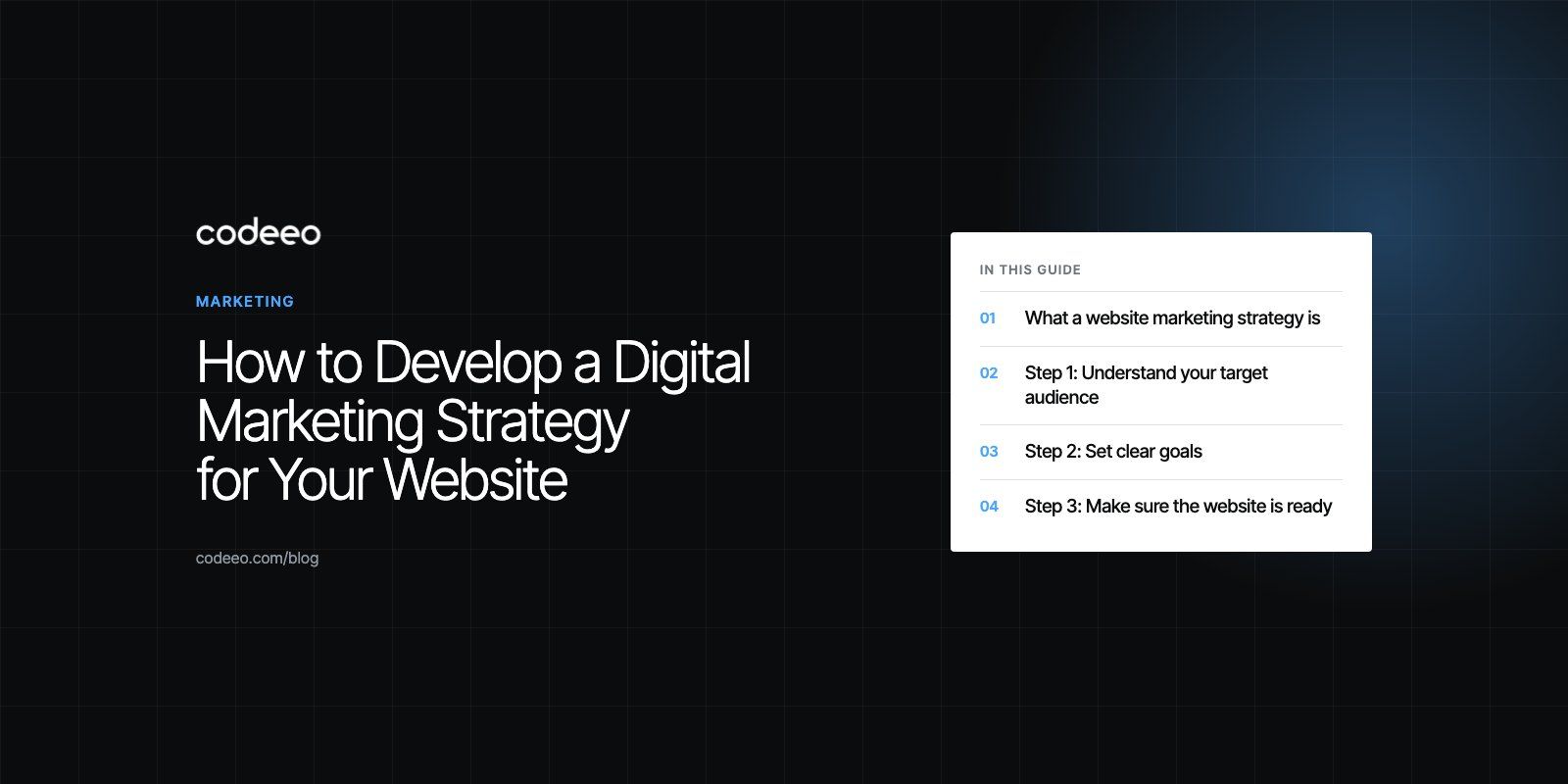
To develop a digital marketing strategy for your website, start by defining who you want to reach and what you want them to do, then set measurable goals, choose the channels that will bring those people to the site, and make sure the site itself turns visits into leads or sales. Track the results from day one and adjust monthly. The strategy is the plan that ties SEO, content, social, email and paid ads to one set of business goals instead of running them as separate activities.
What a website marketing strategy is
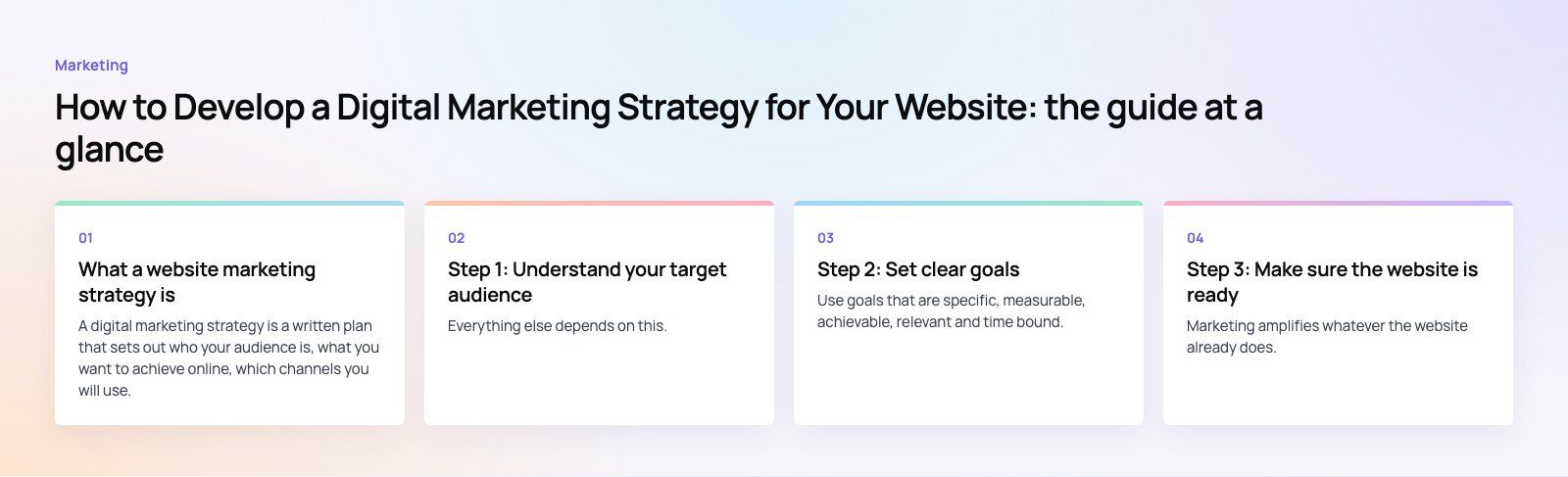
A digital marketing strategy is a written plan that sets out who your audience is, what you want to achieve online, which channels you will use, what content and offers you will put in front of people, and how you will measure progress. The website sits at the center: almost every channel sends people there, and the site is where most conversions happen.
Without a strategy, businesses tend to post on social media, run a few ads and publish the occasional blog, with no way of telling which effort produced results. With one, each activity has a job and a number attached to it.
Step 1: Understand your target audience
Everything else depends on this. Answer these questions before choosing any channel:
- Who buys from you, and who influences the decision?
- What problems are they trying to solve when they find you?
- What do they search for, read and watch online?
- Which devices and languages do they use?
- What objections stop them from buying?
Use your own data first: sales conversations, customer emails, CRM records, site search terms and analytics. Turn the answers into two or three simple audience profiles, and refer to them whenever you write content or set up a campaign.
Step 2: Set clear goals
Use goals that are specific, measurable, achievable, relevant and time bound. "More traffic" is not a goal. "Increase qualified enquiries from the website each month by the end of the quarter" is. Pick one primary goal, such as leads, sales or bookings, and a small number of supporting goals, such as organic traffic to key pages or email subscribers.
Then decide how each goal will be measured. Set up conversion tracking for forms, calls, chat clicks and purchases before you spend money on any channel.
Step 3: Make sure the website is ready
Marketing amplifies whatever the website already does. If the site is slow, unclear on mobile or makes it hard to get in touch, every channel will underperform. Before launching campaigns, check that:
- Pages load quickly, especially on phones. Google's Core Web Vitals are a good benchmark.
- Each key service or product has its own page with a clear next step.
- Contact forms are short and work on every device.
- Analytics and conversion tracking are installed and tested.
- The site can be crawled and indexed properly.
A technical SEO review or a focused Core Web Vitals project will catch most of these problems early.
Step 4: Keyword research and SEO
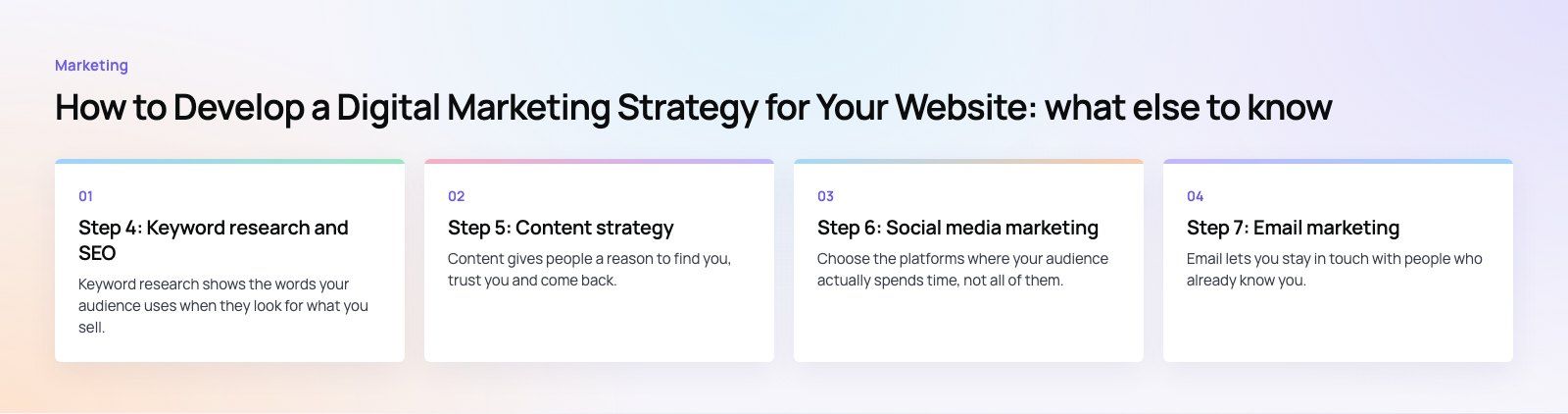
Keyword research shows the words your audience uses when they look for what you sell. Group keywords by intent: people researching a problem, people comparing options and people ready to buy. Map each group to a page on your site, and create pages where gaps exist.
SEO then has three parts:
- On page: clear titles, meta descriptions, headings and content that fully answer the search.
- Technical: speed, mobile usability, crawlability, structured data and clean internal links.
- Off page: earning links and mentions from relevant, trustworthy sites.
Google's own SEO starter guide is a reliable reference for the basics. If you serve customers in one city or region, local SEO should be part of this step from the start.
Step 5: Content strategy
Content gives people a reason to find you, trust you and come back. Plan it around your audience's questions and your keyword map rather than around what is easy to write. Useful formats include:
- Service and product pages that answer buying questions in detail.
- Guides and articles for people earlier in their research.
- Case studies that show how you solved a real problem.
- Comparison pages and FAQs that handle common objections.
- Short videos and visuals that can be reused on social channels.
Publish on a steady schedule you can actually keep, and update your best pages regularly instead of only adding new ones.
Step 6: Social media marketing
Choose the platforms where your audience actually spends time, not all of them. LinkedIn tends to suit B2B services, while Instagram and TikTok suit visual consumer products. Use social media to share content, show the people and work behind the business, and answer questions quickly. Every profile should link back to the most relevant page on your website.
Step 7: Email marketing
Email lets you stay in touch with people who already know you. Build a list through useful offers on your website, such as a guide, a checklist or updates, and always with clear consent. Then send:
- A short welcome sequence for new subscribers.
- Regular updates with genuinely useful content.
- Follow ups for people who enquired but did not buy.
- Offers and news for existing customers.
Automating these steps with a CRM, through sales automation, means no lead is forgotten.
Step 8: Paid advertising
Paid ads bring traffic quickly and let you test messages before investing in long term content. The main options are:
- Search ads on Google and Bing for people actively looking for your service.
- Social ads on Meta, LinkedIn and TikTok for targeting by interest, role or behavior.
- Display and video ads for awareness and retargeting past visitors.
Send each ad to a landing page that matches its message, set a budget you can sustain, and track cost per lead and cost per sale rather than clicks.
Strategy components at a glance
| Component | Purpose | Key measure |
|---|---|---|
| Target audience | Know who you are speaking to and what they need | Clear audience profiles |
| Goals | Give every activity a measurable target | Leads, sales or bookings |
| Website readiness | Turn visits into conversions | Conversion rate, page speed |
| Keyword research and SEO | Earn traffic from search over time | Organic visits to key pages |
| Content | Answer questions and build trust | Engagement, assisted conversions |
| Social media | Reach and engage your audience | Referral traffic, enquiries |
| Nurture leads and keep customers | Click and reply rates | |
| Paid advertising | Fast, targeted traffic | Cost per lead and per sale |
| Analytics | Measure and improve everything | Results by channel |
Step 9: Measure, report and adjust
Set up a simple monthly report that shows, for each channel, the traffic it sent, the conversions it produced and the cost of each. Look for patterns: which pages convert best, which keywords bring enquiries, which campaigns waste money. Then move effort and budget towards what works.
Tracking is what makes this possible. In our Diyafah case study, a bilingual school website on Strapi, 399+ conversions have been recorded since launch, which is only visible because measurement was built in from the start.
Common strategy mistakes
- Choosing channels before understanding the audience.
- Sending paid traffic to the home page instead of a matching landing page.
- Launching campaigns without conversion tracking.
- Expecting SEO to produce results in a few weeks.
- Writing a strategy once and never revisiting it.
Next steps
A good strategy does not need to be long. One or two pages covering audience, goals, channels, content and measurement is enough to start. If you would like help turning that into results, Codeeo's digital marketing team plans and runs SEO, content, social and paid campaigns, and because we also build websites we can fix the site side when it holds marketing back. Get in touch to talk about your goals.
Frequently asked questions
Design and development decide whether visitors from your marketing actually convert.
A fast, clear site with obvious next steps turns more visits into enquiries and sales, which lowers the cost of every channel. A slow or confusing site wastes the traffic you paid for or worked to earn. Good structure and technical quality also help search engines crawl and rank your pages.
MarketingShopify Email vs Mailchimp: Which Is Better for Your Store?Shopify Email, now Shopify Messaging, against Mailchimp: ease of use, Shopify data, automation, segmentation, design and how pricing scales, with a clear way to choose. MarketingHow Much Should You Spend on Digital Marketing Services?How to set a digital marketing budget from your own numbers: what you pay for, what drives cost, how to split channels and when to spend more.
 MarketingHow to Use Social Media to Drive Traffic to Your WebsiteHow to turn social media followers into website visitors: choosing platforms, content that earns clicks, landing pages, paid social and UTM tracking.
Tell us what the business needs. We will tell you what to build first.
Schedule a free consultation and get a written recommendation, with costs, before you commit to anything.
Get in touchPROVEN RESULTS
4.7 / 5verified reviews on Google