 E-Commerce10 Features of a High-Converting Ecommerce WebsiteThe ten features that turn store visitors into buyers, from product pages and checkout to speed, mobile design, social proof and ongoing testing.
How to Start a Home and Kitchen Store on Shopify
Step by step: choose a niche, source products, set up Shopify, connect payments, ship fragile items safely and market a home and kitchen store.
To start a home and kitchen store on Shopify, pick a specific audience and product niche, set up your business and suppliers, choose a Shopify theme that shows products clearly, add strong photography and detailed descriptions, connect payments and shipping that suit fragile and bulky items, then test everything before launch. After launch, steady marketing, good service and regular analysis decide whether the store grows.
Home and kitchen is a crowded category, so the stores that do well are focused and trustworthy. This guide walks through each step and the tips that matter most for this kind of product.
Step 1: Choose your audience and niche
"Home and kitchen" is too broad to win in. Narrow it to a customer and a problem you understand. Examples of focused angles include:
- Professional-grade cookware for serious home cooks.
- Sustainable kitchen essentials for eco-conscious households.
- Compact storage and gadgets for small apartments.
- Handmade tableware and decor for design-led buyers.
- Specialty tools for a cuisine, such as baking, coffee or tea.
Describe your ideal customer: their budget, lifestyle, where they shop now and what frustrates them. That profile guides your product range, pricing position, branding and marketing.
Step 2: Choose products and suppliers
Research demand before you commit stock. Look at search trends, marketplace bestsellers, social media content in your niche and gaps in what competitors offer. Then decide how you will source products.
| Sourcing model | Strengths | Trade-offs |
|---|---|---|
| Holding your own stock | Control over quality, packaging and delivery speed | Upfront investment and storage space |
| Dropshipping | Low upfront cost, wide range quickly | Less control over quality and shipping; thinner margins |
| Print on demand or made to order | Unique designs with no stock risk | Longer lead times and limited product types |
| Own brand or private label | Distinctive products and stronger margins | Minimum orders, product development and compliance work |
For kitchen products, check materials and safety. Items that touch food may need to meet food contact rules in the markets you sell to, and electrical appliances usually need certification. Ask suppliers for documentation before you list anything.
Step 3: Set up the business
Decide on a business structure that fits your goals and liability needs, register it with the right authorities in your country, and get any licenses or permits required to sell online. Rules differ widely between countries and regions, so speak to a local accountant or legal advisor. Open a separate business bank account and set up simple bookkeeping from day one.
Step 4: Build your brand
Your brand should signal quality and suit your audience. That means a clear name, a simple logo, a consistent color palette and typography, and a tone of voice you use everywhere, from product pages to packaging inserts. A short brand story that explains why you chose these products helps buyers trust a new store. If you need help, our design team works on brand and store design together.
Step 5: Set up your Shopify store
Choose a theme
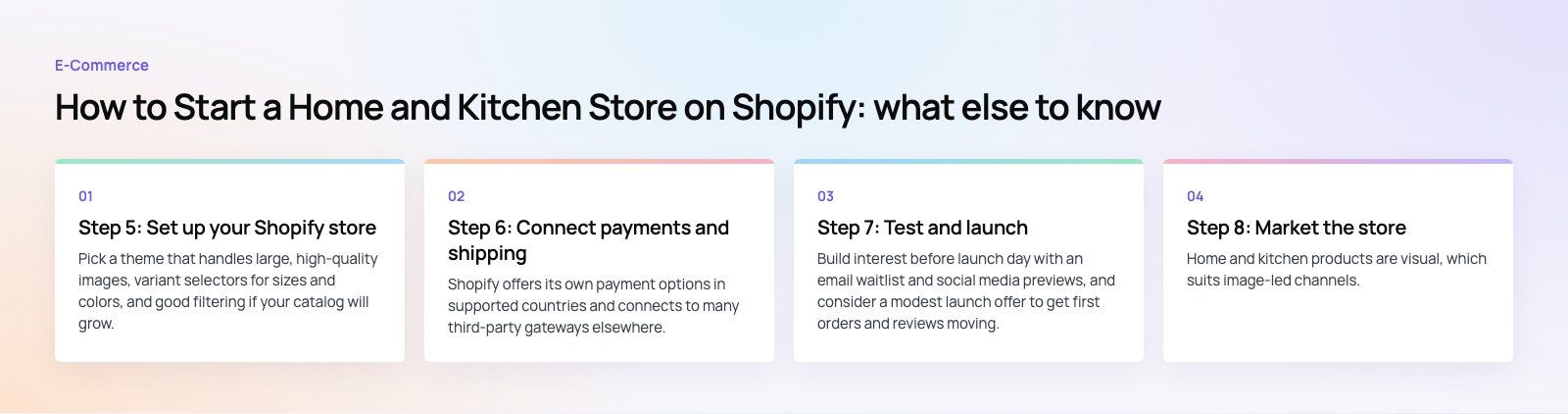
Pick a theme that handles large, high-quality images, variant selectors for sizes and colors, and good filtering if your catalog will grow. Check the product page, cart and checkout on mobile before deciding, because many shoppers browse on their phones.
Create product pages that sell
- Several photos per product, including close-ups, scale shots and the item in use.
- Dimensions, capacity, materials, care instructions and compatibility, such as induction or dishwasher safe.
- Clear variant options and stock status.
- Delivery times and return terms close to the add to cart button.
Add the trust pages
Publish About, Contact, Shipping, Returns and Privacy pages before launch. Shoppers look for these when buying from a store they do not know.
Set up inventory
Shopify's built-in inventory tools track stock levels by variant and location. Set low stock alerts so popular items do not sell out unnoticed.

Step 6: Connect payments and shipping
Payments
Shopify offers its own payment options in supported countries and connects to many third-party gateways elsewhere. Offer the methods your customers expect: cards, digital wallets such as Apple Pay and Google Pay, and buy now pay later where it is popular. Compare transaction fees and payout schedules before choosing. Our EGO Sustainable case study is a bilingual Shopify store that offers Tabby and Tamara across five markets, a good example of matching payments to the region. For gateway setup, see our payment integration service.
Shipping fragile and bulky items
- Use sturdy boxes, inner padding and dividers for glass and ceramics.
- Test your packaging by sending a few orders to yourself or friends.
- Choose carriers with good handling records and offer shipping insurance on high-value items.
- Price shipping correctly for heavy or oversized products, or build it into product prices.
- Write a clear damaged-item policy so customers know what happens if something breaks.
Step 7: Test and launch
- Place test orders with every payment method.
- Check all links, product details, variants and images.
- Test the store on several phones and browsers.
- Confirm order notification emails look right and carry your branding.
- Set up analytics and conversion tracking.
- Prepare stock, packaging and fulfillment for the first orders.
Build interest before launch day with an email waitlist and social media previews, and consider a modest launch offer to get first orders and reviews moving. Watch the first days closely and fix friction fast.
Step 8: Market the store
Home and kitchen products are visual, which suits image-led channels.
- Search: optimize product titles, descriptions and collection pages for the terms buyers use, and publish helpful content such as care guides and recipes.
- Social: Instagram, Pinterest and TikTok work well for styled product photos, short videos and before-and-after kitchen setups.
- Email: welcome series, abandoned cart reminders and new arrival announcements drive repeat sales.
- Creators: partnerships with home cooks and interior creators put products in real kitchens.
- Paid ads: shopping and social ads scale what already works organically.
Our digital marketing team runs search, social and paid campaigns for online stores.
Tips that make a home and kitchen store succeed
Invest in photography
Photos sell kitchenware. Combine clean white-background shots with lifestyle images in real kitchens so buyers can picture the product at home.
Offer helpful service
Answer questions quickly, make returns straightforward and consider live chat. Good service turns first orders into repeat customers.
Use apps carefully
Shopify apps add reviews, product recommendations, loyalty programs and bundles. Add only what you need, because every app can slow the store.
Collect reviews
Ask customers for a review after delivery and show reviews on product pages. They reassure buyers who are unfamiliar with your brand.
Review performance monthly
Track traffic sources, conversion rate, average order value and repeat purchase rate. A checkout teardown can show where shoppers drop out.
A focused niche, honest product information and careful delivery are what make a home and kitchen store stand out on Shopify. If you want help with the build, Codeeo's Shopify developers design and develop stores, integrations and custom features.
Frequently asked questions
Shopify does not require a business license to open a store, but your local laws may.
Requirements depend on your country, region and the products you sell, and some items such as food contact goods or electrical appliances carry extra rules. Check with your local authority or an accountant before launch so you trade legally from the start.
E-Commerce10 Features of a High-Converting Ecommerce WebsiteThe ten features that turn store visitors into buyers, from product pages and checkout to speed, mobile design, social proof and ongoing testing. E-CommerceBenefits of Using a CMS for Ecommerce WebsitesHow a CMS helps online stores manage products, SEO, growth and security, how it compares with a custom build, and how to choose between WooCommerce, Shopify and headless.
 E-CommerceEcommerce Website Development: 9 Elements Every Store NeedsThe nine parts every online store needs, from catalog data and search to checkout, security, operations and analytics, with what to decide before you build.
Tell us what the business needs. We will tell you what to build first.
Schedule a free consultation and get a written recommendation, with costs, before you commit to anything.
Get in touchPROVEN RESULTS
4.7 / 5verified reviews on Google