 E-Commerce10 Features of a High-Converting Ecommerce WebsiteThe ten features that turn store visitors into buyers, from product pages and checkout to speed, mobile design, social proof and ongoing testing.
How to Sell on Shopify Without Inventory
Six ways to sell on Shopify without holding inventory, from print on demand and dropshipping to services and marketplaces, with the trade offs of each.
You can sell on Shopify without holding inventory by letting someone else stock and ship the products: a print on demand partner, a dropshipping supplier, an affiliate program, other sellers on a marketplace you run, or a third party fulfillment center. You can also sell services or digital products, which need no stock at all. Each model trades lower upfront risk for less control over margins, quality or delivery, so the right choice depends on what you sell and how much of the customer experience you want to own.
This guide compares the main models, explains how each works on Shopify, and covers the setup steps and mistakes that decide whether an inventory free store succeeds.
Why sell without inventory
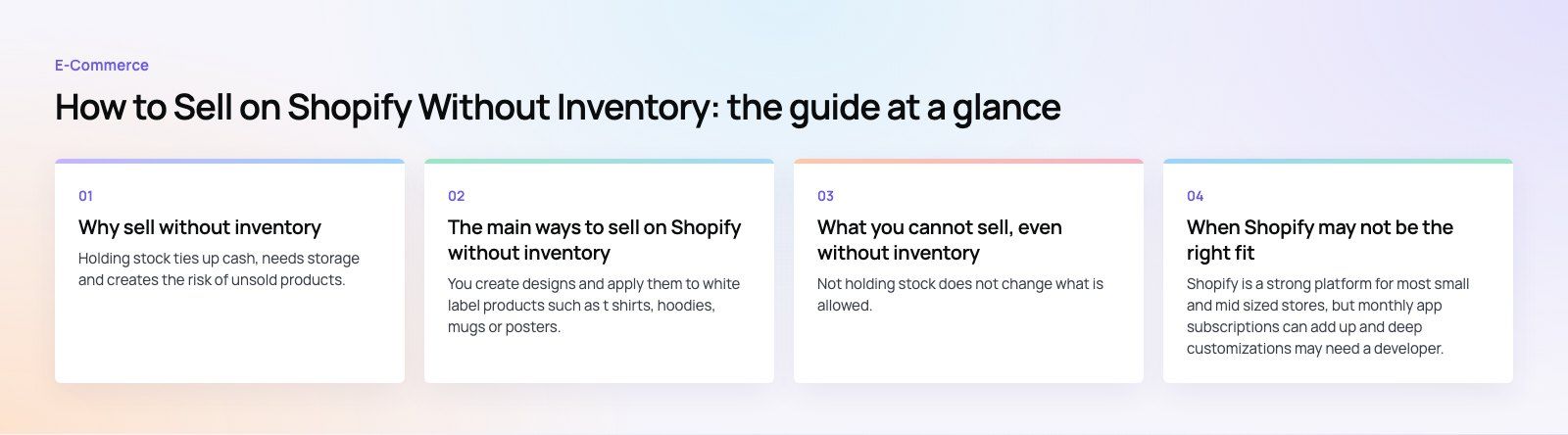
Holding stock ties up cash, needs storage and creates the risk of unsold products. Inventory free models remove most of that. The common benefits are:
- Lower startup cost, because you do not buy stock in advance.
- More time for marketing and customer service, since someone else handles picking, packing and shipping.
- Easier testing of new niches and products without being stuck with unsold units.
- A wider catalog, as you can list products from several suppliers.
- Room to scale without building a warehouse operation.
The trade off is control. Margins are usually thinner, delivery times depend on partners and product quality is only as good as your supplier.
The main ways to sell on Shopify without inventory
| Model | How it works | Main advantage | Main drawback |
|---|---|---|---|
| Print on demand | A partner prints your designs on blank products after each order and ships them | Unique products with no stock | Slower delivery, limited quality control |
| Dropshipping | A supplier ships finished products directly to your customer | Wide product range from day one | Thin margins, supplier dependence |
| Affiliate products | You send customers to another seller and earn a commission | No fulfillment or customer service burden | No control over price or checkout |
| Services and digital products | You sell bookings, consultations, courses or downloads | No physical goods at all | Revenue tied to your time or content |
| Marketplace | Other vendors list and fulfill products through your store | Catalog grows without your stock | Revenue shared, support is more complex |
| Third party fulfillment | A 3PL holds your stock and ships orders | You own the product without a warehouse | You still buy inventory upfront |
Print on demand
You create designs and apply them to white label products such as t shirts, hoodies, mugs or posters. When a customer orders, a print on demand partner connected to your Shopify store prints the item and ships it. Shopify's own guide to print on demand lists partner apps that connect to the store.
The model suits creators and brands with a clear design identity. Order samples before you list anything, because print quality and garment fit vary between partners. If you use licensed artwork or characters, make sure you hold the rights.
Dropshipping
You list products from one or more suppliers. When an order arrives, it is passed to the supplier, who ships directly to the customer. You never handle the goods. Shopify explains the basics in its guide to what dropshipping is.
The biggest risks are long or unpredictable delivery times, inconsistent quality and competing with many stores selling the same items. Choose suppliers with reliable stock data and shipping times, test orders yourself and build a brand and content that give customers a reason to buy from you rather than the next store.
Affiliate products
Your store features products sold by others and links to them through an affiliate program, such as Amazon Associates. You earn a commission on qualifying sales. There is no fulfillment and no customer service for the order, but you do not set the price, you do not own the checkout and income depends on the program's rules. This model works best as part of a content led site with reviews and buying guides.
Services and digital products
Shopify can sell consultations, classes, bookings, courses and downloadable files. You can set up a digital or service product and add apps for appointments and file delivery. Coaches, designers, trainers and consultants can take payment online without any stock. The limit is that revenue scales with your time or your content library.
Running a marketplace
Shopify does not turn a store into a multi vendor marketplace on its own. Marketplace apps add vendor accounts, product syncing, commission rules and payouts, so other sellers list and fulfill products through your store. In some markets, Shopify Collective also lets merchants sell products from other Shopify brands; check its availability where you operate. A marketplace grows your catalog quickly, but you share revenue and take on vendor quality control and more complex customer support.
Third party fulfillment
Strictly speaking, a 3PL is not inventory free, because you still buy stock. The difference is that a fulfillment partner stores it, packs orders and ships them, and Shopify supports fulfillment apps that pass orders to them automatically. It suits brands that have outgrown dropshipping and want better margins and faster delivery without running a warehouse. Packaging customization and direct control of shipping are usually limited.
Setting up an inventory free Shopify store
- Research the niche. Look for products with clear demand, room for a brand and margins that survive advertising costs.
- Study competitors. Note their pricing, shipping promises, reviews and content.
- Choose and test suppliers. Order samples, check delivery times to your target markets and confirm how returns work.
- Connect the apps. Install the print on demand, dropshipping, marketplace or fulfillment app and check that stock and order status sync correctly.
- Build trust into the store. Clear shipping times, a return policy, real product photos and accurate descriptions reduce refunds and complaints.
- Price for the full cost. Include product cost, shipping, payment fees, app subscriptions, returns and marketing.
- Market consistently. Content, email, social and search bring customers who are not just chasing the lowest price.
What you cannot sell, even without inventory
Not holding stock does not change what is allowed. Shopify's Acceptable Use Policy restricts certain products, and payment providers and local laws add more rules. Your supplier's products are your responsibility once you list them, so check that they are genuine, safe, correctly labeled and legal in every market you ship to. Avoid suppliers who might sell directly to your customers using your listings.
When Shopify may not be the right fit
Shopify is a strong platform for most small and mid sized stores, but monthly app subscriptions can add up and deep customizations may need a developer. If you need unusual checkout logic, complex B2B pricing or full control of the codebase, compare it with options such as WooCommerce or a headless build before committing.
Getting help with your Shopify store
Codeeo has delivered more than 200 projects across the UAE and the US with a team of 80+ across Dubai, Riyadh and Karachi, including the EGO Sustainable bilingual Shopify store for a GCC athleisure label. Our Shopify developers can set up apps and integrations for your model, and a checkout teardown can show where an existing store loses buyers. If you are still choosing a platform, see our WooCommerce development service as well.
Frequently asked questions
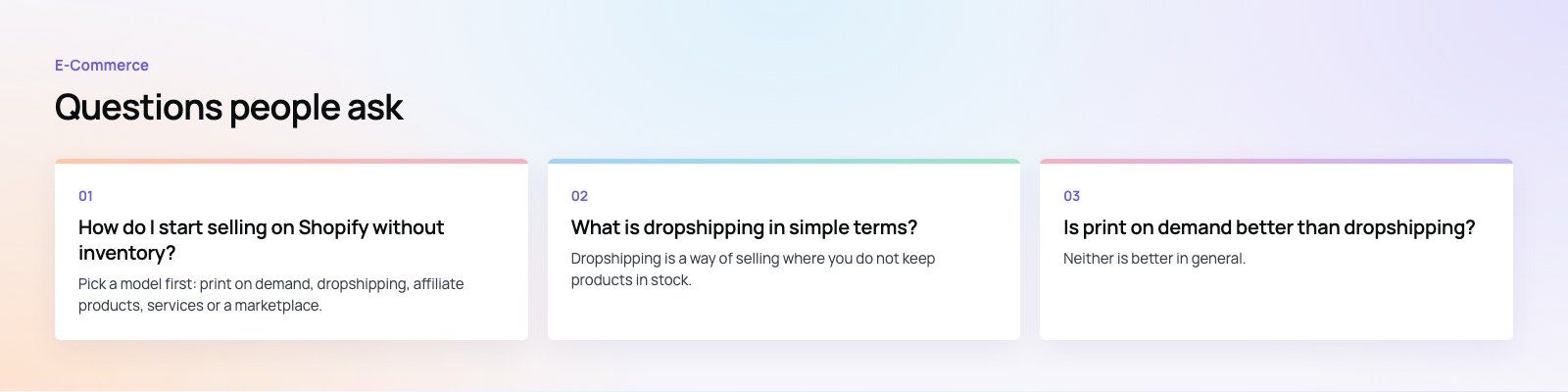
Pick a model first: print on demand, dropshipping, affiliate products, services or a marketplace.
Then research your niche, choose suppliers or partners, order samples and connect their app to your Shopify store. Set clear shipping times and a return policy, price products to cover every cost including marketing, and test a few orders yourself before you start advertising.
E-Commerce10 Features of a High-Converting Ecommerce WebsiteThe ten features that turn store visitors into buyers, from product pages and checkout to speed, mobile design, social proof and ongoing testing. E-CommerceBenefits of Using a CMS for Ecommerce WebsitesHow a CMS helps online stores manage products, SEO, growth and security, how it compares with a custom build, and how to choose between WooCommerce, Shopify and headless.
 E-CommerceEcommerce Website Development: 9 Elements Every Store NeedsThe nine parts every online store needs, from catalog data and search to checkout, security, operations and analytics, with what to decide before you build.
Tell us what the business needs. We will tell you what to build first.
Schedule a free consultation and get a written recommendation, with costs, before you commit to anything.
Get in touchPROVEN RESULTS
4.7 / 5verified reviews on Google