 E-Commerce10 Features of a High-Converting Ecommerce WebsiteThe ten features that turn store visitors into buyers, from product pages and checkout to speed, mobile design, social proof and ongoing testing.
Shopify vs Amazon: Where Should You Sell Online?
Shopify vs Amazon compared on audience, fees, branding, customer data, fulfillment and risk, with a clear guide to choosing one channel or both.
Sell on Amazon if you want instant access to shoppers who are already searching and you can compete on price and reviews. Sell on Shopify if you want to own your brand, your customer data and your margins, and you are ready to bring your own traffic. Many growing brands end up doing both: a Shopify store as the home of the brand and Amazon as an extra sales channel.
The right answer depends on your product, your margins and how much marketing you can do. This comparison walks through each factor so you can decide where to start.
The basic difference
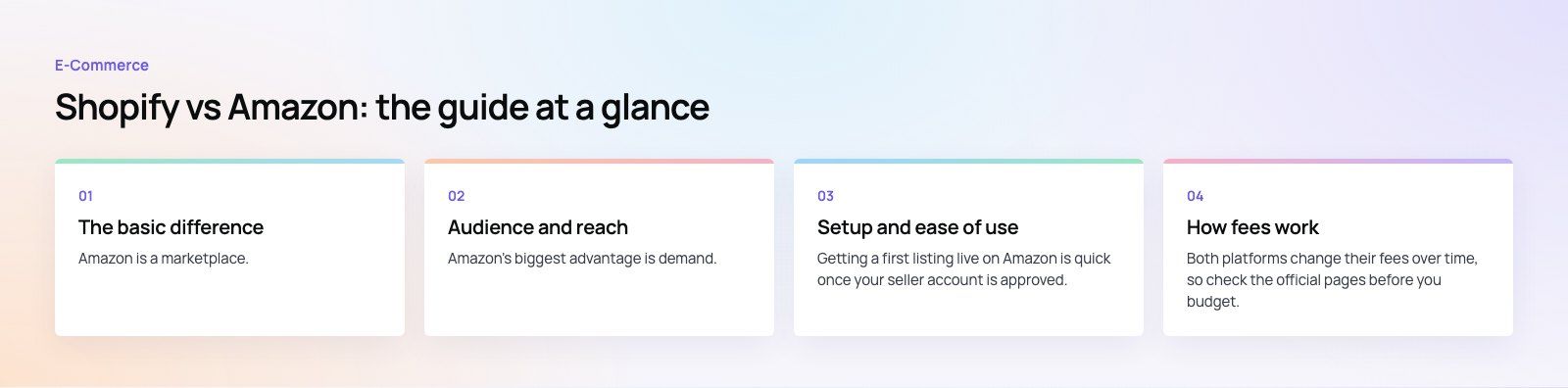
Amazon is a marketplace. You list products in a catalog that Amazon owns, next to other sellers, and Amazon controls the page layout, the checkout and the customer relationship. You pay for access to its audience through selling fees.
Shopify is a platform for building your own online store. You choose the design, run the checkout under your brand, keep the customer list and decide how to market. You pay a subscription and payment processing, but no one brings shoppers to you by default.
That single difference, renting space in a busy mall versus opening your own shop, explains most of the trade offs below.
Shopify vs Amazon at a glance
| Factor | Shopify | Amazon |
|---|---|---|
| Audience | You bring your own traffic | Large built in base of active shoppers |
| Branding | Full control of design and messaging | Standard listing format, limited brand space |
| Customer data | You own emails and order history | Amazon owns the customer relationship |
| Fee model | Monthly plan plus payment processing | Selling plan plus referral and fulfillment fees |
| Fulfillment | Your own or a third party logistics partner | Your own or Fulfillment by Amazon |
| Competition on the page | None on your own store | Rival listings beside yours |
| Rules and policy risk | Shopify terms only | Strict marketplace policies and account health |
Audience and reach
Amazon's biggest advantage is demand. Shoppers go there with an intent to buy, and a well optimized listing can start selling without any outside marketing. For commodity products that people search for by name, that is hard to beat.
The downside is that every shopper also sees competing products, sponsored listings and sometimes Amazon's own private label goods on the same page. You are competing on price, reviews and delivery speed in a space you do not control.
A Shopify store starts with zero visitors. Traffic comes from search engines, social media, paid ads, email and word of mouth. That takes effort and budget, but every visitor sees only your products, and you can retarget and email them later.
Setup and ease of use
Getting a first listing live on Amazon is quick once your seller account is approved. You fill in product details in Seller Central and Amazon handles the storefront. The trade off is that everything must follow Amazon's templates and category rules, and some categories need approval before you can sell in them.
Shopify has a short learning curve for basic stores. You choose a theme, add products, connect payments and shipping, and publish. Getting a store that looks distinctive, loads quickly and converts well usually takes more work: theme customization, apps chosen with care and good product photography. That is the point where many merchants bring in Shopify developers.
How fees work
Both platforms change their fees over time, so check the official pages before you budget. What matters for the decision is the structure.
Amazon
According to Amazon's seller pricing page (checked in 2026), there are two selling plans. The Individual plan charges a fee per item sold and suits sellers with a handful of products. The Professional plan charges a monthly subscription and adds bulk tools and advertising. On top of the plan, you pay a referral fee on each sale, which is a percentage of the price that varies by category, plus fulfillment and storage fees if you use Fulfillment by Amazon. Advertising is extra.
Shopify
Shopify charges a monthly subscription that rises with the plan, plus card processing on each order. Shopify's pricing page (checked in 2026) also shows an extra transaction fee when you use a payment provider other than Shopify Payments, which is lower on higher plans. Paid apps and premium themes add to the monthly bill.
In practice, Amazon's costs scale with every sale, while Shopify's are more fixed but come with marketing costs to attract visitors. Work out your margin per order on both models before you commit.
Branding and customization
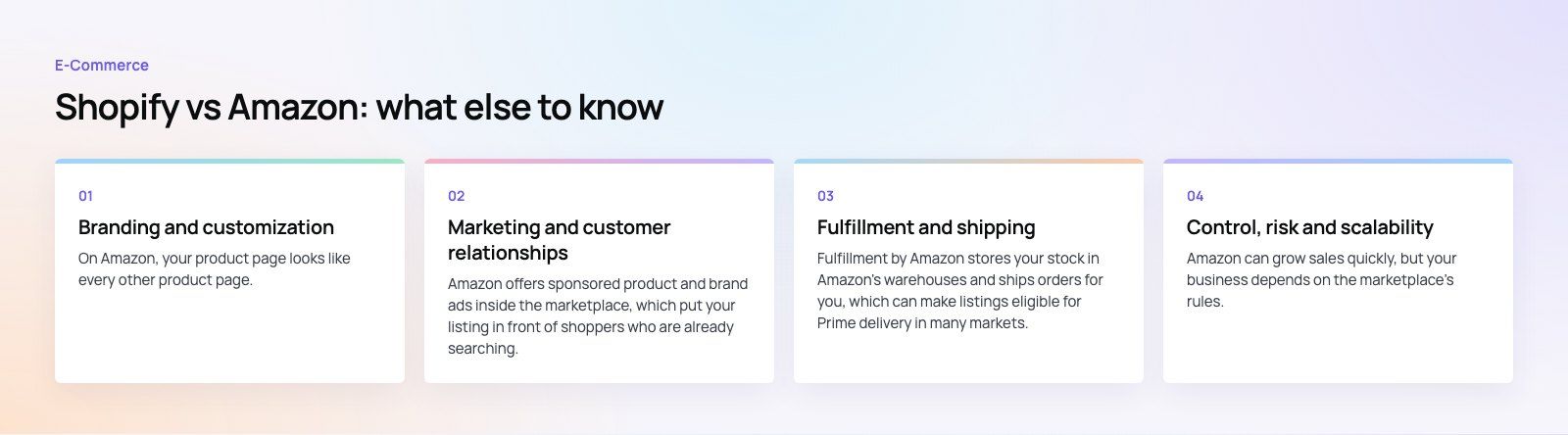
On Amazon, your product page looks like every other product page. Registered brands get some extra space through Amazon's brand tools, such as richer product content and a brand store, but the layout and checkout remain Amazon's.
Shopify gives you full control: layout, copy, product page structure, bundles, subscriptions and loyalty programs. That freedom is what lets a brand stand out and charge a premium. It also means design and development work if you want something better than a lightly edited theme.
Marketing and customer relationships
Amazon offers sponsored product and brand ads inside the marketplace, which put your listing in front of shoppers who are already searching. You do not get the customer's email, and you cannot market to them freely after the sale.
With Shopify you own the customer list. You can run email and SMS campaigns, build loyalty programs, retarget visitors and measure every channel in your own analytics. Over time, repeat customers who come straight to your store are usually the most profitable ones you have. Getting there needs steady work on search, social and paid channels, which is where a digital marketing plan comes in.
Fulfillment and shipping
Fulfillment by Amazon stores your stock in Amazon's warehouses and ships orders for you, which can make listings eligible for Prime delivery in many markets. You pay for storage and handling, and you must follow Amazon's packaging and inventory rules.
Shopify leaves fulfillment to you. You can ship yourself, use a third party logistics provider or connect a fulfillment app. You choose the carriers and packaging, which is good for brand experience but means more to manage.
Control, risk and scalability
Amazon can grow sales quickly, but your business depends on the marketplace's rules. Listing suppressions, account health warnings and policy changes can stop sales overnight. Competitors can also undercut you on your own listing if they sell the same product.
Shopify scales from small stores to large brands, and you control your growth path: new markets, new channels, wholesale, headless storefronts. The risk is different. Growth depends entirely on your own marketing and operations.
Which should you choose?
Start with Amazon if
- You sell products people already search for by name or type
- You have little budget for marketing and need sales quickly
- You want fulfillment handled for you
- Your margins can absorb referral and fulfillment fees
Start with Shopify if
- Your brand, story or design is the reason people buy
- You want to own customer data and build repeat purchases
- You sell custom, bundled or subscription products
- You are ready to invest in marketing to bring traffic
Use both if
You have a recognizable brand and enough stock and operations to manage two channels. Your Shopify store holds the full brand experience and your best customers, while Amazon captures shoppers who prefer to buy there. Apps in the Shopify App Store can sync products, stock and orders between the two so you are not updating everything twice.
If you choose Shopify, Codeeo builds and improves stores like EGO Sustainable, a bilingual Shopify store for a GCC athleisure label selling across five markets. Our retail and ecommerce team can help you plan the store, the integrations and the marketing, and a platform fit review is a quick way to test whether Shopify suits your model.
Frequently asked questions
It depends on your volume and margins.
Amazon charges per sale through referral fees, plus fulfillment fees if you use its warehouses, so costs grow with every order. Shopify charges a monthly plan and payment processing, which are more fixed, but you must pay to attract visitors. Compare your profit per order on both models, including marketing, before deciding.
E-Commerce10 Features of a High-Converting Ecommerce WebsiteThe ten features that turn store visitors into buyers, from product pages and checkout to speed, mobile design, social proof and ongoing testing. E-CommerceBenefits of Using a CMS for Ecommerce WebsitesHow a CMS helps online stores manage products, SEO, growth and security, how it compares with a custom build, and how to choose between WooCommerce, Shopify and headless.
 E-CommerceEcommerce Website Development: 9 Elements Every Store NeedsThe nine parts every online store needs, from catalog data and search to checkout, security, operations and analytics, with what to decide before you build.
Tell us what the business needs. We will tell you what to build first.
Schedule a free consultation and get a written recommendation, with costs, before you commit to anything.
Get in touchPROVEN RESULTS
4.7 / 5verified reviews on Google