 Web DevelopmentWordPress Website Cost in Saudi Arabia: What Shapes Design, Development and Maintenance CostsWhat shapes the cost of a WordPress website in Saudi Arabia: design, plugins, Arabic and RTL, WooCommerce, hosting, security and maintenance.
Healthcare Website Design in Riyadh: Features and Best Practices
What clinics and hospitals in Riyadh need from a website: doctor profiles, booking, insurance details, Arabic first design, privacy and SEO.
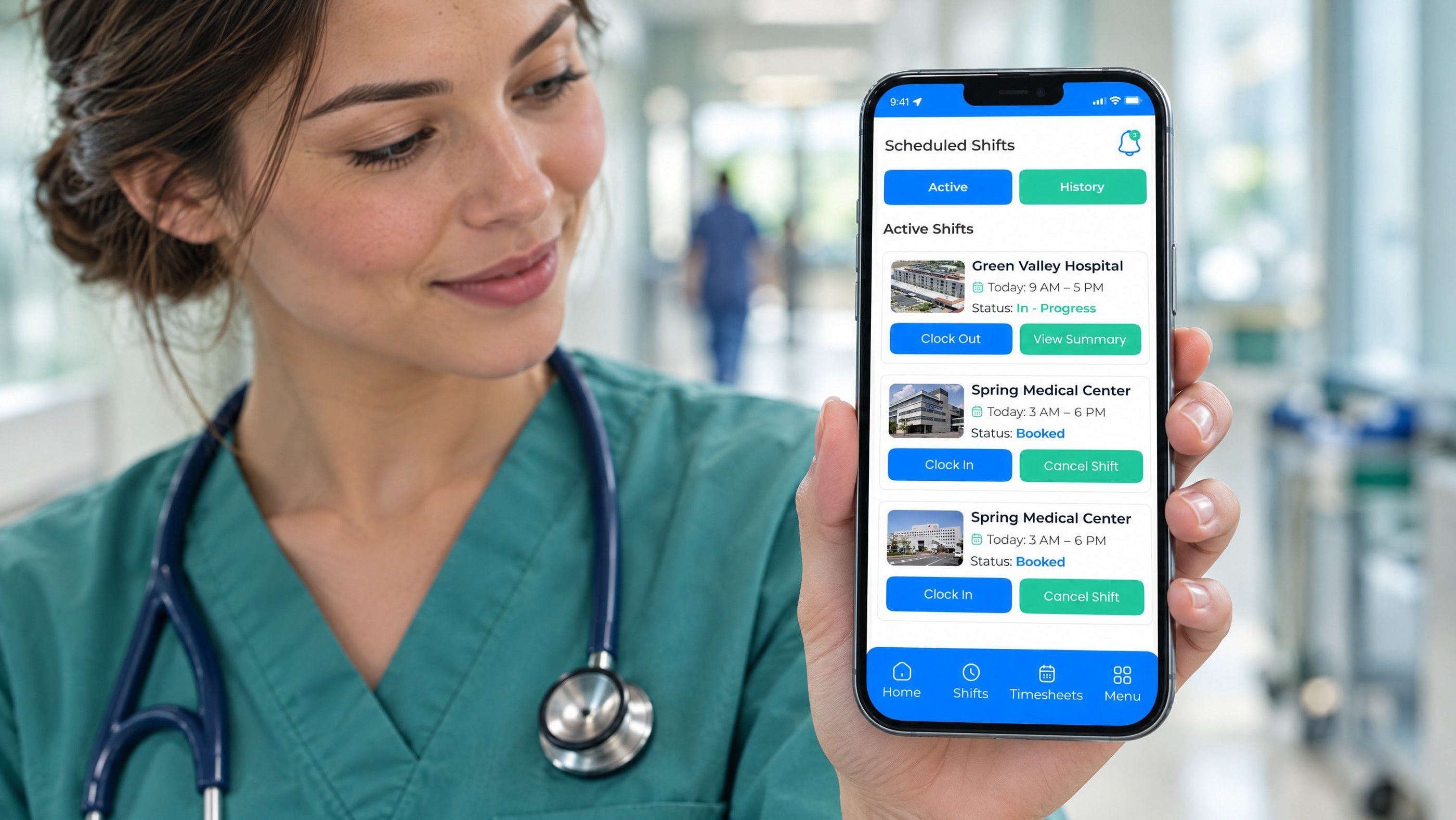
Good healthcare website design in Riyadh puts three things first: helping patients find the right doctor, letting them book quickly, and giving them enough confidence to trust the clinic with their health. That means an Arabic first site with clear doctor profiles, simple online booking, honest insurance information, visible licensing details and careful handling of patient data, all loading fast on a phone.
This guide covers the features clinics and hospitals in Riyadh need, the practices that build patient trust, the privacy and regulatory points to plan for, and how to make sure patients can find you in local search.
What patients in Riyadh expect from a healthcare website
Patients rarely arrive at a clinic website to browse. They come with a task: find a dermatologist who speaks their language, check whether their insurance is accepted, book a slot after work, or get directions to the right branch. A medical website design that makes those tasks quick wins the appointment; one that hides them behind slideshows and long welcome messages loses it to the next result.
The most common patient tasks
- Find a doctor by specialty, gender, language or branch.
- Check whether a specific insurance provider and plan are accepted.
- Book, reschedule or cancel an appointment.
- Find opening hours, location, parking and contact numbers.
- Understand a treatment or procedure before committing.
- Reach the clinic quickly on WhatsApp or by phone.
Design the homepage and navigation around these tasks. Everything else, from the clinic's history to awards and news, is secondary.
Essential features for healthcare website design in Riyadh
Whether you run a single specialty clinic or a multi branch hospital, the core features of healthcare website design in Riyadh are broadly the same. Their depth scales with the size of the organisation.
| Feature | Clinic website | Hospital website |
|---|---|---|
| Doctor profiles | Every doctor with photo, specialty, qualifications and languages | Searchable directory with filters by department, branch and language |
| Booking | Online booking or a structured request form plus WhatsApp | Integrated booking with the hospital information system and patient accounts |
| Services | One page per main treatment | Department hubs with condition and procedure pages |
| Insurance | List of accepted insurers and how to check coverage | Searchable insurer and plan list, approvals guidance |
| Locations | Map, hours, parking and directions | Branch pages with departments, hours and contacts per site |
| Patient information | Preparation and aftercare guides | Patient and visitor guides, admission information, results access |
Doctor profiles that build confidence
Doctor profiles are often the most visited pages on a clinic website, and they deserve care. A good profile includes a professional photo, the doctor's full name in Arabic and English, specialty and subspecialties, qualifications and where they trained, languages spoken, the branches and days they work, and a direct booking button. A short personal statement in plain language helps patients feel they know who they will meet. Keep all claims factual and avoid promising outcomes.
Online booking that actually gets used
The best booking flows ask for as little as possible. Let patients pick a specialty or doctor, see available slots, and confirm with a name and mobile number. Send a confirmation and a reminder by SMS or WhatsApp. If full integration with your clinic management system is not possible yet, a well designed request form that reaches reception instantly is far better than a generic contact form. Over time, connecting booking to your scheduling system removes double handling and reduces no shows.
Insurance information patients can understand
Insurance is one of the first questions Saudi patients ask. List accepted insurers clearly, explain how to confirm whether a specific plan covers a service, and say what patients should bring. Keep this page current, because an outdated insurer list creates frustration at reception. Where coverage depends on approvals, say so plainly rather than implying every visit is covered.
Arabic first design and accessibility
For most patients in Riyadh, Arabic should be the default language, with English for expatriate residents and international patients. Arabic should not be a translated afterthought: the layout, navigation, forms and typography must all work properly in right to left.
Bilingual design essentials
- A clear language switch that keeps the patient on the equivalent page.
- Medical terms written in Arabic that patients actually use, with the English term alongside where helpful.
- Arabic fonts chosen for readability at small sizes on phones.
- Forms that accept Arabic names, Saudi mobile numbers and national ID or Iqama numbers where needed.
- Mirrored icons and layouts that read naturally in RTL.
Accessibility for every patient
Healthcare websites serve older patients, people with visual impairments and people who are unwell or anxious. Use generous text sizes, strong colour contrast, clear focus states and buttons large enough to tap easily. Make sure the site works with screen readers in both languages, and avoid relying on colour alone to show information. Following WCAG guidance is a sound baseline.
Building patient trust online
Trust decides whether a patient books. A clean, calm design helps, but trust is built mostly by honest, specific information.
Trust signals that matter
- Licensing details. Clinics and practitioners in Saudi Arabia are licensed by the health authorities, with the Ministry of Health (MOH) the main regulator for many private facilities. Showing the facility's licence information on the site, typically in the footer or on the about page, reassures patients. Confirm with the MOH or your compliance adviser exactly what should be displayed and how.
- Real photography. Photos of your actual facility and team, not stock images of strangers in white coats.
- Clear qualifications. Doctors' credentials stated accurately, without inflated titles.
- Transparent policies. Cancellation, privacy and complaint procedures that are easy to find.
- Reviews handled responsibly. If you display patient feedback, make sure you have consent and that it meets any applicable rules on healthcare advertising.
Content that informs without overpromising
Treatment pages should explain what a procedure involves, who it may suit, how to prepare, what recovery looks like and when to seek help. Avoid guarantees, before and after claims you cannot support, and language that pressures patients. Healthcare advertising in the Kingdom is regulated, so review marketing claims with your compliance team before publishing.
Privacy, security and patient data
Healthcare websites collect some of the most sensitive data there is. Even a simple booking form may capture a patient's name, mobile number and the reason for their visit, which together can reveal health information.
Privacy and security practices
- Collect only what you need for each task. A booking request rarely needs a detailed medical history.
- Use HTTPS everywhere and keep forms off third party tools that store data where you cannot control it.
- Publish a clear Arabic and English privacy notice explaining what you collect and why.
- Restrict access to submissions to the staff who need them and log that access.
- Keep the CMS, plugins and servers patched, and back up regularly with tested restores.
- Be careful with analytics and advertising pixels on pages that reveal health conditions.
The Personal Data Protection Law, overseen by SDAIA, treats health data as sensitive, and healthcare providers may also be subject to sector specific rules and NCA cybersecurity controls. Requirements depend on your organisation, so confirm your obligations with legal counsel or the relevant regulator. Our PDPL and NCA website checklist is a useful starting point.
Speed, mobile and patient portals
Most patients will visit on a phone, often while busy or unwell. A slow site costs bookings. Keep pages light, compress and size images properly, load Arabic fonts efficiently, and avoid heavy sliders and video backgrounds on key pages. Measure Core Web Vitals on real devices and fix the worst pages first.
When to add a portal or app
Larger providers often want patients to view appointments, results or invoices online. This moves the project from a marketing website toward hospital website development with secure logins, integration with clinical systems and stricter security reviews. Plan it as a separate phase with its own requirements, and consider whether a mobile app would serve repeat patients better than a web portal.
Local SEO for clinics and hospitals in Riyadh
Patients search for things like a paediatrician near them, a dental clinic in a particular district or a specific doctor's name. Local SEO helps you appear in those searches and in map results.
Local SEO checklist for healthcare providers
- Claim and complete a Google Business Profile for each branch, with accurate categories, hours, phone and booking link.
- Create a page per branch with its address, district, map, departments and doctors.
- Write Arabic and English service pages targeting the terms patients actually use, including district names where relevant.
- Add structured data for medical organisations, physicians and locations so search engines understand your pages.
- Keep name, address and phone consistent across your site, profiles and directories.
- Encourage genuine reviews and respond professionally, without revealing patient details.
- Link doctor profiles to branch and service pages so authority flows through the site.
Our local SEO team supports clinics with exactly this work, and an initial website audit shows where your current site stands.
A step by step plan for a clinic website project
- Agree goals: more bookings, fewer calls to reception, stronger presence for specific services.
- Map patient tasks and build the sitemap around them.
- Gather doctor information, photography, licensing details and insurer lists early.
- Design Arabic first layouts, then adapt for English.
- Decide the booking approach: integrated system, structured request form or both.
- Write and review content with clinical and compliance teams.
- Build, then test on real phones, with screen readers and in both languages.
- Launch with analytics that respect patient privacy, then review booking data monthly.
How Codeeo helps Saudi businesses with healthcare web development
Codeeo is a web, app, software and AI company with 200+ projects delivered across the UAE and the US and a team of 80+ across Dubai, Riyadh and Karachi. Clients rate us 4.7 from 23 Google reviews. With an office in Riyadh, healthcare clients in the city can meet the team in person, and we work with providers elsewhere in the Kingdom over video calls.
For healthcare web development, we bring together design, web development and local search. We design Arabic first sites around patient tasks, build booking and enquiry flows that reach your team quickly, and plan for privacy from the start. Where providers need more, we can add an AI chatbot to handle routine questions or a mobile app for repeat patients. Our guide to choosing a web design company in Riyadh may also help with your shortlist.
To discuss your clinic or hospital website, contact our Riyadh team.
Frequently asked questions
At minimum: a homepage built around patient tasks, doctor profiles, service or treatment pages, an insurance page, location and contact pages for each branch, a booking page, and clear privacy and cancellation policies.
All should be available in Arabic and English. Larger providers add department hubs, patient guides, news and, later, secure patient portals for appointments and results.
Web DevelopmentWordPress Website Cost in Saudi Arabia: What Shapes Design, Development and Maintenance CostsWhat shapes the cost of a WordPress website in Saudi Arabia: design, plugins, Arabic and RTL, WooCommerce, hosting, security and maintenance. Web DevelopmentWordPress vs Webflow for Saudi Businesses: An Honest ComparisonWordPress or Webflow? An honest comparison for Saudi businesses: Arabic and RTL, CMS needs, ecommerce, SEO, ownership and team skills.
 Web DevelopmentAI Plugins for WordPress: What They Do Well and Where to Be CarefulWhat AI plugins for WordPress do well, where to be careful with privacy and speed, and when a custom AI integration is the better option.
Tell us what the business needs. We will tell you what to build first.
Schedule a free consultation and get a written recommendation, with costs, before you commit to anything.
Get in touchPROVEN RESULTS
4.7 / 5verified reviews on Google