 E-CommerceSquare WooCommerce Integration: A Step by Step Setup GuideHow to connect Square to WooCommerce with the official plugin, choose a system of record, test in sandbox and fix the sync problems stores hit most often.
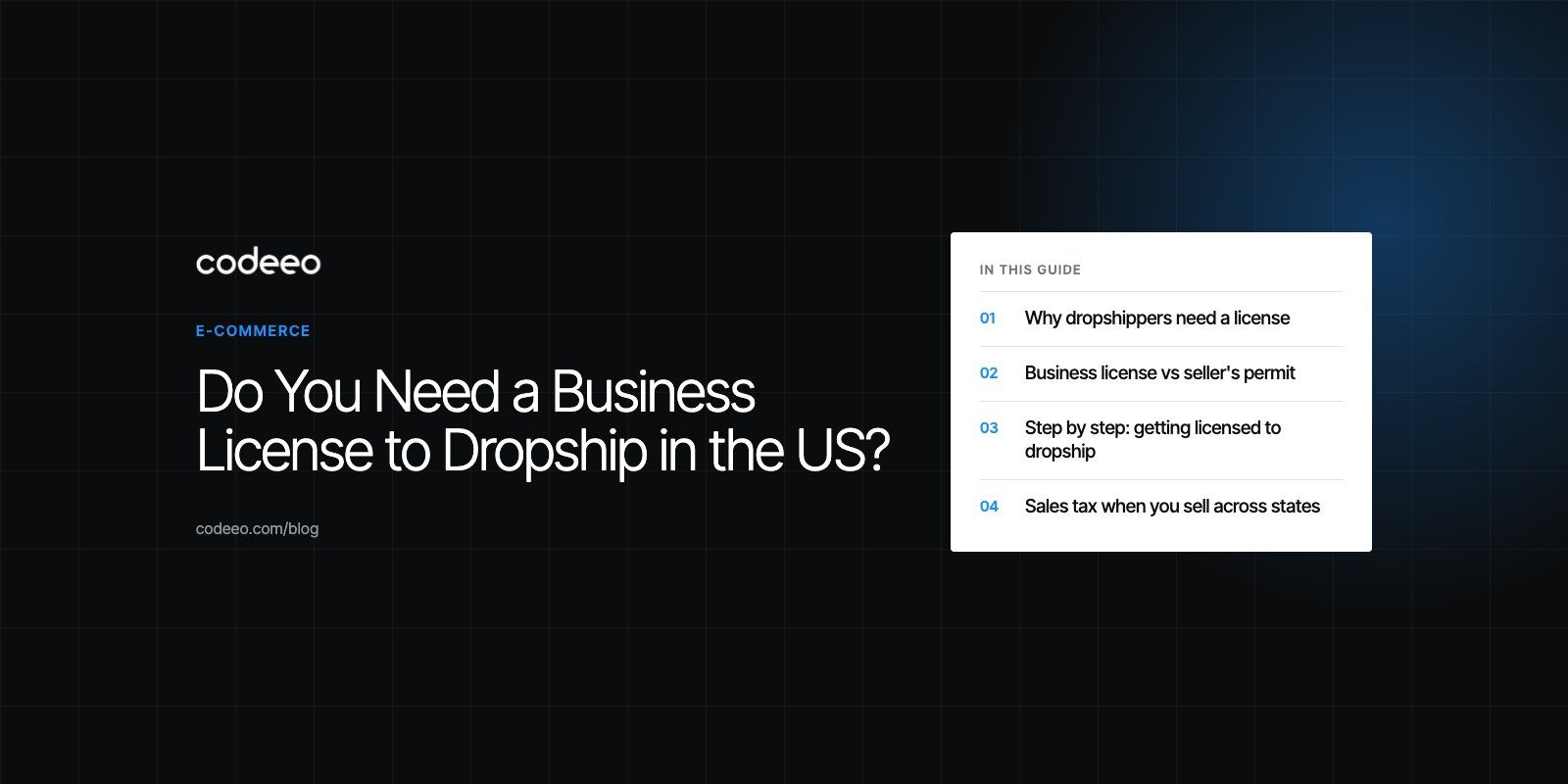
Do You Need a Business License to Dropship in the US?
Do you need a business license to dropship? What US sellers need: a local business license, a state seller's permit, an EIN, and when you might not need one.
In most US states and cities, yes: a dropshipping store is a business like any other, so you generally need a general business license from your city or county, and a seller's permit (sales tax permit) from your state if you sell taxable goods. There is no special "dropshipping license." What you actually need depends on where you live, how you structure the business and what you sell.
This guide explains the difference between a license and a permit, the steps to get set up legally, and the few situations where you might not need a license at all.
Why dropshippers need a license
Dropshipping means you sell products online while a supplier stores and ships them. Because you never touch the stock, many new sellers assume the rules do not apply. They do. You are still running a business that takes payments, collects customer data and, in most cases, owes sales tax and income tax.
A license does three things for you:
- Keeps you legal in the city, county and state where your business is based.
- Lets you collect and remit sales tax correctly, which protects you from back taxes and penalties.
- Makes you look credible to suppliers, payment processors and banks, many of which ask for business details before they work with you.
Business license vs seller's permit
These two are often confused, but they do different jobs.
| General business license | Seller's permit | |
|---|---|---|
| Issued by | Usually your city or county | Your state's tax or revenue department |
| Purpose | Permission to operate a business in that location | Permission to collect sales tax from customers |
| Who needs it | Most businesses, including many home based ones | Businesses selling taxable goods or services |
| Also called | Business tax certificate, operating license | Sales tax permit, sales and use tax license |
| Renewal | Often yearly, depending on the locality | Varies by state; some never expire |
A seller's permit also often lets you issue a resale certificate to your supplier, so you do not pay sales tax when you buy goods you are going to resell. For dropshippers this matters, because suppliers may otherwise charge you tax on every order.
The US Small Business Administration has a good overview of federal, state and local licenses and permits, with links to each state's office.
Step by step: getting licensed to dropship
1. Choose a business structure
Most dropshippers start as a sole proprietorship or a limited liability company (LLC). A sole proprietorship is simplest but offers no separation between your personal and business assets. An LLC adds that protection and is formed through your state. The SBA explains the trade offs in its guide to choosing a business structure.
2. Register your business name
If you trade under a name that is not your own legal name, you usually need to file a "doing business as" (DBA) name with your county or state. An LLC registers its name when it is formed.
3. Get an EIN if you need one
An Employer Identification Number identifies your business for federal tax. LLCs with more than one member, corporations and any business with employees need one. A sole proprietor without employees can often use their Social Security number, but many get an EIN anyway to keep it off supplier and platform forms. You can apply for an EIN directly with the IRS online.
4. Apply for a general business license
Check your city and county websites. Some require a license for every business, including online ones run from home; others only require one for certain activities. Applications usually ask for your business name, address, structure, owner details and a description of what you sell.
5. Register for a seller's permit
Apply through your state's department of revenue or taxation if you sell taxable products. Many states let you apply online and issue the permit quickly.
6. Check product specific rules
Some products need extra approvals or carry their own rules: food and supplements, cosmetics, children's products, electronics, and anything hazardous or age restricted. Check federal and state requirements before you list these items, and confirm your supplier's products meet them.
7. Keep everything current
Note the renewal dates for every license and permit, file sales tax returns on schedule even when you owe nothing, and update your registrations if you move or change structure.
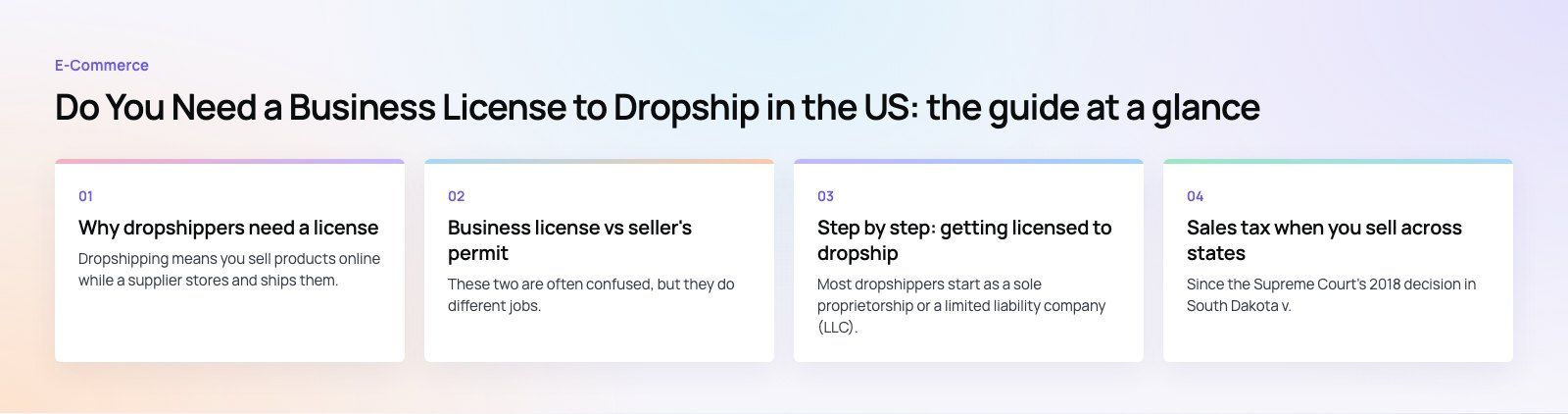
Sales tax when you sell across states
Since the Supreme Court's 2018 decision in South Dakota v. Wayfair, states can require online sellers to collect sales tax even without a physical presence there, once sales into the state pass a threshold set by that state. Thresholds and rules differ, so a growing store may need permits in several states, not just its home state.
Marketplaces such as Amazon and Etsy usually collect and remit sales tax on your behalf in most states. If you sell through your own store on Shopify or WooCommerce, that job generally falls to you, although both platforms offer tax calculation tools and apps. An accountant who works with ecommerce sellers is worth the fee once you start selling into many states.
Do you need a license for Shopify dropshipping?
Shopify does not issue or require a specific dropshipping license to open a store. But the law where you live still applies, and the platform's payment setup asks for business and tax details before it pays you out. Having a registered business, a tax ID and a business bank account makes that setup smoother and keeps your personal and business money separate.
Digital products raise different questions. If you sell ebooks, templates or software, sales tax treatment varies by state, and you need the rights to sell what you list. Physical goods bring product safety and labeling rules that digital goods avoid.
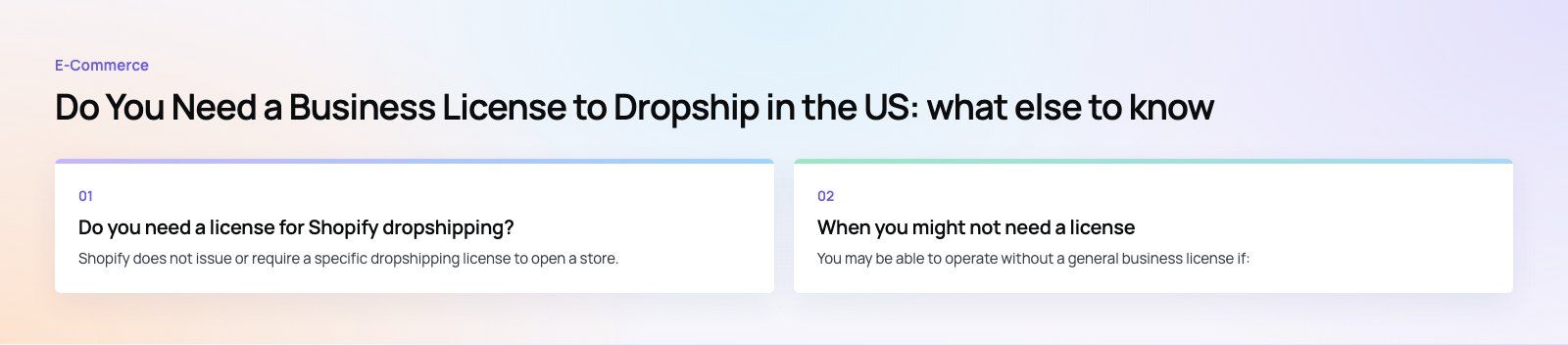
When you might not need a license
You may be able to operate without a general business license if:
- Your city and county do not require one for home based online sellers.
- You only sell products that are not taxable in your state.
- You are selling occasionally as a hobby rather than running a business.
Even then, you still owe income tax on profits. You should not skip a license if:
- Your locality requires one for all businesses.
- You sell taxable goods.
- Your products are regulated.
- Your sales are growing and you plan to scale.
When in doubt, call your city or county clerk. It is a short conversation and far cheaper than penalties later.
Build a store that is ready to scale
Getting licensed is the paperwork side of dropshipping. The other side is a store that converts, calculates tax correctly and handles payments without friction. Codeeo has delivered 200+ projects across the UAE and the US. If you are setting up or rebuilding a store, see our Shopify development and WooCommerce development services, get help with payment integration, or book a checkout teardown to find where buyers drop off.
Frequently asked questions
In most US locations, yes.
Dropshipping is treated like any other retail business, so your city or county usually requires a general business license, and your state requires a seller's permit if you sell taxable goods. There is no separate dropshipping license. Check your local government website or call the clerk's office to confirm what applies where you live.
E-CommerceSquare WooCommerce Integration: A Step by Step Setup GuideHow to connect Square to WooCommerce with the official plugin, choose a system of record, test in sandbox and fix the sync problems stores hit most often. E-CommerceLiquor Store POS Systems: Key Features and BenefitsWhat a liquor store POS system should do: age verification, case and bottle inventory, reordering, reporting and compliance, plus how to choose one.
 E-CommerceDo You Need a Business License to Sell Online in the US?Most US online sellers need a local business license, a sales tax permit or both. Learn which licenses apply, common seller scenarios and how to check your state.
Tell us what the business needs. We will tell you what to build first.
Schedule a free consultation and get a written recommendation, with costs, before you commit to anything.
Get in touchPROVEN RESULTS
4.7 / 5verified reviews on Google