
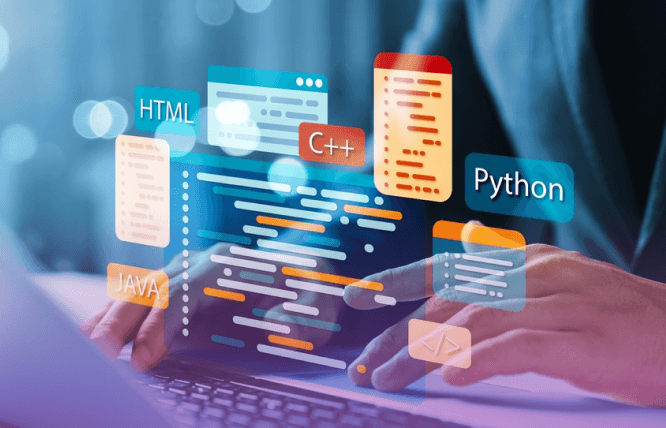
Software development trends in 2025 will revolutionise the way software will assist businesses with undergoing daily processes. In this article we will touch upon the top 10 software development trends that will impact your business and its ability to improve operations.
The software development market is growing at a rapid pace. According to a study, 70% of businesses globally have invested in software solutions. This is because of the seamlessness that custom software can offer any organisation with operations and processes. While the need for software is crucial in this era, there are certain trends that should be noted by organisations and developers alike.
In this article we will discuss the upcoming software development trends in the market and how they will impact the development of software moving forward.
Top 10 Trends in the Software Development Market
Artificial Intelligence (AI)
Artificial Intelligence continues to revolutionise software development by enabling smarter applications that can learn and adapt. AI algorithms are used for predictive analytics, natural language processing (NLP), and automation, enhancing user experiences and operational efficiency. According to a report by PwC, AI could contribute up to $15.7 trillion to the global economy by 2030, highlighting its significance in the future of software development.
5G Technology
The rollout of 5G technology is a game-changer for software development, providing faster internet speeds and reduced latency. This advancement facilitates the development of more sophisticated applications, particularly in areas such as augmented reality (AR), virtual reality (VR), and the Internet of Things (IoT). With Ericsson predicting that 5G subscriptions will reach 3.5 billion by 2026, developers need to optimise their software to leverage these capabilities.
Python
Python remains one of the most popular programming languages due to its simplicity and versatility. Its extensive libraries and frameworks support a wide range of applications, from web development to data science and machine learning. According to the TIOBE Index, Python has consistently ranked as one of the top programming languages, reflecting its growing adoption in various industries.
Progressive Web Apps (PWAs)
Progressive Web Apps (PWAs) offer the best of both web and mobile apps, providing a seamless user experience with offline capabilities and faster load times. They are cost-effective and easier to maintain, making them an attractive option for businesses. Google’s data shows that PWAs can lead to a 68% increase in mobile traffic and a 52% increase in conversions, indicating their potential impact on web development.
Blockchain
Blockchain technology is transforming industries by providing a secure and transparent way to conduct transactions. Beyond cryptocurrencies, blockchain is being integrated into supply chains, healthcare, and finance to enhance security and traceability. Gartner forecasts that blockchain will generate $3.1 trillion in new business value by 2030, making it a critical area for software developers to explore.
React Native
React Native is gaining traction as a popular framework for building cross-platform mobile applications. It allows developers to write code once and deploy it on both iOS and Android platforms, significantly reducing development time and costs. Facebook, Instagram, and Airbnb are among the notable companies using React Native, showcasing its reliability and efficiency.
Augmented Reality (AR) and Virtual Reality (VR)
AR and VR technologies are creating immersive experiences in gaming, education, healthcare, and retail. As hardware becomes more accessible and affordable, the adoption of AR/VR applications is expected to grow. Statista estimates that the AR/VR market will reach $209.2 billion by 2022, emphasising the need for developers to acquire skills in these technologies.
FinOps and GreenOps
FinOps (Financial Operations) and GreenOps (Green Operations) are emerging trends focusing on cost management and sustainability in software development. FinOps helps organisations manage cloud spending effectively, while GreenOps emphasises eco-friendly practices. As businesses prioritise cost efficiency and environmental impact, developers must incorporate these practices into their workflows.
Cloud-Native Technology
Cloud-native technology allows developers to build and run scalable applications in cloud environments. It leverages microservices, containers, and Kubernetes to improve flexibility and resilience. The adoption of cloud-native technologies is accelerating, with a report from CNCF indicating that 92% of organisations use containers in production, highlighting the shift towards cloud-native development.
Conclusion
The way the software development market is evolving, businesses will soon be looking at advancements in how they are getting their solutions developed. The future of software development is bright and these advancements will have a huge impact on businesses in the future.
If you are looking for a software development company that will keep these software trends in mind when developing your solution, Codeeo has got you covered. Our team of experts will work tirelessly to create custom software that is designed to help your business grow. Contact us today for a free consultation.