 Software DevelopmentSQL vs NoSQL Databases: Differences and How to ChooseHow SQL and NoSQL databases differ in data model, schema, scaling and consistency, where each one fits, and five questions to choose for your project.
CodeeoInsightsSoftware Development
Digital Product Strategy: A Step by Step Guide
How to build a digital product strategy: vision, user research, value proposition, roadmap, monetization and launch, plus the mistakes to avoid.
A digital product strategy is the plan that explains who an app, website or software product is for, what problem it solves, how it will be built in stages, how it will make money and how it will reach its first users. It sits between the company's business strategy and the day to day work of design and development, and it keeps every feature decision tied to a clear goal.
This guide covers how a product strategy differs from a business strategy, the steps to write one, how it plays out in practice, the tools teams use and the mistakes that most often sink new products.
What is a digital product strategy?
Think of it as the map for a single product. It describes the audience and their needs, the value the product offers, the order in which features will be built, the technology choices, the revenue model and the launch plan. It also says how the team will know whether the product is working.
Take a simple example: a to-do list app for busy parents. The strategy would define those parents and their routines, explain why existing apps fail them, decide what goes in the first release and what waits, choose whether to build for iOS, Android or both, and set the measures that show people are actually using it. Without that thinking, a team tends to build whatever is suggested last.
Business strategy compared with digital product strategy
| Business strategy | Digital product strategy |
|---|---|
| Defines the company's overall vision and position | Defines the goals of one product in its market |
| Guides every business activity, from finance to hiring | Guides product design, development, launch and improvement |
| Considers the whole organization | Considers users, competitors, technology and market trends |
| Usually spans several years | Works in shorter cycles that change with feedback |
| Driven by company level objectives | Driven by user needs and evidence from the product |
The two must agree. A product strategy that ignores the business strategy produces a product nobody in leadership will fund for long; a business strategy with no product strategy produces vague ambitions and no shipped software.
How to create a digital product strategy, step by step
1. Set the vision, mission and goals
The vision is the long term picture: why the product exists and what changes for users if it succeeds. The mission is how the product will get there, written so that anyone on the team can use it to settle an argument about priorities. Goals turn both into specific, measurable targets with a deadline, such as weekly active users, task completion or retention after thirty days.
2. Understand the target market and customer needs
Start with one question: who is this for? Then find out how those people behave today. Interviews, short surveys, analytics from existing products and watching people use competitors all help. The aim is to find the jobs users are trying to get done and where current tools let them down.
If you are planning a budgeting app, for example, research might show that your audience cares less about charts and more about tracking several accounts in one place. That finding should shape the first release.
3. Define the value proposition and differentiation
The value proposition is the reason someone would choose your product over the alternatives, including doing nothing. It might be speed, simplicity, a feature competitors lack, a better fit for a specific audience or a lower cost of switching. If the product is not clearly better at something that matters to users, persuading them to change habits will be hard.
4. Build the product roadmap
The roadmap sets out the milestones from concept to launch and beyond. Break the work into phases, starting with the smallest version that delivers the core value. A fitness app might begin with workout tracking, add analytics once people are logging regularly, then add social features. This keeps cost and risk under control and gets real feedback early. A product scoping exercise is a practical way to agree what belongs in the first phase.
5. Choose a monetization model
Decide how the product will earn money: a one-time purchase, a subscription, in-app purchases, advertising, transaction fees or a mix. Match the model to how users get value. If they benefit every week, a subscription often fits; if they use the product once, it may not. App store rules also matter here, so check the current App Store Review Guidelines (Apple, 2026) before settling on how digital goods are sold inside an iOS app.
6. Plan the go-to-market approach
The go-to-market plan covers positioning, channels, partnerships and launch timing. A project management tool for small businesses might rely on search content, partnerships with accountants and a free tier. A consumer app might focus on app store visibility and social media. Build in room to change the plan as early feedback arrives.
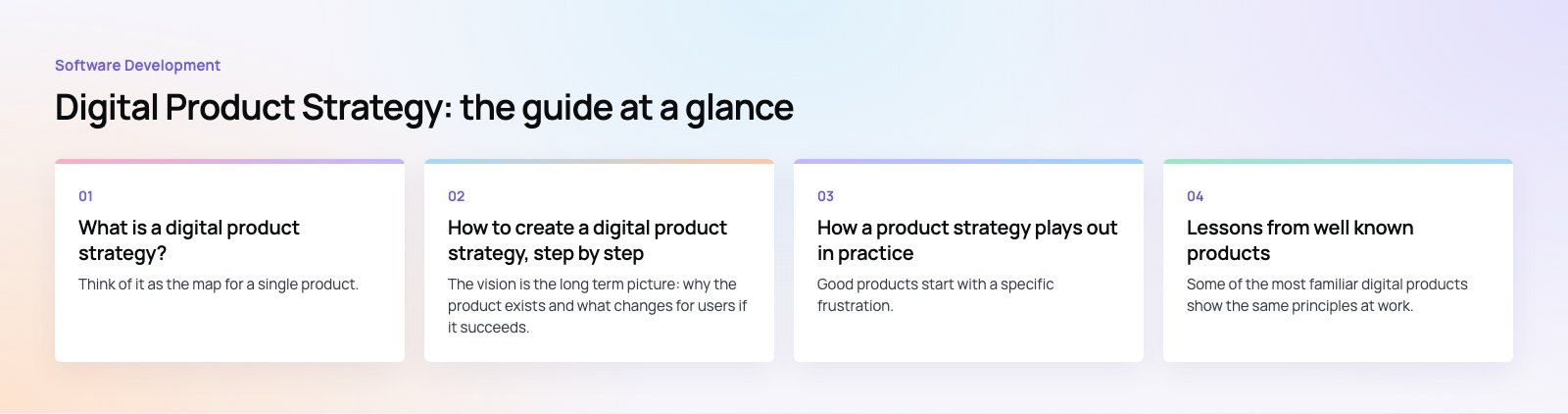
How a product strategy plays out in practice
Spotting the problem and the opportunity
Good products start with a specific frustration. A team planning a productivity app might notice that people struggle to manage tasks spread across email, chat and calendars. That frustration becomes the opportunity: one place that keeps tasks in sync across devices.
Making strategic choices
Next come the trade-offs. If research shows most of your audience uses phones rather than laptops, a mobile first design makes sense, and some desktop features can wait. Writing down why each choice was made helps new team members and makes it easier to revisit decisions later.
Prototyping and testing
Prototypes let you test ideas before paying for full development. Clickable designs in a tool like Figma can be put in front of real users within days. What they struggle with tells you more than any internal debate.
Iterating and scaling
After launch, the strategy becomes a feedback loop. Watch how people use the product, talk to them and adjust priorities. If users of a task app keep asking for email integration, that request may deserve a place in the next release ahead of features the team assumed were important.
Lessons from well known products
Some of the most familiar digital products show the same principles at work. Spotify built its product around convenience and personal recommendations, with a free tier supported by advertising alongside paid plans. Netflix began by renting DVDs by post and moved to streaming, a shift that changed how people watch films and television. In both cases, the product strategy started with a clear view of what users wanted and was willing to change the business model to deliver it.
Trends shaping product strategy
- AI driven personalization. Products increasingly adapt content, recommendations and interfaces to each user.
- AI assistants inside products. Chat and voice features that answer questions or complete tasks are becoming an expected part of many apps.
- Privacy by design. Users and regulators expect clear consent, minimal data collection and transparent controls.
- Cross-platform delivery. Frameworks such as Flutter and React Native let one codebase serve iOS and Android, which changes how teams plan releases.
- Remote collaboration. Distributed teams need products, and product processes, that work without everyone in one room.
Tools and frameworks teams use
| Area | Common tools |
|---|---|
| Web development | HTML, CSS, JavaScript, React, Next.js, Angular |
| App development | Swift, Kotlin, Flutter, React Native |
| Back end and APIs | Node.js, Python, Laravel, .NET |
| Project management | Jira, Trello, Asana |
| Design and prototyping | Figma, Sketch |
| Analytics | Google Analytics, Power BI, Tableau |
The tools matter less than how they are used. Pick a stack your team can maintain and hire for, and keep the product strategy, not the technology, in charge of priorities.
Common mistakes in digital product strategy
- Ignoring user feedback once development starts.
- Starting without a clear vision or measurable goals.
- Packing too much into the first release and making the experience complicated.
- Skipping prototypes and testing ideas only after they are fully built.
- Overlooking competitors and changes in the market.
- Underestimating how long development and launch will take.
- Choosing an architecture that cannot handle growth.
- Letting the product drift away from business goals.
Turning the strategy into a product
A strong digital product strategy keeps everyone pointed at the same users, the same goals and the same order of work, and it changes as evidence comes in. Codeeo has delivered 200+ projects across the UAE and the US, including multi-platform products such as Edsidera and Seamfox. If you are planning a new product, our mobile app development and custom software teams can help you shape and build it.
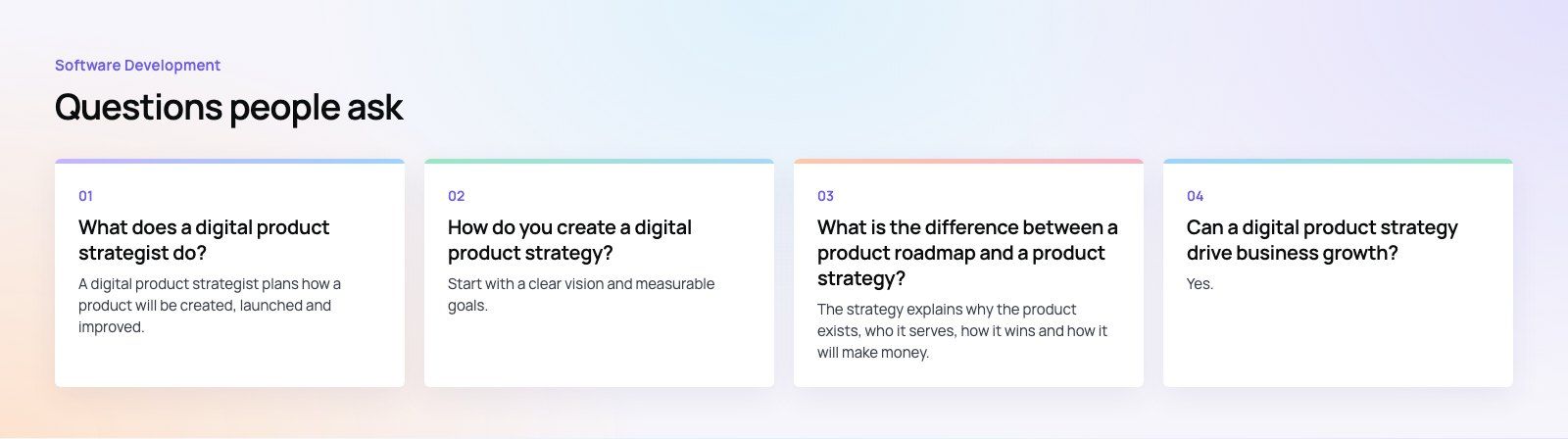
Frequently asked questions
A digital product strategist plans how a product will be created, launched and improved.
They research users and competitors, define the value proposition, set goals and measures, and shape the roadmap with designers and developers. After launch they review data and feedback to decide what changes next, keeping the product aligned with business goals throughout.
Software DevelopmentSQL vs NoSQL Databases: Differences and How to ChooseHow SQL and NoSQL databases differ in data model, schema, scaling and consistency, where each one fits, and five questions to choose for your project. Software DevelopmentOpen Source Apps: Examples, Licenses and How to Build Your OwnWhat makes an app open source, well known examples, the steps to build your own, how to pick MIT, Apache or GPL, and when to customize instead.
 Software DevelopmentHow an Online HR Portal Improves Employee ExperienceWhat an online HR portal does, how self service improves employee experience, which features matter, and whether to buy, configure or build one.
Tell us what the business needs. We will tell you what to build first.
Schedule a free consultation and get a written recommendation, with costs, before you commit to anything.
Get in touchPROVEN RESULTS
4.7 / 5verified reviews on Google