 E-Commerce10 Features of a High-Converting Ecommerce WebsiteThe ten features that turn store visitors into buyers, from product pages and checkout to speed, mobile design, social proof and ongoing testing.
Ecommerce Trends Worth Acting On in 2026
The ecommerce trends worth acting on in 2026: mobile speed, AI search, social commerce, wallets and installments, flexible delivery and accessibility.
The ecommerce trends worth acting on in 2026 are the ones that remove friction for shoppers: fast mobile stores, AI driven search and recommendations, social and video commerce, wallet and installment payments, flexible delivery and pickup, subscriptions, and accessible design. Newer ideas like AR try-on and AI shopping assistants matter for some categories, but the biggest gains for most stores still come from speed, checkout and relevance.
Chasing every trend wastes budget. This guide explains each trend, who it suits, and how to decide which ones deserve a place on your roadmap this year.
Mobile first is now the baseline
For most consumer stores, the majority of visits come from phones, and many of those visitors arrive from social apps with little patience. Designing desktop first and shrinking it down no longer works. A mobile first store means:
- Product pages that load quickly on a mobile connection, with images sized for small screens.
- Large tap targets, a sticky add to cart button and a short, uncluttered checkout.
- Search and filters that work with a thumb, not just a mouse.
- Autofill, wallets and guest checkout so nobody has to type a card number on a phone keyboard.
Speed is part of this. Google's Core Web Vitals measure loading, responsiveness and visual stability, and slow stores lose shoppers before the page even renders. If your store struggles here, our Core Web Vitals service focuses on exactly these metrics.
AI in search, recommendations and service
Smarter on site search
Shoppers increasingly type full questions rather than keywords: "waterproof running shoes for wide feet" rather than "shoes". AI powered search understands intent, handles typos and synonyms, and returns relevant products instead of an empty results page. For stores with large catalogs, this is often the single most valuable AI upgrade.
Personalized recommendations
Recommendations based on browsing and purchase history, such as "frequently bought together" or "you may also like", raise order value when they are genuinely relevant. The key is data quality: clean product attributes and accurate stock levels matter more than the algorithm.
AI assistants and chat
Chat assistants have moved beyond scripted bots. Modern assistants can answer product questions from your catalog, check order status and hand complex issues to a human. They work best with clear limits: answer from your real data, escalate quickly, and never invent policies or stock.
Shopping through AI tools
More shoppers now ask AI assistants for product suggestions before they visit a store. Structured product data, clear descriptions, accurate prices and real reviews make it more likely your products are understood and cited correctly. The same work also improves regular search visibility.
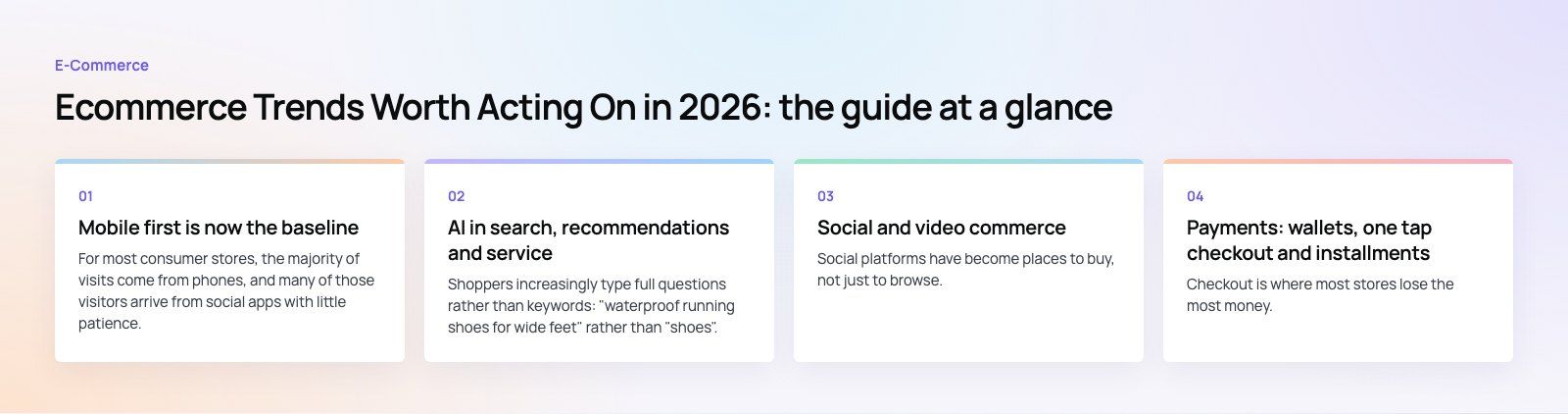
Social and video commerce
Social platforms have become places to buy, not just to browse. Shoppable posts, in-app shops, creator content and live selling shorten the path from discovery to purchase. This suits visual, impulse friendly products such as fashion, beauty, accessories and home goods.
To make it work, connect your catalog to the platforms your customers use, keep stock and pricing in sync, and invest in a steady stream of short, authentic video. Treat social as a channel with its own content plan, not as an afterthought to your website.
Payments: wallets, one tap checkout and installments
Checkout is where most stores lose the most money. Three payment trends reduce that loss:
- Digital wallets such as Apple Pay and Google Pay let shoppers pay without typing card details.
- Accelerated checkout remembers returning customers so they can buy in one or two taps.
- Buy now, pay later splits a purchase into installments, which can lift conversion on higher value items. Which providers matter depends on your market.
Offer the methods your customers already trust, and remove anything that slows checkout down. A checkout teardown will show where shoppers drop off, and our payment integration team can add the right gateways. Our EGO Sustainable case study shows a bilingual Shopify store for a GCC athleisure label with Tabby and Tamara installments across five markets.
Omnichannel and flexible fulfillment
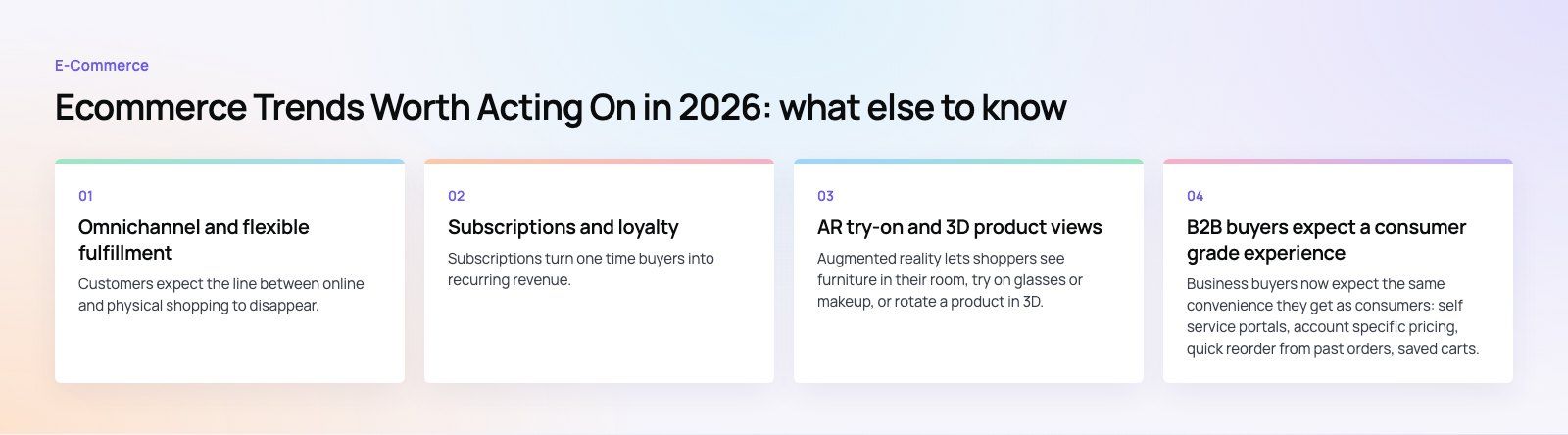
Customers expect the line between online and physical shopping to disappear. That includes buy online and pick up in store, checking local stock before visiting, returns to a branch, and consistent prices across channels. Behind the scenes, this depends on one accurate view of inventory and orders across every location.
Delivery choice is part of the same trend. Letting shoppers pick a delivery date or time window, or choose same day delivery where you can offer it, reduces failed deliveries and support tickets. The Gorgeous Flower Co is a good example: a WooCommerce florist with delivery dates and windows at checkout, loyalty points and subscriptions.
Subscriptions and loyalty
Subscriptions turn one time buyers into recurring revenue. They fit consumables such as coffee, pet food, skincare and supplements, as well as curated boxes and memberships. The essentials are easy pause, skip and cancel controls, because a subscription that is hard to leave generates complaints and chargebacks.
Loyalty programs reward repeat purchases with points, tiers or perks. Simple programs that customers understand at a glance outperform complicated ones.
AR try-on and 3D product views
Augmented reality lets shoppers see furniture in their room, try on glasses or makeup, or rotate a product in 3D. It reduces uncertainty for products where size, fit or appearance drive returns. For most categories it is a nice extra rather than a priority, but for furniture, eyewear, beauty and high value goods it can earn its cost. Start with 3D views on best sellers before investing in full AR.
B2B buyers expect a consumer grade experience
Business buyers now expect the same convenience they get as consumers: self service portals, account specific pricing, quick reorder from past orders, saved carts, invoice payment and accurate stock visibility. Replacing email and phone orders with a proper portal frees sales teams to focus on relationships rather than data entry.
Try before you buy and easier returns
For fashion and other fit sensitive categories, flexible returns and try before you buy models lower the risk of ordering online. They work only if the returns process is efficient, so plan reverse logistics, restocking and refunds before promoting generous return terms.
Accessibility as a requirement
An accessible store works for shoppers who use screen readers, keyboards or magnification, and it usually improves usability for everyone. Accessibility law increasingly applies to online shops; for example, the European Accessibility Act now covers many stores selling to consumers in the EU. The WCAG guidelines are the standard to build against.
Which trends to prioritize
| Trend | Best suited to | Effort | Priority for most stores |
|---|---|---|---|
| Mobile speed and UX | Every store | Medium | High |
| Wallets and fast checkout | Every store | Low | High |
| AI search and recommendations | Large catalogs | Medium | High for big catalogs |
| Social and video commerce | Visual, impulse friendly products | Medium, ongoing | Medium to high |
| Installment payments | Higher value items | Low | Medium |
| Omnichannel fulfillment | Brands with physical stores | High | High if you have stores |
| Subscriptions and loyalty | Consumables and repeat purchases | Medium | Medium |
| AR and 3D | Furniture, eyewear, beauty | High | Low to medium |
| B2B portals | Wholesale and trade sellers | High | High for B2B |
| Accessibility | Every store | Medium | High |
How to decide what to build
- Fix the basics first. Speed, mobile usability and checkout affect every order.
- Look at your data. Find where shoppers drop off and which questions support answers most often.
- Match trends to your products. AR helps furniture; subscriptions help consumables; neither helps everyone.
- Test small. Pilot a feature on one category or market and measure conversion, order value and returns.
- Check your platform. Some features are a simple app install; others need custom development or a headless commerce build.
Codeeo has delivered 200+ projects across the UAE and the US, including Shopify and WooCommerce stores built around fast checkout, local payments and flexible delivery. If you are planning this year's store improvements, talk to our Shopify development team or our WooCommerce developers.
Frequently asked questions
The most important are mobile first design and speed, AI powered search and recommendations, social and video commerce, wallet and installment payments, omnichannel fulfillment with flexible delivery, subscriptions and loyalty, and accessibility. AR try-on and AI shopping assistants matter for specific categories. For most stores, improving speed, checkout and product relevance still delivers the largest gains.
E-Commerce10 Features of a High-Converting Ecommerce WebsiteThe ten features that turn store visitors into buyers, from product pages and checkout to speed, mobile design, social proof and ongoing testing. E-CommerceBenefits of Using a CMS for Ecommerce WebsitesHow a CMS helps online stores manage products, SEO, growth and security, how it compares with a custom build, and how to choose between WooCommerce, Shopify and headless.
 E-CommerceEcommerce Website Development: 9 Elements Every Store NeedsThe nine parts every online store needs, from catalog data and search to checkout, security, operations and analytics, with what to decide before you build.
Tell us what the business needs. We will tell you what to build first.
Schedule a free consultation and get a written recommendation, with costs, before you commit to anything.
Get in touchPROVEN RESULTS
4.7 / 5verified reviews on Google