 InsightsHow Employee Engagement Drives Business PerformanceHow employee engagement affects profit, productivity, absence, retention, customers and innovation, what the evidence says, and how to link it to results.
How to Boost Employee Engagement: Practical Steps for HR Leaders
Eleven practical steps to boost employee engagement, from manager feedback and recognition to career paths, wellbeing, measurement and useful tools.
The most reliable ways to boost employee engagement are clear expectations, managers who give regular feedback and recognition, visible career growth, and removing the daily friction that stops people doing good work. Engagement improves when employees can see their work matters, feel heard, and trust that leadership acts on what they say. Perks and events help at the margins, but they do not fix a poor manager or a broken process.
This guide sets out practical steps HR leaders and managers can take, how to measure whether they work, and where tools and technology genuinely help.
What employee engagement means
Employee engagement is the degree of involvement and enthusiasm people bring to their work. Engaged employees understand what is expected of them, have what they need to do it, and feel connected to their team and the organization's goals. It is not the same as happiness or satisfaction: someone can be content and still disengaged.
The gap is wide. Gallup's State of the Global Workplace 2026 report found that only 20% of employees worldwide were engaged in 2025, the lowest level in five years. That means most organizations have a lot of untapped effort and ideas sitting in their teams.
Why it is worth the effort
Gallup's 2024 meta-analysis of its Q12 survey, the 11th edition, compared business units in the top and bottom quarters for engagement. The median differences favored the top units by 78% in absenteeism, 18% in productivity measured in sales and 23% in profitability. Engagement also showed up in quality, safety and turnover. The pattern is consistent: engaged teams lose fewer people and do better work.
Eleven practical steps to boost engagement
1. Make the mission and expectations concrete
A mission statement on a wall changes nothing. What helps is each person knowing how their role contributes to the organization's goals and exactly what good looks like in their job. Managers should agree a few clear priorities with each team member and revisit them every quarter. When leaders model the values they promote and hold everyone to the same standard, trust follows. When they do not, cynicism spreads quickly.
2. Invest in managers first
Managers shape most of an employee's daily experience, so their own engagement and skill matter more than any program. Train them to hold regular one to one conversations, give specific feedback, handle conflict and spot signs of burnout. Middle managers are often squeezed between leadership demands and team needs; give them time and support for people management, not just delivery targets.
3. Build feedback into the rhythm of work
People want to know how they are doing, and they want their views heard. Make feedback a habit rather than an annual event: short weekly check ins, quick peer feedback after projects, and an easy channel for raising ideas or concerns. Different teams may prefer different formats, so let managers adapt the method while keeping the habit.
4. Run regular surveys and act on them
An annual engagement survey plus short pulse surveys between them shows what is working and where problems are growing. The survey itself is not the hard part. What builds trust is sharing results openly, picking two or three issues to address, and reporting back on progress. A survey with no visible follow up does more harm than no survey at all.
5. Recognize good work quickly and specifically
Recognition works best when it is timely, specific and sincere: "your fix to the onboarding flow cut support tickets this week" means more than a generic thank you. Combine manager recognition with peer recognition so appreciation does not depend on one person noticing. Make sure recognition is fair across roles, including people whose work is less visible.
6. Show people a future
Lack of growth is one of the most common reasons people leave. Map realistic career paths, including lateral moves and specialist tracks, not just management. Discuss development goals in one to ones at least twice a year, and fill roles internally when you can. People who can see a future with you invest more in the present.
7. Offer learning that fits the work
Skills date quickly, especially as AI and automation change roles. Offer access to courses, mentoring, job rotations and stretch projects, and give people time during work hours to use them. Tie learning to real needs in the business so new skills are applied, not forgotten.
8. Get onboarding right
The first weeks set the tone. A good onboarding plan explains the organization's goals, introduces key people, sets clear first objectives and assigns a buddy for everyday questions. Check in at the end of the first week, month and quarter. A messy start, with no laptop, no access and no plan, tells new hires that nobody prepared for them.
9. Take wellbeing seriously
Stress and burnout drain engagement. Practical measures include realistic workloads, flexible arrangements where the work allows, access to confidential counseling, and managers trained to have supportive conversations. Wellness activities help, but they cannot compensate for chronic overwork.
10. Remove friction from daily work
Few things disengage capable people faster than wasted effort: duplicate data entry, slow approvals, tools that do not talk to each other, and reports built by hand every week. Ask teams which tasks frustrate them most and fix the worst ones. Often the answer is a simple automation, a shared dashboard or a small internal app. Low code tools such as the Microsoft Power Platform can turn a recurring spreadsheet chore into a short approval flow.
11. Connect people beyond their desks
Relationships at work keep people engaged through tough periods. Make room for team lunches, volunteering days, interest groups and cross team projects. Vary the format and timing so everyone can take part, including remote staff, parents and people who do not drink or prefer quieter settings. Ask teams what they would enjoy instead of guessing.
How to measure engagement
| Measure | What it tells you | How often |
|---|---|---|
| Engagement survey | Overall engagement and its drivers by team | Once or twice a year |
| Pulse survey | Short term changes on specific topics | Monthly or quarterly |
| Employee net promoter score | Whether people would recommend working here | Quarterly |
| Voluntary turnover | Who is leaving, from where and why | Monthly |
| Absenteeism | Early warning of stress or disengagement | Monthly |
| Internal moves and promotions | Whether growth paths are real | Quarterly |
Look at trends by team rather than one company wide number, and always pair numbers with conversations. Bringing survey, HR and absence data together in one dashboard, for example with Power BI, helps leaders spot problems early instead of discovering them in exit interviews.
Common mistakes to avoid
- Treating engagement as an HR project. It lives in daily management. HR designs the system; managers make it real.
- Surveying without acting. Each unanswered survey lowers response rates and trust.
- Relying on perks. Free snacks do not offset unclear goals or poor management.
- Copying another company's program. Diagnose your own issues first, then choose actions.
- Measuring once a year. Problems grow quickly; shorter feedback loops catch them sooner.
Where technology helps
Technology does not create engagement, but it removes obstacles and makes good habits easier. Useful tools include survey and pulse platforms, recognition features inside the apps people already use, learning systems, and analytics that combine HR data. Many organizations get far by configuring Microsoft 365 well, with Teams channels, shared intranet pages and simple automations. Others need a custom internal tool because their shifts, approvals or field work do not fit off the shelf software. Our Distinct case study shows a healthcare workforce platform with shifts, bookings, reviews and rewards built in. If you want to talk through the tools behind your engagement plan, get in touch.
Frequently asked questions
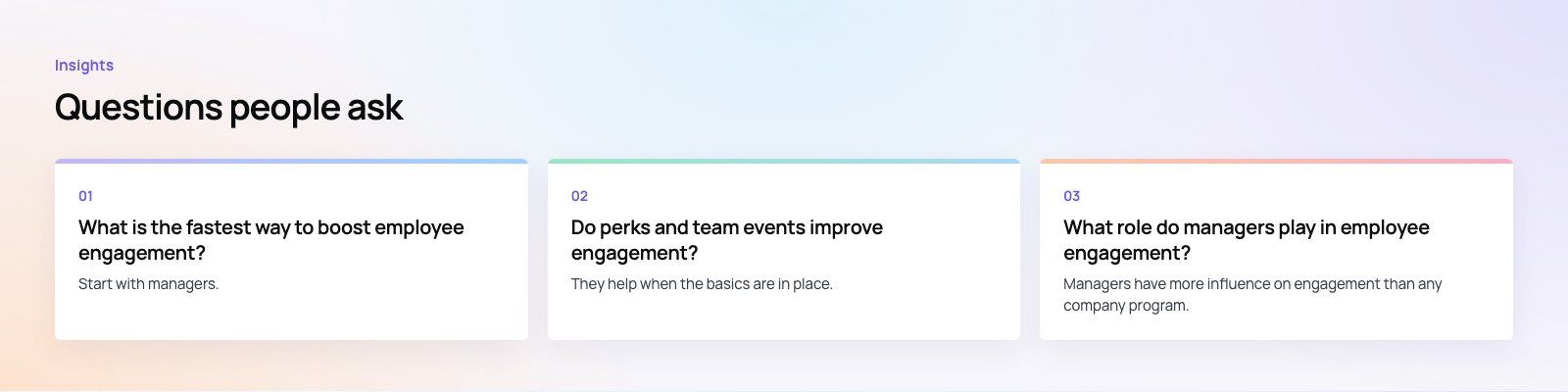
Start with managers.
Ask each manager to hold short, regular one to one conversations, recognize good work specifically and quickly, and remove one source of daily frustration for their team. These actions cost little and change how people feel within weeks. Pair them with a short pulse survey so you can see whether the changes are landing.
InsightsHow Employee Engagement Drives Business PerformanceHow employee engagement affects profit, productivity, absence, retention, customers and innovation, what the evidence says, and how to link it to results. InsightsThe Five Functions of Human Resource Management ExplainedThe five core functions of human resource management: recruitment, training, performance, compensation and employee relations, with practices and pitfalls.
 InsightsPerformance Management and Employee Engagement: A Practical GuideHow to run performance management that raises engagement: frequent check ins, specific recognition, growth plans, a strengths based approach and who owns what.
Tell us what the business needs. We will tell you what to build first.
Schedule a free consultation and get a written recommendation, with costs, before you commit to anything.
Get in touchPROVEN RESULTS
4.7 / 5verified reviews on Google