 E-CommerceEcommerce Development Tools for Building Scalable Saudi Online StoresThe tool stack behind a scalable Saudi online store: platforms, mada and BNPL payments, shipping, ZATCA e-invoicing, search, analytics and CRM.
Salla vs Shopify vs WooCommerce: Choosing an Ecommerce Platform in Saudi Arabia
Compare Salla, Zid, Shopify and WooCommerce for a Saudi store: Arabic, local payments, shipping, e-invoicing, control and when to go custom.
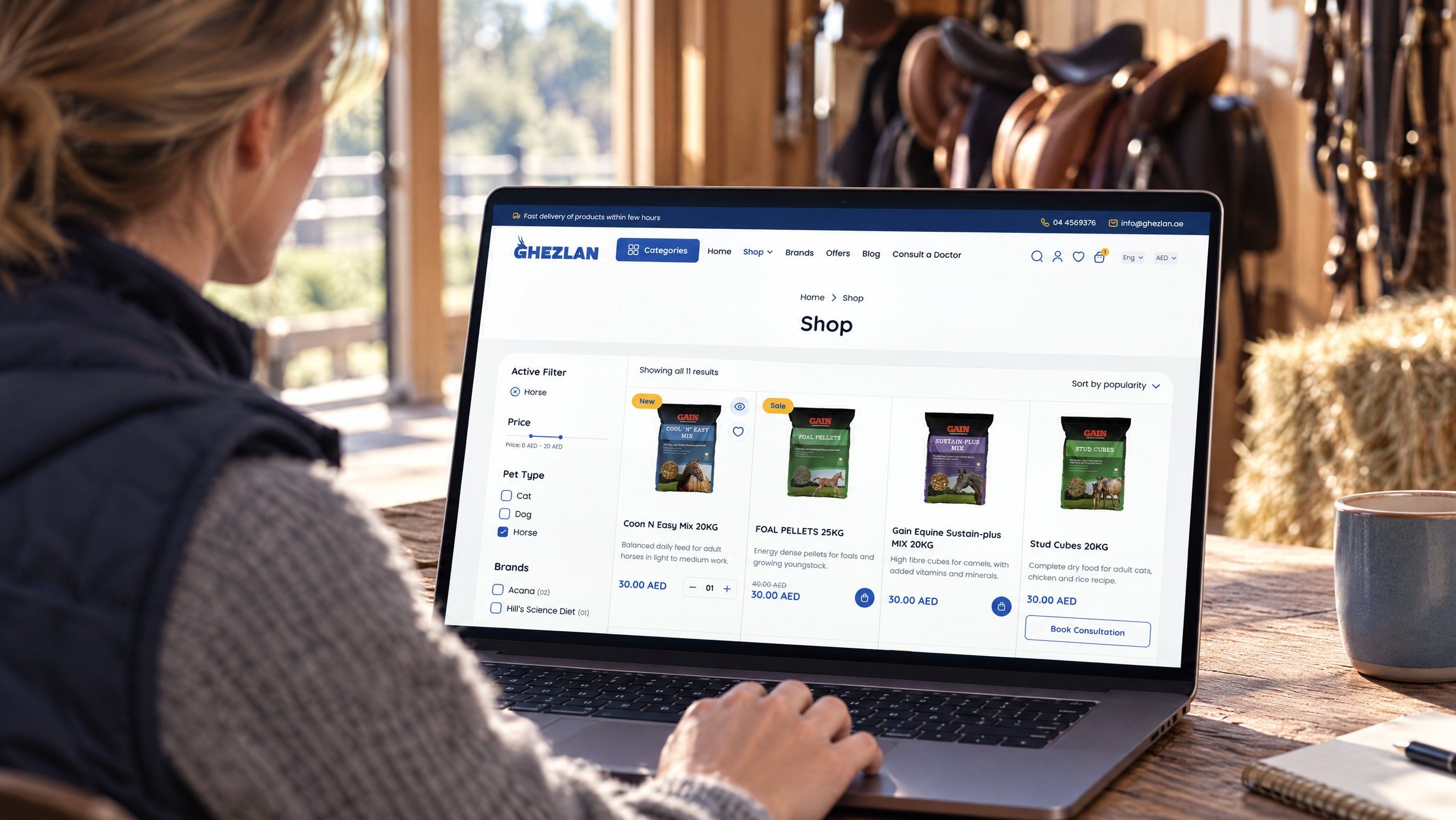
In the Salla vs Shopify decision, Salla usually suits Saudi merchants who want a fast, Arabic first launch with local payments and shipping built in, while Shopify suits brands selling across borders that want a mature global app ecosystem. WooCommerce sits apart as the option for businesses that want full ownership and deep customisation, provided they can maintain it. The right ecommerce platform in Saudi Arabia depends on your catalogue, markets, integrations and in house skills, not on which name is most familiar.
This guide compares Salla, Zid, Shopify and WooCommerce on the points Saudi store owners actually ask about: Arabic and RTL, local payments, shipping, ZATCA e-invoicing, apps, control and growth. It also explains when a custom or headless build is worth considering instead.
The four platforms at a glance
Each of these platforms takes a different approach. Understanding that approach matters more than any single feature list, because features change often while the underlying model does not.
Salla
Salla is a Saudi hosted ecommerce platform built for local merchants. Arabic is the default, the dashboard is designed around Saudi business practices, and local payment methods and couriers are integrated through the platform. A Salla store can be launched quickly by a non technical team, with themes and an app store for extra features.
Zid
Zid is another Saudi hosted platform with a similar local focus. It offers Arabic first storefronts, local payments and shipping, and a marketplace of apps. Merchants comparing Zid vs Salla usually find both cover the essentials, and the decision often comes down to specific integrations, theme options, support experience and how each fits the merchant's operations.
Shopify
Shopify is a global hosted platform with a very large ecosystem of themes, apps and developers. It supports Arabic storefronts and multiple languages and markets from one store, which suits brands selling across the Gulf and beyond. Some features that are standard elsewhere, including Shopify's own payments product, have not historically been available to Saudi merchants, so stores typically connect a third party gateway. Check current availability before you decide.
WooCommerce
WooCommerce is an open source ecommerce plugin for WordPress. You host it yourself or with a managed host, which gives you full control over code, data and design. That control comes with responsibility: updates, security, performance and backups are yours to manage, directly or through a partner.
Salla vs Shopify vs WooCommerce: the comparison table
| Factor | Salla and Zid | Shopify | WooCommerce |
|---|---|---|---|
| Hosting | Hosted by the platform | Hosted by the platform | Self hosted or managed hosting |
| Arabic and RTL | Arabic first by design | Supported; quality varies by theme and apps | Supported; depends on theme and build quality |
| Local payments | Local methods integrated through the platform | Through third party gateways and apps | Through gateway plugins or custom integration |
| Local shipping | Saudi couriers integrated through the platform | Through apps or aggregators | Through plugins or custom integration |
| Cross border selling | Possible; strongest for the Saudi market | Strong multi market and multi currency tools | Possible with plugins and configuration |
| App ecosystem | Growing, locally focused | Very large, global | Very large, plugin based |
| Design control | Theme based with customisation options | High, with theme development | Total |
| Data and code ownership | Platform controlled | Platform controlled | Fully yours |
| Maintenance load | Low | Low | Higher; needs ongoing technical care |
Treat the table as a starting point. Every platform updates its features regularly, so confirm the specific capabilities you rely on during a trial or a demo.
Arabic, RTL and the Saudi shopper
Saudi shoppers expect an Arabic experience that feels native, not translated. That means right to left layout across every page, Arabic product titles and descriptions written for local search, correct Arabic typography, and checkout messages that read naturally.
What to test on any platform
- Switch the storefront to Arabic and check that menus, filters, carts and icons mirror correctly.
- Check that checkout, error messages and emails are fully translated, not partly English.
- Look at how prices, dates and phone numbers display in Arabic.
- Test search with Arabic spelling variations and common English transliterations.
- Review the order confirmation and WhatsApp or SMS notifications in Arabic.
A Salla store or Zid store usually passes these tests out of the box. On Shopify and WooCommerce, results depend heavily on the theme and on how carefully the build was done. A strong Arabic Shopify or WooCommerce store is entirely achievable, but it needs deliberate design and development rather than a quick theme install.
Payments and checkout
Saudi customers expect to pay with mada, Apple Pay and international cards, and many look for buy now, pay later options such as Tabby and Tamara. STC Pay is also widely used. Cash on delivery remains a consideration for some categories, though many merchants try to reduce it.
How each platform handles local payments
Salla and Zid integrate local payment methods directly, so activating mada, Apple Pay and buy now, pay later providers is typically part of the onboarding process.
Shopify stores in Saudi Arabia usually connect a third party payment gateway that supports mada and Apple Pay, and add Tabby or Tamara through their apps. Check how each gateway presents the checkout in Arabic and how settlements reach your bank.
WooCommerce uses gateway plugins or a custom integration. This gives the most control over checkout design, but each gateway plugin must be kept updated and tested. Our payment integration service covers these setups.
Shipping, fulfilment and operations
Delivery speed and reliability shape repeat purchases. Look at which couriers each platform connects to, whether rates show at checkout, how labels and tracking are generated, and how returns are handled.
Operational questions to ask
- Can orders be routed to different couriers by city or product type?
- Does tracking reach customers automatically, including on WhatsApp?
- How does the platform connect to your warehouse or ERP for stock and orders?
- Can you manage stock across several branches or warehouses?
- How are returns and exchanges recorded and refunded?
Local platforms tend to make the common Saudi courier setups straightforward. Shopify and WooCommerce can match them but often need apps, aggregators or development work, especially for ERP connections. Our guide to API integration for Saudi business websites explains those patterns in detail.
ZATCA e-invoicing
ZATCA's e-invoicing programme, known as Fatoora, requires businesses within scope to issue electronic invoices in a set format, and in later phases to integrate their invoicing systems with ZATCA's platform. Businesses are brought into the integration phase in waves. Technical guidance is published at zatca.gov.sa.
What this means for your platform choice
Local platforms generally offer e-invoicing features or connected apps designed with Saudi requirements in mind. On Shopify and WooCommerce, compliance usually comes from connecting the store to an ERP or invoicing system that handles e-invoices, or from a dedicated app or plugin. Whichever route you take, confirm that the solution covers your phase and your invoice types, and check current obligations with your tax adviser or ZATCA directly.
Control, scaling and ownership
Hosted platforms trade some control for convenience. You cannot change how core checkout logic works, and you depend on the platform's roadmap, policies and uptime. For most small and mid sized stores, this is a sensible trade.
WooCommerce gives full ownership of code and data, which matters to businesses with unusual pricing rules, B2B accounts, subscriptions or complex product configurators. It also means scaling is your responsibility: hosting, caching, database tuning and security all need attention as traffic grows.

Shopify vs WooCommerce in Saudi Arabia for growing brands
When weighing Shopify vs WooCommerce in Saudi Arabia, the key question is who will run the platform day to day. Shopify removes most infrastructure work and suits teams focused on merchandising and marketing. WooCommerce rewards teams that have, or retain, technical capacity and want full flexibility. Both can support large catalogues and high traffic when built and maintained properly.
When custom or headless makes sense
Some businesses outgrow any off the shelf storefront. A custom or headless build separates the storefront from the commerce engine, so the front end can be designed and optimised without theme limits while the back end handles catalogue, cart and orders.
Signals that point to custom or headless
- You sell through a website, an app and in store screens and want one product source.
- Your pricing, bundling or B2B rules cannot be expressed in platform settings.
- Performance or design limits of themes are holding back conversion.
- You are building a marketplace with multiple vendors, commissions and payouts.
- You need deep integration with in house systems that apps cannot handle reliably.
Headless is more work to build and maintain, so it is worth the effort only where these needs are real. Our article on why Saudi businesses are moving to headless CMS covers the architecture, and our headless commerce and marketplace development services cover the build.
A decision checklist for Saudi merchants
- Define your markets. Saudi only points toward Salla or Zid; Gulf wide or global selling strengthens the case for Shopify.
- List required payment methods and confirm each platform supports them in Arabic at checkout.
- List couriers and fulfilment needs, including returns and multiple warehouses.
- Confirm your ZATCA e-invoicing route for your phase and invoice types.
- Map integrations with ERP, CRM, accounting and WhatsApp, and check how each platform handles them.
- Assess your team's skills. Without technical capacity, favour hosted platforms.
- Consider ownership. If code and data control are strategic, weigh WooCommerce or a custom build.
- Run a trial. Build a few real products in Arabic and walk through checkout on a phone.
How Codeeo helps Saudi businesses choose and build an ecommerce platform
Codeeo designs and builds online stores, apps and custom software. We have delivered 200+ projects across the UAE and the US, with a team of 80+ across Dubai, Riyadh and Karachi, and clients rate us 4.7 from 23 Google reviews. Riyadh clients can meet the team in person at our office there, and we work with merchants elsewhere in the Kingdom over video calls.
We help merchants pick the right platform first, then build on it properly. That might be a Shopify store from our Shopify developers, a WooCommerce build from our WooCommerce developers, or a fully custom store through our ecommerce website development service. In each case we focus on Arabic quality, local payments, integrations and speed on mobile.
If you are deciding between platforms, talk to our team about your products, markets and systems.
Frequently asked questions
For a store focused on Saudi customers that wants a quick Arabic launch with local payments and couriers built in, Salla is often the simpler choice.
Shopify becomes stronger when you sell across several countries, need its global app ecosystem or plan heavy theme customisation. In the Salla vs Shopify choice, start from your markets, team skills and integrations rather than brand familiarity.
E-CommerceEcommerce Development Tools for Building Scalable Saudi Online StoresThe tool stack behind a scalable Saudi online store: platforms, mada and BNPL payments, shipping, ZATCA e-invoicing, search, analytics and CRM. E-CommerceHow to Start an Ecommerce Business in Saudi ArabiaHow to start an ecommerce business in Saudi Arabia: registration, platform, payments like mada and Tabby, shipping, VAT, e-invoicing and growth.
 E-CommerceShopify Instagram Integration in 2026: Setup, Tagging and CostsHow to connect Shopify to Instagram in 2026: the requirements, setup steps, product tagging, checkout, costs and fixes for common connection errors.
Tell us what the business needs. We will tell you what to build first.
Schedule a free consultation and get a written recommendation, with costs, before you commit to anything.
Get in touchPROVEN RESULTS
4.7 / 5verified reviews on Google