 Web DevelopmentBusiness Website Design DubaiWhat a business website in Dubai should do, template vs custom builds, what drives cost and time, platforms, SEO and conversion, and choosing an agency in Business Bay.
Trakheesi Permit Numbers on Dubai Real Estate Websites
Every Dubai property advert needs a Trakheesi permit number and, since April 2023, a Madmoun QR code. On a brokerage website that means structured permit fields with an expiry date, not a number pasted into the listing description.
Every property advertisement published in Dubai needs a Trakheesi advertising permit issued by the Dubai Land Department, and since 24 April 2023 it also needs a Madmoun QR code on the advert itself. For a brokerage website that means two pieces of regulated data on every listing page, kept current for the life of that listing, and matching what the Land Department holds.
Most brokerages treat this as a marketing chore and paste the permit number into the listing description. That works until a permit expires, a listing is duplicated, or the Land Department’s monitoring reaches the page. The fixes are structural and belong in the website, not in the copywriting. Figures below were taken from Dubai Land Department pages and dated announcements read on 7 October 2026.
Key takeaways
- Trakheesi is the Dubai Land Department system that issues real estate advertising permits, supervised by the Real Estate Regulatory Agency.
- The Madmoun QR code has been required on real estate adverts since 24 April 2023, announced by DLD on 18 April 2023.
- DLD’s advertising permit page lists AED 1,000 for other permits and AED 5,000 for a project launch event permit, plus an AED 20 knowledge and innovation fee, with the service completed in one working day.
- DLD monitored over 279,000 listings across Property Finder, Dubizzle and Bayut and automatically modified 29 per cent of them using AI, announced 24 April 2025.
- Advertising without a permit, reusing permit numbers and running expired permits were the three violations named when DLD fined 10 companies in October 2020, with fines starting at AED 50,000.
- Permit number and QR belong in structured database fields with an expiry date, not inside the listing description.
What a Trakheesi permit actually covers
Trakheesi is the Land Department’s licensing and permitting system, and the advertising permit is one service inside it. The DLD service page describes it as allowing an applicant to request a real estate advertising permit, and the list of advert types it covers is wider than most brokerages assume. It names newspaper, SMS, outdoor, vehicle, printed, electronic, billboard, promotional campaigns, open house events, classified ads, exhibitions, project launches, promotion platforms and seminars.
Read that list against how a brokerage actually markets. A listing on your own website is an electronic advertisement. So is the same listing pushed to a portal, the carousel posted to Instagram, and the WhatsApp broadcast with three photos and a price. The permit requirement attaches to the advertisement, and there is no carve out for the channel being informal or the audience being small.
One issue we often see on brokerage sites is a single permit number repeated across several listings for units in the same tower. The permit is tied to the specific property and advert. Reusing one number across units is the behaviour DLD described as manipulation of advertising permit numbers when it announced enforcement action, so it is worth treating each unit as its own permitted advert from the first day the site is built.
The Madmoun QR code and where it has to appear
Madmoun is an electronic service inside Trakheesi that issues a QR code for each advertising permit. DLD announced it on 18 April 2023, with the requirement effective from 24 April 2023, and the wording in the announcement is broad: all real estate companies are expected to feature the QR code on their print and audiovisual advertisements.
What the code does matters for how you build the page. Scanning it lets a buyer verify that RERA approved the advertisement and see the property information DLD holds, including details of the advertising company, the property specifications and whether the unit is already sold or rented. The QR is not decoration. It exposes your listing data to comparison with the Land Department’s record, in front of the buyer, while they stand in the property.
That has a practical consequence that catches teams out. If your website still shows a unit as available because nobody updated the status after the deal closed, the QR scan can say otherwise. Status is the field most likely to drift, because it changes through a conversation rather than through the marketing workflow, and it is one of the details worth settling before a site design is signed off.
What the AI monitoring changed
On 24 April 2025 the Land Department announced an AI-powered real estate advertising governance platform, first shown at GITEX 2024. The figures published with it are the useful part. The platform monitored more than 279,000 real estate advertisements across Property Finder, Dubizzle and Bayut, and 29 per cent of the monitored listings were automatically modified using artificial intelligence.
Nearly a third of monitored listings being corrected by machine tells you two things. Inaccurate listing data is normal rather than rare, and checking is now continuous rather than triggered by a complaint. A brokerage that relies on someone noticing a problem is relying on a slower system than the one doing the watching.
What it costs and how long it takes
The Land Department’s own service page sets the fees, and they are higher than the numbers that circulate in guides. The page lists AED 5,000 for a project launch event permit and AED 1,000 for other permits, with an AED 20 knowledge and innovation fee on top. Exhibitions carry a non-refundable preliminary booking fee of AED 10,200 and a participation fee of AED 1,020 per exhibitor. Service completion time is given as one working day.
| Item | Amount on the DLD service page |
|---|---|
| Project launch event permit | AED 5,000 |
| Other permits | AED 1,000 |
| Knowledge and innovation fee | AED 20 |
| Exhibition preliminary booking, non-refundable | AED 10,200 |
| Participation fee per exhibitor | AED 1,020 |
A figure of AED 220 appears in several published guides to Trakheesi permits. It does not appear on the Land Department’s advertising permit page, which lists the amounts above, so treat the lower number with caution and confirm the current fee in the system before budgeting a year of listings around it.
The process itself is short. DLD describes five steps: log in to the Trakheesi system and select the service, fill in the information and upload documents, wait for an employee to review and approve, log in and pay, then receive the e-permit certificate. Required documents vary by permit type and include advertisement copies, tenancy contracts and no-objection letters.
The Land Department’s advertising permit page does not state a validity period, and published guides disagree, with some saying 60 days and others a year. Rather than designing your site around a number nobody can source, store the expiry date the permit certificate gives you and drive the website from that.
The fields a listing database needs
Permit data fails on brokerage websites for an ordinary reason. It is stored as text inside the listing description, where nothing can validate it, query it or expire it. Treating it as structured data fixes most of the problem at once.
- A permit number field, separate from the description, with a format check so a half-pasted number is rejected at entry.
- A permit expiry date field, which is the field the whole system hangs from.
- The Madmoun QR, stored as an image or generated from the permit, rendered on the listing page rather than pasted into a photo.
- A listing status field with sold and rented as real values, because that is what a QR scan can contradict.
- The RERA broker number for the agent on the listing, so agent pages and listing pages agree.
- A last-verified timestamp, which is what lets you prove the data was checked rather than assumed.
Once expiry is a date rather than prose, the website can act on it without anyone remembering. A nightly job that flags listings expiring within seven days, and unpublishes or hides those already expired, converts a compliance risk into a queue someone clears on a Monday morning. That is the single highest-value piece of automation on a Dubai brokerage site, and it is a small amount of work on any normal WordPress build.
Keeping the website and the portal feed honest
Most Dubai brokerages publish to their own site and to Property Finder, Bayut and Dubizzle at the same time, usually through an XML or API feed from a CRM. Compliance problems multiply when those are separate sources of truth, because the permit number can be right in one place and stale in another, and DLD’s monitoring covers the portals directly.
The workable arrangement is one record per listing, held wherever your team actually works, with the website and the feed both reading from it. If the CRM owns listings, the website should render them rather than keep its own copy. If the website owns them, the feed should be generated from the same records. Two hand-maintained copies will diverge, and the version that embarrasses you is the one you are not looking at.
Permit fields deserve the same treatment as price in the feed mapping. Price mismatches get noticed because they cost money. Permit mismatches get noticed by the regulator, and they undo the work behind ranking a brokerage in Dubai search results at the same time.
What happens when something is wrong
The clearest published figure comes from an enforcement announcement reported on 20 October 2020, when the Land Department fined 10 real estate companies and issued warnings to another 30. DLD described the fines as progressive, starting at AED 50,000, and said penalties could escalate further, including cancellation of the company’s licence. The violations named were operating without advertising permits, manipulation of advertising permit numbers, and use of expired permits.
That figure is from 2020 and we could not locate a current published penalty schedule for advertising violations on the Land Department site, so treat AED 50,000 as an indication of the order of magnitude rather than today’s confirmed rate, and confirm the current position with DLD or your legal adviser. The portals apply their own enforcement in parallel by removing listings that fail checks, which costs enquiries immediately regardless of any fine.
The commercial damage usually arrives before any penalty does. A listing pulled from a portal mid-campaign stops producing leads that week, and the organic rankings a listing page accumulated do not survive repeated unpublishing and republishing at the same URL.
A short build checklist
- Store the permit number, expiry date, QR and listing status as database fields on the listing, with validation at entry.
- Render the permit number and QR on the listing page template, so a new listing cannot be published without them.
- Run a scheduled check that flags permits expiring inside a week and hides expired ones automatically.
- Map permit fields into the portal feed and compare the feed against the site weekly.
- Put the QR on social creatives and brochures as well, since the requirement covers print and audiovisual advertisements.
- Keep one record per unit, and never reuse a permit number across units in the same tower.
Figures, fees and dates here are indicative, taken from Dubai Land Department pages and dated announcements as they stood on 7 October 2026, and this article is not legal or regulatory advice. Permit rules and fees change, so confirm the current position in the Trakheesi system before publishing. If you would like your listing templates, permit fields and portal feed reviewed together, our Dubai team builds and maintains real estate websites and can go through the setup with you.
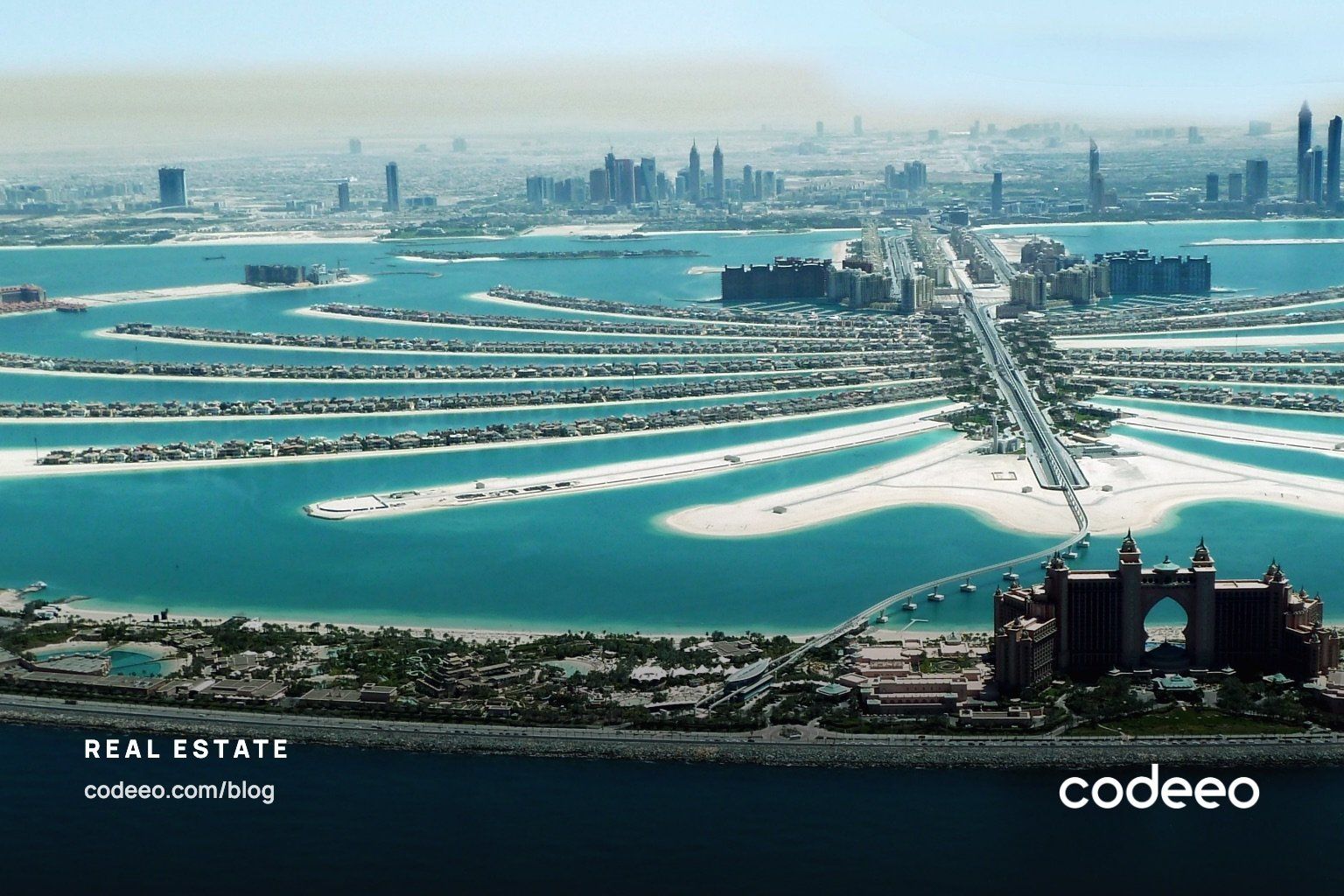
Cover photo: Vereinigte Arabische Emirate – Dubai – Palm Jumeirah und Dubai Marina – im Vordergrund das Hotel Atlantis – panoramio by giggel, via Wikimedia Commons (CC BY 3.0).
Web DevelopmentBusiness Website Design DubaiWhat a business website in Dubai should do, template vs custom builds, what drives cost and time, platforms, SEO and conversion, and choosing an agency in Business Bay. Web DevelopmentBest Website Designing Company in DubaiHow to choose a website designing company in Dubai: business goals, the right platform, SEO and conversion, costs and timelines, and support after launch.
 Web DevelopmentInclusive Web Design: Principles, WCAG 2.2 Checks and Tools for 2026What inclusive web design means in 2026, the seven principles behind it, the WCAG 2.2 checks that matter most, useful accessibility tools and the laws to know.
Tell us what the business needs. We will tell you what to build first.
Schedule a free consultation and get a written recommendation, with costs, before you commit to anything.
Get in touchPROVEN RESULTS
4.7 / 5verified reviews on Google