 UAEBookkeeping Requirements for a UAE Free Zone Company: What to Keep and for How LongCorporate tax records run seven years, VAT real estate records fifteen, and an open audit adds four more. A Qualifying Free Zone Person also needs audited accounts at any revenue level, which rules out Small Business Relief entirely.
Qualifying Free Zone Person: How the 0% Corporate Tax Rate Works
The 0% rate applies to Qualifying Income only. The four doors in Cabinet Decision 100, the 2025 activity lists, the 5% or AED 5m de minimis test and the five-year loss rule, with Dubai examples.
A Qualifying Free Zone Person pays 0% UAE corporate tax only on Qualifying Income, and 9% on everything else, under Article 3(2) of Federal Decree-Law 47 of 2022. Qualifying Income is defined by Cabinet Decision 100 of 2023, and the activity lists that feed it were rewritten by Ministerial Decision 229 of 2025, issued on 28 August 2025 and applied retroactively from 1 June 2023. The practical test is simple to state and easy to fail: income from other free zone companies qualifies unless the activity is excluded, income from mainland or foreign customers qualifies only if the activity is on the qualifying list, and everything else has to fit inside a de minimis allowance of 5% of revenue or AED 5,000,000, whichever is lower. Breach any condition at any point in a tax period and the company loses the regime for that period and the four after it. The figures and article numbers below were read from the Ministry of Finance and Federal Tax Authority texts on 9 October 2026.
Key takeaways
- The 0% rate is a rate on a category of income, not a status a free zone licence confers. A free zone company that sells services to mainland clients earns non-qualifying income on every such invoice unless the service is a listed Qualifying Activity.
- Ministerial Decision 229 of 2025 lists fourteen Qualifying Activities, from manufacturing to logistics, and six Excluded Activities, led by “any transactions with natural persons”.
- The de minimis allowance is the lower of 5% of total revenue or AED 5,000,000. The FTA’s own example fails a company for selling one AED 100 office chair to an employee in a year with no other revenue.
- Every Qualifying Free Zone Person must prepare audited financial statements under Ministerial Decision 84 of 2025, whatever its size, and cannot use the AED 375,000 0% band, Small Business Relief or a tax group.
- Failing a condition means losing the regime from the start of that tax period and for the four subsequent tax periods, under Article 5(2) of Ministerial Decision 229 of 2025.
What the 0% rate applies to
Article 3(2) of the Corporate Tax Law imposes “0% (zero percent) on Qualifying Income” and “9% (nine percent) on Taxable Income that is not Qualifying Income” for a Qualifying Free Zone Person. Article 18(1) sets the conditions: the company must maintain adequate substance in the State, derive Qualifying Income as defined by the Cabinet, not have elected into the standard regime under Article 19, comply with the arm’s length and transfer pricing provisions in Articles 34 and 55, and meet any further conditions the Minister prescribes. Article 5(1) of Ministerial Decision 229 of 2025 adds the two the Minister has prescribed: the de minimis test and audited financial statements. We covered why registration alone confers none of this in our guide to corporate tax registration for free zone companies; this article is about the income side, which is where the money is actually won or lost.
Two further points from the law are worth having in front of you before any planning conversation. Article 18(4) says the 0% treatment runs “for the remainder of the tax incentive period stipulated in the applicable legislation of the Free Zone”, extendable but never beyond 50 years in any one period, so the regime is tied to the free zone’s own incentive clock. And Article 3(3), added by Federal Decree-Law 60 of 2023, provides for a top-up tax so that multinational enterprises pay an effective 15%, which means the largest groups in DIFC or ADGM should not read the 0% as their final number.
Qualifying Income has four doors
Article 3(1) of Cabinet Decision 100 of 2023 lists four categories of Qualifying Income, and a company’s revenue has to enter through one of them.
- Income from transactions with a Free Zone Person, except income from Excluded Activities. The counterparty must be the “Beneficial Recipient”, defined in Article 3(3) as a person “who has the right to use and enjoy the service or the Good and does not have a contractual or legal obligation to supply such service or Good to another person”. A free zone company invoicing a free zone intermediary that passes the service straight to a mainland client does not get through this door.
- Income from transactions with a Non-Free Zone Person, “but only in respect of Qualifying Activities that are not Excluded Activities”. This is the door that decides most Dubai cases, because mainland and foreign customers are where most revenue comes from.
- Income from Qualifying Intellectual Property, which Cabinet Decision 100 defines as patents, copyrighted software and functionally equivalent rights, “but not including any marketing related intellectual property assets, such as trademarks”, calculated under the formula in Article 4 of Ministerial Decision 229 of 2025.
- Any other income, provided the de minimis requirements are met.
Three kinds of income never qualify regardless of the door. Article 5 of Cabinet Decision 100 taxes income attributable to a Domestic or Foreign Permanent Establishment at 9%, so a free zone company with a mainland branch or a sales office in Riyadh pays 9% on that establishment’s profit. Article 6 taxes income from immovable property in a free zone at 9% unless it is Commercial Property transacted with a Free Zone Person, and the definition of Commercial Property excludes “hotels, motels, bed and breakfast establishments, serviced apartments and the like”. And income from intellectual property other than Qualifying Intellectual Property sits outside both the qualifying and the de minimis calculations.
The Qualifying Activities after Ministerial Decision 229 of 2025
Article 2(1) of the 2025 decision replaces the 2023 list and names fourteen activities. The table gives each with the qualification that matters in practice, taken from Article 2(3) of the same decision.
| Qualifying Activity | What the decision adds |
|---|---|
| Manufacturing of goods or materials | Includes production, improvement or assembly from raw materials or components |
| Processing of goods or materials | Preparation, treatment, transformation or conversion into another form for commercial or industrial use or sale |
| Trading of Qualifying Commodities | Physical trading with a Quoted Price on a recognised exchange or price reporting agency; metals, minerals, industrial chemicals, energy, agriculture, by-products and environmental commodities such as carbon credits; “excluding products packaged for retail sale”; not available where distribution, warehousing, logistics or inventory functions are 51% or more of revenue |
| Holding of shares and other securities for investment purposes | Deemed investment purposes only when held for an uninterrupted period of at least 12 months |
| Ownership, management and operation of Ships | International transportation, towing, dredging and bareboat chartering; not local transport, leisure, floating hotels, restaurants or casinos |
| Reinsurance services | Regulated under Federal Decree-Law 48 of 2023 |
| Fund management services | Subject to a Competent Authority, which the decision defines as the Central Bank, DFSA, FSRA or SCA |
| Wealth and investment management services | Same regulatory condition as fund management |
| Headquarter services to Related Parties | Senior and general management, captive insurance, procurement, planning, risk and group coordination for related parties |
| Treasury and financing services to Related Parties or for its own account | The 2025 text adds “or for its own account”, covering cash and liquidity management, financing and financial risk management |
| Financing and leasing of Aircraft | Aircraft, engines and rotable components, including securitisation and agency services |
| Distribution of goods or materials in or from a Designated Zone | Goods must enter the State through the Designated Zone and be supplied to a customer who resells, processes or alters them, or to a public benefit entity |
| Logistics services | Storage and transport on behalf of another person “without taking title”, including freight forwarding, customs brokerage and packing |
| Ancillary activities | Only where necessary to the main activity or a minor and closely related contribution to it, under Article 2(4) |
Read the list for what is absent. Consulting, marketing, software development for clients, recruitment, real estate brokerage, restaurants, clinics, e-commerce retail and almost every other service business a Dubai free zone licence is issued for do not appear. A company in those lines qualifies only through the first door, free zone customers, or through the de minimis allowance. One issue we often see is a founder who chose a free zone for the 0% headline and runs a consultancy serving mainland clients, which puts close to 100% of revenue outside the regime from the first invoice.
Excluded Activities and the natural persons trap
Article 2(2) names six Excluded Activities: “any transactions with natural persons”, except in relation to ships, fund management, wealth management and aircraft leasing; banking; insurance, other than reinsurance and captive insurance within headquarter services; finance and leasing, other than the listed commodity, ship, treasury and aircraft activities; ownership or exploitation of immovable property other than Commercial Property transacted with a Free Zone Person; and anything ancillary to those. Income from an Excluded Activity is non-qualifying even when the customer is another Free Zone Person, which is why the first door in Cabinet Decision 100 carries its exception.
The natural persons exclusion is the one that catches ordinary businesses. A free zone manufacturer that sells one pallet to an individual, a logistics company that moves a private customer’s furniture, a holding company that charges a family member for a service: each of those sales is non-qualifying revenue and counts against the de minimis allowance. The FTA’s Free Zone Persons guide, CTGFZP1 of May 2024, makes the point with Example 9, where a company whose only 2024 revenue is an AED 100 office chair sold to an employee “will not meet the de minimis requirements in 2024 and will not qualify to be a QFZP for the 2024 Tax Period and the four subsequent Tax Periods”. The example is deliberately absurd, and that is the lesson: the test is mechanical.
The de minimis test with numbers
Article 3 of Ministerial Decision 229 of 2025 sets the allowance: non-qualifying revenue in a tax period must not exceed “5% (five percent) of the total Revenue of the Qualifying Free Zone Person in that Tax Period or AED 5,000,000 (five million dirhams), whichever is lower”. Article 4(3) of Cabinet Decision 100 takes four things out of both sides of the fraction before you calculate: revenue attributable to a domestic or foreign permanent establishment, revenue from non-commercial immovable property in a free zone, revenue from commercial property transacted with a non-free zone person, and revenue from intellectual property other than Qualifying Intellectual Property. Those streams are taxed at 9% on their own account and neither help nor hurt the ratio.
Take a DMCC metals trader with AED 8,000,000 of total revenue, of which AED 7,550,000 is physical trading of quoted copper and aluminium with foreign buyers and AED 450,000 is brokerage commission charged to mainland clients. The allowance is the lower of 5% of AED 8,000,000, which is AED 400,000, and AED 5,000,000, so AED 400,000. The AED 450,000 of brokerage exceeds it, the company is not a Qualifying Free Zone Person for the period, and all of its taxable income is taxed under the standard rules for that period and the next four. Had the brokerage been AED 390,000, the company would have stayed inside the regime, and because the fourth door admits “any other income” once the test is passed, both lines would have been Qualifying Income at 0%; the 9% would have reached only the carve-outs such as a mainland branch or free zone property. Now scale the same trader to AED 150,000,000 of revenue: 5% is AED 7,500,000, so the cap of AED 5,000,000 bites instead, and a brokerage line of AED 6,000,000 fails the test even though it is only 4% of revenue.
The quantities that matter are therefore the total, not the profit margin, and the direction of every invoice. A free zone company that cannot produce a revenue split by counterparty type and activity at year end cannot prove its de minimis position, which is one of the reasons the bookkeeping requirements for a UAE free zone company are heavier than the licence brochure suggests.
Substance, audit and transfer pricing
Section 6.1 of the FTA guide explains adequate substance as two things: the company must “undertake the core income-generating activities for that Business in the Free Zone”, and within the free zone it must “maintain adequate assets and qualified full-time employees, and incur an adequate amount of operating expenditures in relation to each of those core income-generating activities”. The word “each” is doing work. A company claiming both commodity trading and treasury services needs substance for both, and the guide’s worked example on treasury income warns that “the employee that oversees the treasury activity cannot also be counted for the purpose of the manufacturing activity substance test”. A flexi-desk licence with a single visa and a manager who lives abroad is a hard case to defend.
Outsourcing is allowed within limits. Section 6.3 says core income-generating activities outsourced “to another Person in a Free Zone (or Designated Zone for distribution activities) are treated as being performed by the QFZP, provided the QFZP has adequate supervision of the outsourced activity”, and that for Qualifying Intellectual Property the outsourcing can go to any person in the UAE or any unrelated person abroad. Outsourcing a core activity to a mainland provider, or to a related party outside the UAE for anything other than IP development, does not count.
Article 2(1)(b) of Ministerial Decision 84 of 2025 requires “A Qualifying Free Zone Person” to prepare and maintain audited financial statements, in the same breath as taxable persons with revenue above AED 50,000,000, so the audit condition has no size threshold. The transfer pricing conditions in Articles 34 and 55 of the law apply to every related party transaction, including the headquarter and treasury services that the activities list rewards, and the guide notes that a company inside the regime also gives up the 0% band on the first AED 375,000 of taxable income, Small Business Relief, Qualifying Group Relief, Business Restructuring Relief, the transfer of tax losses and tax grouping. Our corporate tax and VAT registration service in Dubai handles the registration and filing side; the audit and transfer pricing work are separate engagements that should be priced in before the 0% is counted on.
How the status is lost, and the election
Article 18(2) of the law says a company that fails any condition “at any particular time during a Tax Period shall cease to be a Qualifying Free Zone Person from the beginning of that Tax Period”. Article 5(2) of Ministerial Decision 229 of 2025 extends that to “the subsequent (4) four Tax Periods”. A single excluded transaction in December therefore costs the regime for five years in total, and the loss applies to the whole company, not to the offending income line. Section 4.7 of the FTA guide states the same rule in plain words.
The election under Article 19 is the deliberate version of the same outcome. A company that knows it will fail, or that would be better off with the AED 375,000 0% band and Small Business Relief, can elect into the standard rules. Section 4.6 of the guide says the election can be made up to the due date of the return for the period, nine months after the period end, and once made “will apply for the Tax Period from which it is effective and for the following four Tax Periods”. For a small free zone business under AED 3,000,000 of revenue, that election plus the relief described in our small business relief guide is often the better arithmetic than a QFZP claim that needs an audit, transfer pricing files and substance it does not have.
What this means for five common Dubai free zone businesses
A DMCC commodities trader buying and selling quoted metals with foreign counterparties is the case the regime was written for, provided the trades are physical or hedging, the warehousing side stays under 51% of revenue, and retail-packaged product is kept out. A JAFZA distributor is inside the regime when goods enter the State through the Designated Zone and go to customers who resell or process them, and outside it on every sale to an end user; the choice between DMCC and JAFZA for a trading company turns partly on this, which we set out in DMCC versus JAFZA for trading companies. A free zone holding company qualifies on shares held for twelve months or more, and headquarter fees qualify only when charged to Related Parties. A software company owning copyrighted code it developed itself can claim the Qualifying Intellectual Property door on the Article 4 formula, with a 30% uplift on qualifying expenditure, but only with records linking the spend to the income. And an IFZA or Meydan consultancy serving mainland clients has no door at all for that revenue; its sensible route is usually the Article 19 election and, below AED 3,000,000, Small Business Relief.
From a setup perspective, the activity on the licence and the counterparties in the sales ledger decide the tax outcome before any adviser is involved. A company that wants the regime should be structured for it on day one, in a zone whose licence activity matches a listed Qualifying Activity, rather than discovering in month fourteen that the 0% it was sold was never available. Our DMCC company setup page covers the licence side for the trading and holding structures above.
If you are choosing a free zone, or already hold a licence and want to know whether the 0% rate is realistically available on your revenue mix, our free zone company setup team in Dubai can map your licence activity and customer base against the lists above before you commit to the audit and substance costs.
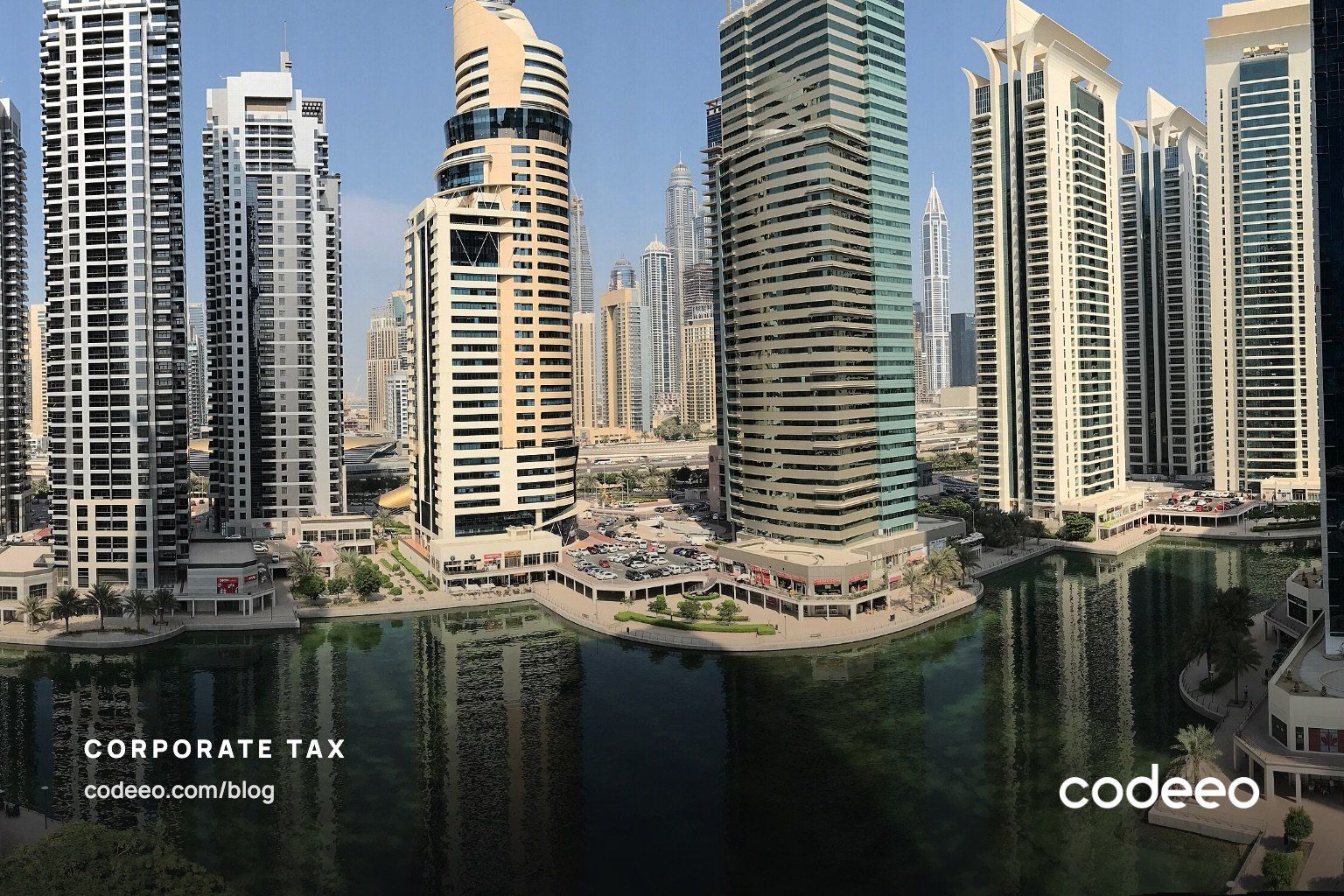
Article numbers and quotations were read on 9 October 2026 from the Ministry of Finance’s consolidated Federal Decree-Law 47 of 2022 (version of January 2026), Cabinet Decision 100 of 2023, Ministerial Decision 229 of 2025 (issued 28 August 2025), Ministerial Decision 84 of 2025, and the Federal Tax Authority’s Free Zone Persons Corporate Tax Guide CTGFZP1 of May 2024. Thresholds and rules change and the FTA may issue updated guidance; figures are indicative and this article is general information, not tax or legal advice. Cover photo: JLT Lake view from low balcony, via Wikimedia Commons (CC0).
UAEBookkeeping Requirements for a UAE Free Zone Company: What to Keep and for How LongCorporate tax records run seven years, VAT real estate records fifteen, and an open audit adds four more. A Qualifying Free Zone Person also needs audited accounts at any revenue level, which rules out Small Business Relief entirely. UAESmall Business Relief and UAE Corporate TaxSmall Business Relief lets a UAE resident business with revenue up to AED 3 million elect to pay no corporate tax until 2029, but it still has to register, file and keep records.
 UAEUAE VAT Registration Threshold: When a New Business Must RegisterThe AED 375,000 and AED 187,500 VAT thresholds explained: how the rolling 12-month and 30-day tests work, what counts, free zone rules, and the cost of registering late.
Tell us what the business needs. We will tell you what to build first.
Schedule a free consultation and get a written recommendation, with costs, before you commit to anything.
Get in touchPROVEN RESULTS
4.7 / 5verified reviews on Google