 SEOTechnical SEO Audit: A Step by Step Guide for 2026A practical technical SEO audit in seven steps, using current Search Console reports and the Core Web Vitals thresholds Google publishes today.
SEO for Clinics in Dubai: A Patient Acquisition Playbook for 2026
DHA’s advertising standard bans the words SEO copy relies on, so clinic SEO in Dubai means doctor and service pages written to it, a Business Profile built to Google’s rules and phone-first booking.
SEO for a clinic in Dubai works when three things line up: a page for each service and each doctor written inside the Dubai Health Authority’s advertising standard, a Google Business Profile structured the way Google’s practitioner rules allow, and a booking path a patient can finish on a phone. The constraint most clinics miss is that the DHA standard bans the exact words generic SEO copy relies on, so the ranking work and the compliance work are the same work. Done in that order, a clinic competes on verifiable credentials, clear service information and reviews it earned, which is also what Google’s guidance on health topics rewards.
Key takeaways
- The DHA’s Standards for Medical Advertisement Content on Social Media (code DHA/HRS/HPSD/ST-21, effective 3 October 2022) names the words a licensed facility must not use, including “the best”, “safest”, “100%”, “has no side effects” and “immediate results”. Write every web page to that list.
- Clause 5.2 requires a facility’s official account to state its medical advertisement licence number from the Ministry of Health and Prevention, and clause 5.3 makes the medical director responsible for approving content that names the facility.
- Google allows a doctor their own Business Profile only if they are public-facing and contactable directly at the verified location, and never several profiles to cover several specialisations.
- Google’s review policy prohibits incentives and selective solicitation, and the DHA standard prohibits patient testimonials without written consent. One after-visit request sent to every patient satisfies both.
The DHA standard decides what your pages may say
Start with the rulebook, because it shapes every sentence that follows. The Dubai Health Authority’s Health Regulation Sector issued the Standards for Medical Advertisement Content on Social Media on 3 August 2022, effective 3 October 2022, with a revision date of 3 August 2027. It applies to every DHA-licensed health facility and healthcare professional advertising on social media, and it was back in the news on 1 September 2026 when Khaleej Times reported the DHA restating its banned-words list to licensed facilities and professionals.
Clause 6.11 is the one to pin above the copywriter’s desk. Absolute statements, exaggerated claims and alarming expressions “must not be used”, and the clause names them: unique, one of a kind, the best, exclusive, safest, the only, incomparable, unprecedented, best product, magic, miraculous, assured success, very limited quantity, has no side effects, get money back, 100%, absolutely certain, distinguished, famous, pioneer and immediate results. Clause 6.12 adds that negative statements about another professional, facility or government entity are not acceptable, and clause 8.1.9 tells professionals to avoid claiming their services are superior to another physician’s or facility’s.
The standard is written for social media accounts, but the words on that list are the words a complaint would quote, so write the website to the same list. The document points back to the federal rule, MOHAP’s Ministerial Decision No. 430 of 2007 on medical advertisement, and clause 5.2 requires the facility’s official account to “state the corresponding medical advertisement license number provided by Ministry of Health and Prevention”. MOHAP lists separate licence services for social media advertising and for advertising on a website or digital link; those pages could not be opened on 8 October 2026, so confirm the current service and fee rather than assuming one licence covers both.
Service pages, one condition or treatment each
A patient searching “knee physiotherapy Dubai” or “root canal Jumeirah” wants a page about that thing, in that place, with a way to book. A clinic that lists forty treatments as bullet points on one Services page gives Google nothing to rank for any of them. One issue we often see on Dubai clinic sites is exactly this: a single long services page, a row of doctor photos, and a contact form, with every search term the clinic cares about absent from any heading.
Each service page carries what Appendix 1 allows and what clause 6.6 requires. Clause 6.6 says every advertisement “must be substantiated, especially when it relates to the outcome(s) of treatment” and “should always include the associated risks”. So a procedure page explains what it is, who it is for, what happens at the first visit, the risks, which doctors provide it, the fee or fee range with its conditions, and how to book. Appendix 1 item (e) adds that surgical and invasive procedures need “the appropriate warning statement in a clearly visible position”, which means in the body of the page rather than a footer.
Fees deserve a word on their own. Appendix 1 item (h) permits “a statement about fees charged” and insurance arrangements, while the not-acceptable column rejects price information that is inaccurate, omits its conditions, or offers time-limited discounts that cannot be met. A page that states the consultation fee and the insurers accepted answers the question patients ask before they call, and it is the page that ranks for the “cost” searches competitors leave to aggregators. Our note on healthcare website design in Dubai covers the page set and the phone layout, and the healthcare industry page describes the kind of build this calls for.
Doctor pages are where trust is checked
Google’s guidance on creating helpful, reliable, people-first content, last updated 5 October 2026, calls health one of the “Your Money or Your Life” topics and asks whether content is “written or reviewed by an expert or enthusiast who demonstrably knows the topic well”, whether pages carry a byline, and whether bylines “lead to further information about the author”. For a clinic, the doctor page is that further information, and it is where a cautious patient confirms the person is real and licensed.
The DHA standard says what goes on it. Clause 8.1.3 requires professionals to “clearly state name, title, professional qualification and speciality as per their DHA license”. Clause 6.1 prohibits titles that differ from the licence, naming Cosmetic Specialist, Aesthetic Consultant, Aesthetician, Diet Consultant, Beauty Expert and Anti-Aging Specialist as examples of what not to invent. Clause 6.2 restricts the prefix “Dr.” to physicians, dentists and holders of a recognised PhD, and clause 6.3 requires PhD certificates to be attested by the UAE Ministry of Education.
Appendix 1 of the standard lists what may be published about a professional: qualifications and titles as recognised by DHA, the schools they graduated from, teaching positions with dates, accreditation, languages spoken, office hours, fees and peer-reviewed publications. So the doctor page carries the licensed name and title, the speciality exactly as licensed, qualifications with institutions and years, hospital affiliations, publications, languages spoken, and the services the doctor provides here, linked to those service pages. Mark it up with the schema.org Physician type, which carries medicalSpecialty, hospitalAffiliation and availableService, and mark the clinic itself up once as MedicalClinic, which sits under both LocalBusiness and MedicalOrganization and carries isAcceptingNewPatients. Keep the name, address and phone identical to the Google profile; the method is in our guide to schema markup for UAE local businesses.
Reviews that both Google and the DHA allow
Two rulebooks apply and they point the same way. Google’s policy for user-contributed content prohibits reviews posted “due to an incentive offered by a business”, tells merchants not to “discourage or prohibit negative reviews, or selectively solicit positive reviews from customers”, bars pressuring users to write reviews on the premises, and treats current or former employment as a conflict of interest. The DHA standard, in Appendix 2, lists “patient testimonials without written patient consent” among prohibited content, and clause 9.1 requires written, documented consent from any patient whose statement is used in an advertisement.
The process that satisfies both is dull and repeatable. Every patient receives the same review request after the visit, by SMS or WhatsApp, with a direct link to the Google profile, and nobody at reception filters who gets it. A review the patient posts on Google is theirs, not the clinic’s advertisement, so the consent rule bites when the clinic wants to reproduce it on its own website or social account, which needs written consent limited to the purpose and period agreed under clauses 6.10 and 9.1. Replies carry their own risk: clauses 7.1.6 and 7.1.7 require the facility to protect patient health information on social platforms, so a reply never confirms the reviewer was a patient, never mentions the treatment, and moves any complaint to a phone number.
One technical point saves wasted effort. Google’s review snippet documentation (last updated 8 September 2026) states that where the entity being reviewed controls the reviews about itself, pages using LocalBusiness or any Organization structured data are ineligible for the star feature. Marking up your own testimonials for stars does not work, so leave aggregateRating out of the clinic schema.
Google Business Profile for a multi-doctor clinic
Google publishes the local ranking factors in plain terms: relevance, “how well a Business Profile matches what someone is searching for”; distance; and prominence, “how well-known a business is”. The same page states “There’s no way to request or pay for a better local ranking on Google” and that “More reviews and positive ratings can help your business’s local ranking”. A clinic can act on relevance and prominence. Distance is the patient’s location and nothing else.
The structural question is who gets a profile. Google’s guidelines say an individual practitioner should create their own profile if they work in a public-facing role and can be contacted directly at the verified location during stated hours, that support staff should not, and that “a practitioner shouldn’t have multiple Business Profiles to cover all of their specializations”. Where several practitioners work at one location, the organisation has its own profile and each practitioner profile carries only the practitioner’s name; a sole practitioner trading under a brand uses one profile named “[brand/company]: [practitioner name]”. A clinic in Jumeirah with four dentists therefore runs five profiles at most. Reviews split across them, which is the trade-off, and a dentist who leaves takes their profile along, so for a practice whose patients book with “the clinic” rather than a named doctor, one complete profile is what we would usually recommend.
Then fill it completely. Google says “Businesses with complete and accurate info are more likely to show up in local search results”, so set the primary category to the actual facility type, add every service as a service item, keep hours accurate through Ramadan and public holidays, and add a “Book an appointment” link, which Google’s local business links documentation allows alongside up to ten links per category. Our Google Business Profile guide for Dubai businesses walks through verification and service items in detail.
Arabic searches are a second audience
A clinic in Deira or Al Qusais will see a share of its patients search in Arabic, and an English-only site is invisible to those searches. Google’s documentation on localised versions of a page, last updated 21 September 2026, gives three equivalent ways to declare them (HTML link elements, HTTP headers or the sitemap) and the rule that catches most sites: “Each language version must list itself as well as all other language versions”. An x-default version covers visitors whose settings match neither language.
The translation is where clinics cut corners. Machine-translated Arabic medical copy reads wrong to a native speaker, and because clause 7.1.4 requires content to be “professional and culturally sensitive and acceptable”, a careless rendering can turn an acceptable English sentence into a questionable Arabic one. Use a translator who has written for a hospital, and keep the fee, risk and licence information identical in both languages. The technical setup is in our note on hreflang for Arabic and English UAE sites.
From the search result to a booked appointment
Traffic is not the measure. Search work for a clinic is judged on booked appointments, and the path from a Google result to a booking in Dubai runs through one of three doors: a phone call, a WhatsApp message, or a form. Each needs to be one tap from every service and doctor page on a phone, and each needs to be counted, with a tracked number, a WhatsApp click event and a form event giving the clinic a weekly figure that means something. The booking page shows the doctors available for the chosen service, the fee the service page already stated, the insurers accepted and the location, and it confirms by SMS. Appendix 1 lists providing “an unsolicited appointment time that has not been requested by the patient” as not acceptable, so the flow asks the patient to choose rather than assigning a slot.
Where clinic marketing budgets go wrong
The expensive mistakes tend to be the same ones. Comparative claims against a named competitor breach clause 6.12, and a complaint from that competitor is the likely result. Before-and-after photos without the disclaimer required by clause 9.6 (same person, same lens, no editing, the statement that “there is no guarantee that the result will be the same, as it might vary from one individual to another” in the same font size, plus the risks) appear on cosmetic clinic pages across the city, and Appendix 2 item 12 prohibits them outright. Phrases such as “don’t delay” and “achieve the look you want” are quoted in Appendix 1 as examples that create unrealistic expectations. The most common error of all is structural: a website launched without the medical director having read it, when clause 5.3 makes that approval the director’s responsibility.
A sensible order of work
- Read every page of the current site against clause 6.11 and Appendix 1, and remove or rewrite what fails. This is the cheapest work and it removes the largest risk.
- Confirm the MOHAP advertisement licence position with the medical director, put the number on the official accounts as clause 5.2 requires, and agree a written approval step for new pages under clause 5.3.
- Build the doctor pages from the DHA licence details, marked up as Physician.
- Build one page per service with risks, fees, the doctors who provide it and a booking button, then retire the single long services list.
- Restructure the Google Business Profile along Google’s practitioner rules, complete every field, add the booking link, and start the uniform after-visit review request.
- Add Arabic versions of the service and doctor pages with hreflang declared.
- Set up call, WhatsApp and form tracking, and judge the work on bookings per month rather than visits.
If your clinic’s site is a brochure with a services list and you want to know which treatments are reachable in search and what is holding the pages back, our technical SEO audit reviews the structure, the indexing and the content against the rules above and returns a prioritised list rather than a score.
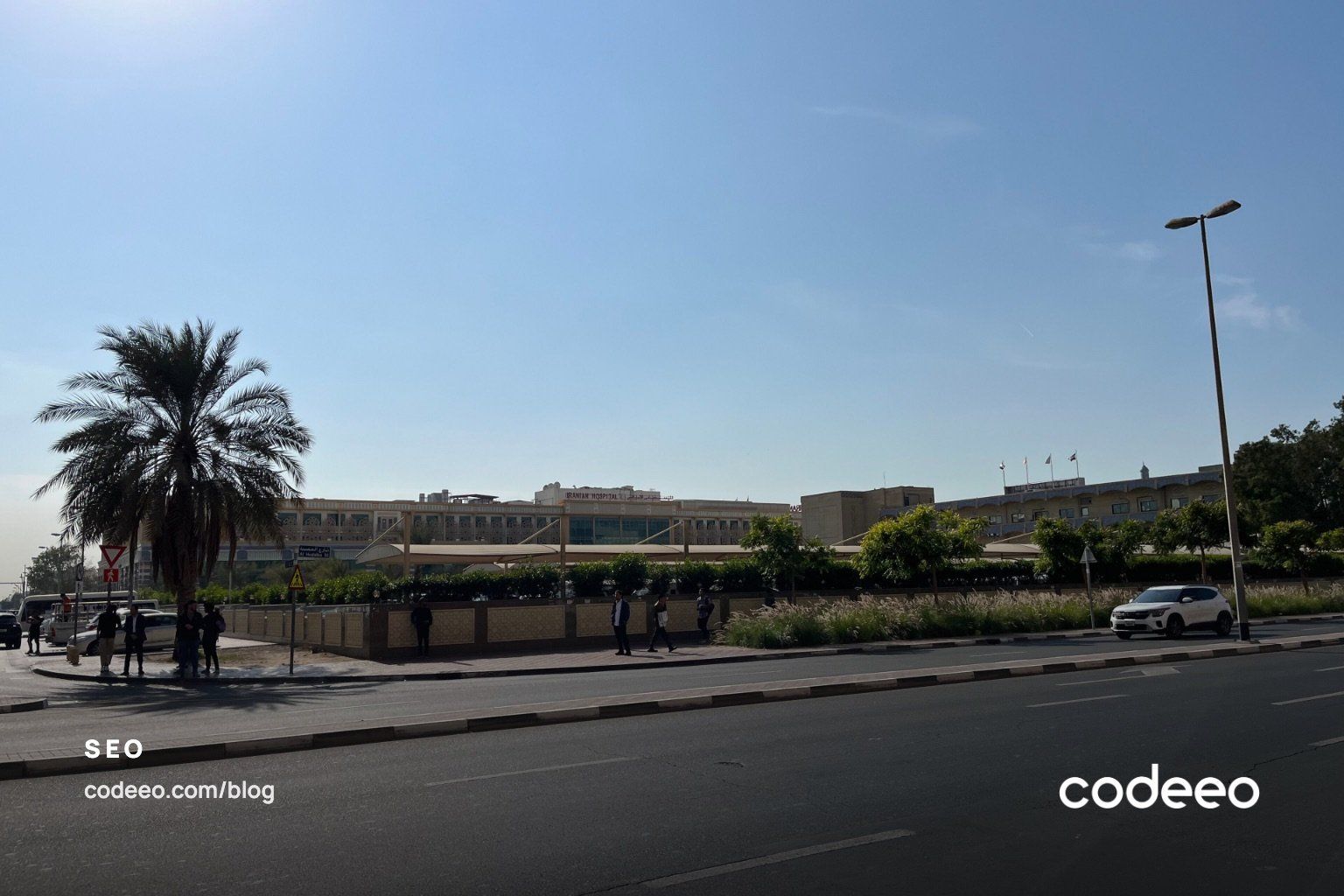
Rules described here were checked on 8 October 2026 against the Dubai Health Authority’s Standards for Medical Advertisement Content on Social Media (DHA/HRS/HPSD/ST-21, version 1.1), Khaleej Times reporting of 1 September 2026, Google’s Business Profile guidelines, local ranking guidance, user-contributed content policy and local business links documentation, Google Search Central’s helpful content, localized versions, LocalBusiness and review snippet documentation, and schema.org’s MedicalClinic and Physician definitions. This is general information about marketing and search, not legal or regulatory advice; licence requirements and fees change, so confirm your position with DHA, MOHAP or your own regulator. Cover photo: Iranian Hospital, Dubai, via Wikimedia Commons (CC0).
SEOTechnical SEO Audit: A Step by Step Guide for 2026A practical technical SEO audit in seven steps, using current Search Console reports and the Core Web Vitals thresholds Google publishes today. SEOSEO Packages in Dubai: What Each Tier Should IncludeWhat basic, mid level, comprehensive and custom SEO packages in Dubai should include, and how to spot a sound agency.
 SEOSEO for Real Estate Brokers in Dubai: Ranking Listings and Area GuidesReal estate SEO in Dubai does not work by fighting Bayut and Property Finder on listing pages. It works on community knowledge the portals handle badly, and it stays safe only if the area guides avoid Google’s doorway and scaled content policies.
Tell us what the business needs. We will tell you what to build first.
Schedule a free consultation and get a written recommendation, with costs, before you commit to anything.
Get in touchPROVEN RESULTS
4.7 / 5verified reviews on Google