 SEOTechnical SEO Audit: A Step by Step Guide for 2026A practical technical SEO audit in seven steps, using current Search Console reports and the Core Web Vitals thresholds Google publishes today.
Schema Markup That Actually Helps UAE Local Businesses
Google lists about 30 structured data features, and FAQ markup stopped producing a rich result on 7 May 2026. Which types a UAE local business can still use, what LocalBusiness really requires, and the review stars you are not eligible for.
Schema markup for a local business in the UAE is worth adding, but for a shorter list of reasons than most agencies will tell you. Google lists about 30 structured data features that produce a rich result, and the ones a Dubai clinic, restaurant or brokerage can realistically use are LocalBusiness, Organization, Breadcrumb, Product and Video. FAQ markup, which almost every UAE agency still installs and bills for, stopped producing anything in Google Search on 7 May 2026. Knowing which four or five types do something is more useful than a page carrying twelve that do not.
Key takeaways
- Google removed the FAQ rich result on 7 May 2026 and deleted the documentation for it on 15 June 2026. FAQ markup on a UAE business site now produces no search feature at all.
- LocalBusiness has only two required properties, name and address. Everything else, including opening hours and coordinates, is recommended rather than mandatory.
- A business that controls the reviews about itself is ineligible for review stars. That rules out the aggregate rating most UAE sites put on their own home page.
- Service is not a rich result type. Marking up a service page with it produces nothing in Search, whatever the plugin’s dashboard says.
- Marking up content that visitors cannot see on the page breaks Google’s structured data policies and can cost a manual action, which removes rich result eligibility while leaving normal ranking alone.
The FAQ markup on your site stopped doing anything in May 2026
This is the change most UAE sites have not caught up with. Google’s search documentation changelog records two entries. On 8 May 2026 it added a deprecation notice to the FAQ rich result documentation stating that the feature would no longer appear in Google Search starting 7 May 2026. On 15 June 2026 it removed the documentation entirely, noting that the feature is no longer shown in search results.
The history matters for anyone deciding what to do next. FAQ rich results launched in May 2019 and were available to any site. In August 2023 Google narrowed them to well-known, authoritative government and health websites, which already excluded a Dubai accountancy or a Sharjah dental clinic. The May 2026 change finished the job for everybody.
So what should a UAE business do with the FAQPage JSON-LD sitting on its site? Leaving it costs nothing directly. It is valid schema.org markup, it describes real content, and it does not violate any policy. What it no longer does is earn a search feature, so it should not appear as a line item on an SEO invoice, and no one should be measuring its effect. One issue we often see is a proposal that promises FAQ schema will “expand your listing”. As of May 2026 that claim is simply out of date.
The same applies to HowTo markup, whose documentation Google removed on 14 September 2023, and to practice problem markup, removed on 6 January 2026. If a technical SEO audit from 2024 recommended any of these, that section of the audit has expired.
What LocalBusiness actually requires
Google’s LocalBusiness documentation lists exactly two required properties: name, the name of the business, and address, a PostalAddress carrying street, locality, region, postal code and country. That is the whole mandatory set. Everything else is recommended.
The recommended properties are where the useful detail sits, and they are worth adding in this order for a UAE business:
- telephone, written with the country and area code, so +971 4 for a Dubai landline rather than 04
- url, pointing at the page for that specific location rather than the site home page
- openingHoursSpecification, which is where Friday hours and Ramadan timings belong
- geo, latitude and longitude, which Google asks to be given to at least five decimal places
- priceRange, kept under 100 characters
- servesCuisine and menu for a restaurant, department for a clinic or showroom with separate desks
Google also asks for the most specific LocalBusiness subtype available, naming Restaurant, DaySpa and HealthClub as examples. A Jumeirah dental clinic is a Dentist, not a LocalBusiness. A Business Bay brokerage is a RealEstateAgent. The subtype costs nothing to get right and is a signal about what the business is, which matters more now that assistants read the markup as well as search engines.
One caution worth stating plainly. Google’s own documentation says it does not guarantee that features consuming structured data will appear in search results. Correct markup makes a page eligible for a feature. It does not order one.
The review stars you are not allowed to have
This is the most common structured data mistake we find on UAE business sites, and it is a policy problem rather than a coding one.
Google’s review snippet documentation is direct about it. If the entity being reviewed controls the reviews about itself, its pages using LocalBusiness or any other Organization type are ineligible for the star review feature. The rule covers reviews placed directly in the structured data and reviews pulled in through an embedded widget, including Google Business Profile and Facebook review embeds.
In practice that means the 4.9 out of 5 with 87 reviews sitting in the JSON-LD on a Dubai company’s own home page is not going to produce stars in Search, no matter how genuine the reviews are. The stars a business does see against its name in Google Maps and the local pack come from its Google Business Profile, which is a separate system that this markup neither feeds nor edits. If the goal is star ratings in front of customers, the work belongs in the Google Business Profile, not in the page source.
There is a narrow legitimate use. A UAE directory or comparison site that publishes reviews written by its users about other businesses is the reviewing entity rather than the reviewed one, and review markup on those listing pages is in scope.
Types that produce nothing, and why they still get installed
Google documents roughly 30 structured data features that can generate a rich result. The list includes Article, Breadcrumb, Local business, Organization, Product, Review snippet, Event, Job posting, Video, Dataset, Software app and Vacation rental, among others.
Service is not on it. Nor is WebPage, WebSite, ProfessionalService as a standalone rich result, or the general Thing type. Plenty of WordPress SEO plugins will happily emit all of them and show a green tick, because the markup is valid schema.org. Valid and useful are different tests. A Dubai marketing agency marking up eight service pages with Service schema has produced eight correct files that Google has never documented a search feature for.
That does not make the markup harmful. It makes it unbillable. The distinction we would draw for a client is between markup that earns a search feature, which is a short list, and markup that describes the business for systems that read pages directly, which is a longer and less predictable one. Only the first can be promised.
Getting the UAE address block right
The address is one of only two required properties, and it is the one UAE businesses most often get wrong, usually for reasons specific to how companies are registered here.
Use the legal trade name in the name property, matching the trade licence, and keep it identical to the name on the Google Business Profile and in the site footer. Where a company trades under a shorter brand, the trade name belongs in name and the brand can sit in alternateName. Getting this consistent is the same discipline as choosing the name in the first place, which we covered in the UAE trade name rules.
For the PostalAddress itself, addressCountry takes AE, addressRegion takes the emirate, and addressLocality takes the area, so Dubai and Business Bay respectively. Most UAE addresses have no postal code in the way the property expects, and PO Box numbers are a postal service rather than a street address. Where there is genuinely nothing to put, leaving postalCode out is better than inventing one, because inaccurate markup is a policy issue.
The harder question is which address a free zone company should use. A firm with a flexi-desk package has a registered address at the free zone business centre and often works from somewhere else entirely. Our view is that the address in LocalBusiness markup should be the one a customer could turn up to and be served at. If nobody can visit, the business is a service area business, and a physical address block presented as a place customers can attend is misleading in exactly the way Google’s policies describe.
Several branches, one website
A Dubai company with a second branch in Abu Dhabi or Sharjah cannot describe both with one block of markup, and stacking two LocalBusiness objects onto the home page does not solve it either.
The structure that works is one page per location, each carrying its own LocalBusiness markup with its own address, telephone, opening hours and geo coordinates, and each with a url property pointing at itself. The home page then carries Organization markup for the company as a whole. Breadcrumb markup on the location pages is worth adding at the same time, since Breadcrumb is on the supported list and the location pages sit two or three levels deep.
From a development perspective this is the point where the markup should stop being hand-written. Three locations maintained by hand become stale the first time a phone number changes. Generating the JSON-LD from the same fields that render the visible address on the page keeps the two in step, which the policies require anyway.
Checking it, and what the tools actually tell you
Two checks answer two different questions, and confusing them wastes time.
Google’s Rich Results Test answers whether a page is eligible for a Google search feature. It only reports on types Google supports, so a page with perfectly formed Service markup will come back with nothing found, which is the correct answer rather than an error. The schema.org validator answers whether the markup is well formed against the vocabulary, and will validate types Google has no feature for.
For a site already indexed, Search Console’s rich result reports are more useful than either, because they run on pages Google has actually crawled and group errors across the site. The Manual Actions report is where a structured data penalty would appear. Worth knowing what is at stake: a manual action for spammy structured data removes rich result eligibility, and Google’s guidelines state it does not affect the page’s ranking in normal web search results.
The rule underneath all of the policies is the simple one. Do not mark up content that is not visible to readers of the page. If the JSON-LD claims opening hours, a price range or a department, a visitor should be able to find the same information on the page without reading the source. A broader sweep of this kind of issue belongs in a periodic SEO audit rather than a one-off fix.
If you are not sure which of your structured data is still earning anything, the quickest test is to run your main location page through the Rich Results Test and compare what it finds against what your last SEO report charged for. We handle structured data as part of SEO work and build it into the templates we write during web design projects, so it stays correct when the content changes.
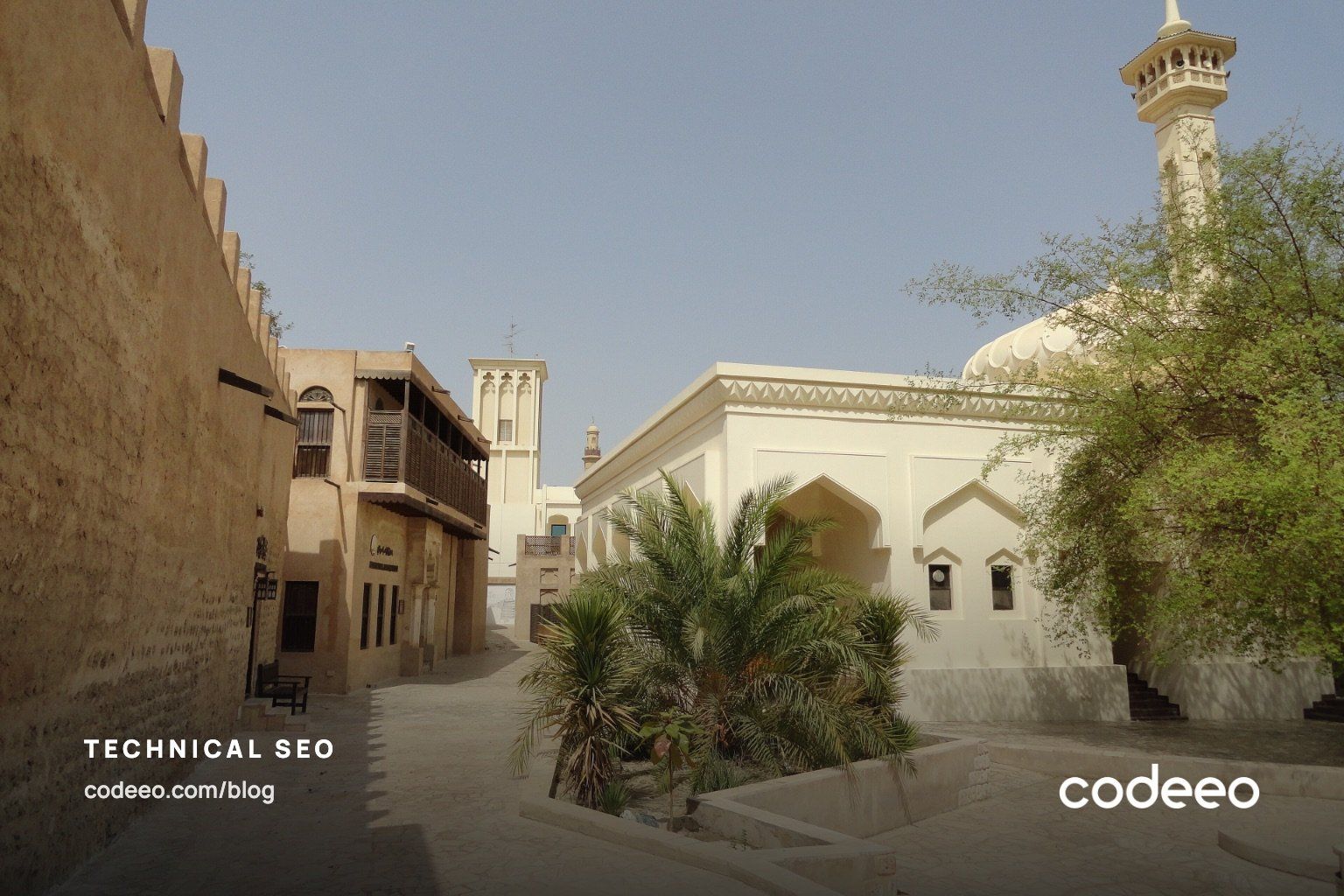
Structured data rules and supported types were checked against Google Search Central documentation on 27 September 2026 and change over time. This is general information rather than professional advice. Cover photo: Bastakiya, Old Dubai (8970753529) by Fabio Achilli from Milano, Italy, via Wikimedia Commons (CC BY 2.0).
SEOTechnical SEO Audit: A Step by Step Guide for 2026A practical technical SEO audit in seven steps, using current Search Console reports and the Core Web Vitals thresholds Google publishes today. SEOSEO Packages in Dubai: What Each Tier Should IncludeWhat basic, mid level, comprehensive and custom SEO packages in Dubai should include, and how to spot a sound agency.
 SEOSEO for Clinics in Dubai: A Patient Acquisition Playbook for 2026DHA’s advertising standard bans the words SEO copy relies on, so clinic SEO in Dubai means doctor and service pages written to it, a Business Profile built to Google’s rules and phone-first booking.
Tell us what the business needs. We will tell you what to build first.
Schedule a free consultation and get a written recommendation, with costs, before you commit to anything.
Get in touchPROVEN RESULTS
4.7 / 5verified reviews on Google